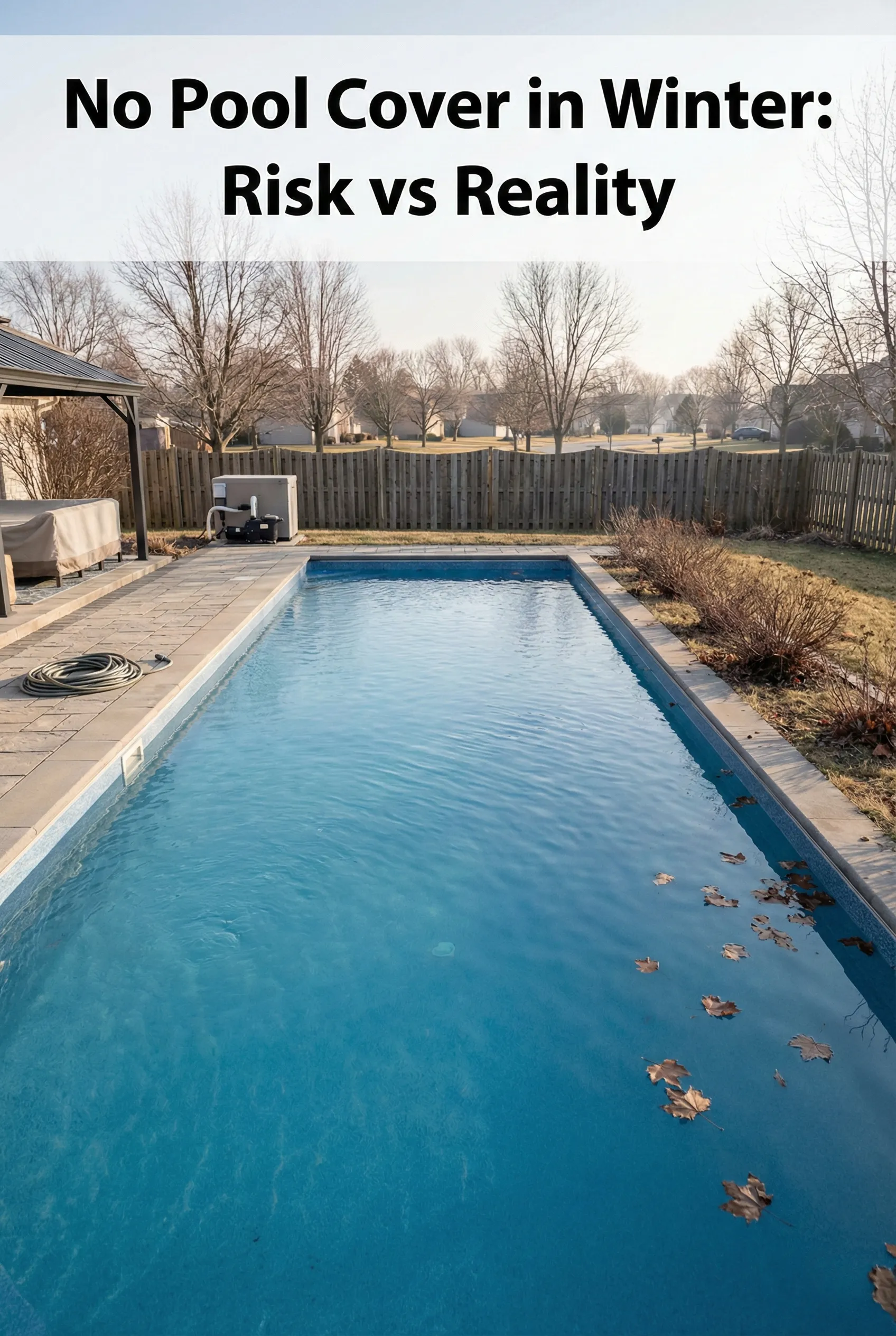
Leaving a pool uncovered through winter sounds like a shortcut. Sometimes it is. Sometimes it is how people end up with a swamp, stained surfaces, damaged equipment, or a spring cleanup that costs more than a cover ever would.
Every winter, pool owners argue both sides. Some leave pools uncovered for years with no disaster. Others regret it badly. The difference is not luck. The difference is climate, debris exposure, pool type, and how the off season is handled.
This guide breaks the decision down logically and practically. It focuses heavily on above ground pools, where skipping a cover is most common, but the same principles apply to many in ground pools.
What a winter cover actually does
A winter cover is not just about keeping leaves out.
A proper cover helps with:
- Reducing debris accumulation so spring opening is faster and cheaper.
- Blocking sunlight, which limits algae growth during mild winter periods.
- Protecting liners and plastics from months of UV exposure.
- Reducing evaporation and water level swings in windy or dry climates.
- Adding a visual barrier that discourages accidental entry. Only true safety covers provide real protection, but even basic covers reduce risk.
If your pool does not benefit much from these functions, skipping a cover can make sense. If your pool depends on one or more of them, skipping a cover often creates bigger problems later.
Why some owners skip covers
People usually skip covers for three reasons.
Wind and hassle
In windy areas, covers are heavy, awkward, and frustrating.
Dragging a soaked tarp. Fighting gusts. Pumping water off. Folding a massive sheet of plastic. Storing it somewhere all winter. Then repeating everything in spring.
Some owners would rather spend time skimming and managing water chemistry than deal with that routine.
Very low debris
If there are few trees nearby and little airborne debris, the biggest benefit of a cover disappears. In these cases, spring cleanup is mostly about water balance, not removing decomposing organic matter.
Mild winters and year round operation
In some regions, pools are never truly dormant. Owners keep water circulating, protect against freezes, and maintain low level sanitation. In those situations, a cover can feel optional.
Those are the situations where skipping a cover can work. Now let us look at when it does not.
The two ways winter goes wrong
Most winter pool problems come from one of these mistakes.
- Turning the pool into a stagnant container full of organic material for months.
- Creating structural or plumbing damage by mishandling water level and freeze protection.
Covers mainly reduce the first risk. Proper winterization prevents the second.
If you skip a cover, you must compensate for debris and sunlight with labor and chemistry. If you skip proper winterization, you are risking expensive repairs regardless of cover choice.
When skipping a cover can work
Skipping a cover can be reasonable if most of the conditions below apply.
Low debris environment
This is the single most important factor.
Few deciduous trees nearby.
Minimal leaf drop.
Limited pollen or wind blown debris.
If debris load is low, spring opening is manageable even without a cover.
Willingness to open early
Cold water slows algae but does not stop it.
Owners who succeed without covers usually open earlier than others. Early opening restores circulation and sanitation before water warms enough for algae to explode.
A plan for sunlight and algae
Uncovered water gets light.
Light drives algae.
In climates with mild winters, algae can wake up during warm spells.
If the pool is left fully closed and uncovered, algae should be expected at opening. That is acceptable only if it is planned for.
Controlled safety risk
If children, pets, or neighbors can access the pool area, skipping a cover increases risk unless fencing and gates are secure.
Many basic covers are not safety rated, but they still reduce the visual and physical risk of open water.
Safe water level management
Above ground pools rely on water pressure to support the walls. Excessive draining weakens that support.
If your no cover plan involves draining significantly below normal winter levels, structural risk increases.
When skipping a cover is a bad idea
If any of the following apply, skipping a cover usually leads to trouble.
Heavy leaf exposure
Leaves consume chlorine as they break down.
They stain liners.
They form sludge that is difficult to vacuum.
They create ideal conditions for algae.
If leaves regularly fall into your pool, a cover or at least a leaf net is strongly recommended.
Long mild winter periods
In regions where winter includes repeated warm stretches, uncovered stagnant water often turns green well before spring.
Cold nights alone do not prevent algae if daytime temperatures rise consistently.
Full shutdown with no monitoring
If the pool is fully winterized, circulation stopped, and chemistry ignored for months, a cover becomes more important, not less.
Without a cover, you are relying entirely on cold water to suppress biological growth. That is unreliable in many climates.
Significant water level reduction
Lowering water too far for long periods stresses liners and walls.
Vinyl liners can wrinkle, shift, or shrink.
Above ground walls can lose structural stability.
Draining “just to be safe” often does the opposite.
Expecting an easy spring
Skipping a cover almost always increases spring workload.
If your goal is a quick, clean opening with minimal chemical use, a cover is usually the better option.
Above ground pools and water level risk
Above ground pools depend on water weight to support the wall structure.
Draining too low removes that support.
Some owners report draining halfway or more with no immediate failure. That does not mean it is structurally safe for every pool, wall thickness, or climate.
A safer approach is:
Lower only as much as required for winterization.
Avoid dropping below manufacturer recommendations.
Avoid long periods with very low water levels.
Inspect the pool after major wind events.
When in doubt, keep more water, not less.
Two workable approaches without a cover
If you decide to skip a cover, use one of these strategies intentionally.
Strategy one. Minimal winter operation
Best for mild climates.
The pool remains partially active.
Circulation is available.
Freeze protection is handled by running the pump during cold periods.
Key steps:
- Thorough cleaning before winter.
- Balanced water chemistry.
- Moderate chlorine level going into winter.
- Low speed circulation during cold nights.
- Protection or winterization of small diameter lines and water features.
- Occasional debris removal.
Risks include power outages during freezes and neglected chemistry during warm spells.
Strategy two. Full close with accepted spring cleanup
Best for low debris sites where owners want minimal winter involvement.
The pool is winterized normally, but the surface remains uncovered.
Key steps:
- Clean aggressively before closing.
- Lower water only as needed.
- Properly winterize plumbing and equipment.
- Remove large debris when possible during winter.
Expect more algae and debris in spring. Plan time and chemicals accordingly.
Practical middle ground options
Most owners are not choosing between perfection and nothing. There are compromises.
Leaf net during leaf season
Use a leaf net during peak leaf drop.
Remove it once trees are bare.
Decide later whether to leave the pool uncovered or add a tarp.
Lightweight tarp with a pump
A simple tarp blocks sunlight and debris.
A small pump prevents water buildup.
This reduces most downsides without heavy cost.
Mesh covers with realistic expectations
Mesh covers reduce maintenance but allow sunlight and fine debris.
Expect some algae at opening if the pool is fully closed.
One professional winterization
For new owners, one professional close can teach correct water levels, fittings, and freeze risks. That knowledge helps future decisions.
Decision checklist
Answer honestly.
Signs skipping a cover may work
- Few nearby trees and low debris.
- Ability to open early.
- Willingness to check the pool occasionally.
- Secure yard with low safety risk.
- Climate with consistent cold or active winter operation.
Signs skipping a cover is risky
- Heavy leaf or debris exposure.
- Long warm winter periods.
- Full shutdown with no monitoring.
- Large water level reduction planned.
- Children or pets with pool access.
If the pool is uncovered and spring arrives
Recovery is usually possible.
- Remove debris first. Organic matter consumes chlorine.
- Restore circulation immediately.
- Balance pH before heavy chlorination.
- Maintain elevated chlorine levels until water clears.
- Expect a few days of cloudy or green water before clarity returns.
An uncovered pool can recover, but it rarely recovers instantly.
Bottom line
Skipping a pool cover in winter is not automatically wrong. It is also not automatically safe.
It works when debris is low, safety is controlled, water level is managed carefully, and either winter maintenance continues or spring opening happens early.
It fails when debris is heavy, winters are mild, water is drained too low, or the pool is ignored for months.
If you want a clear recommendation, consider your pool type, climate, debris exposure, and how much work you are willing to do in spring. The right answer depends on those facts, not on habit or convenience.