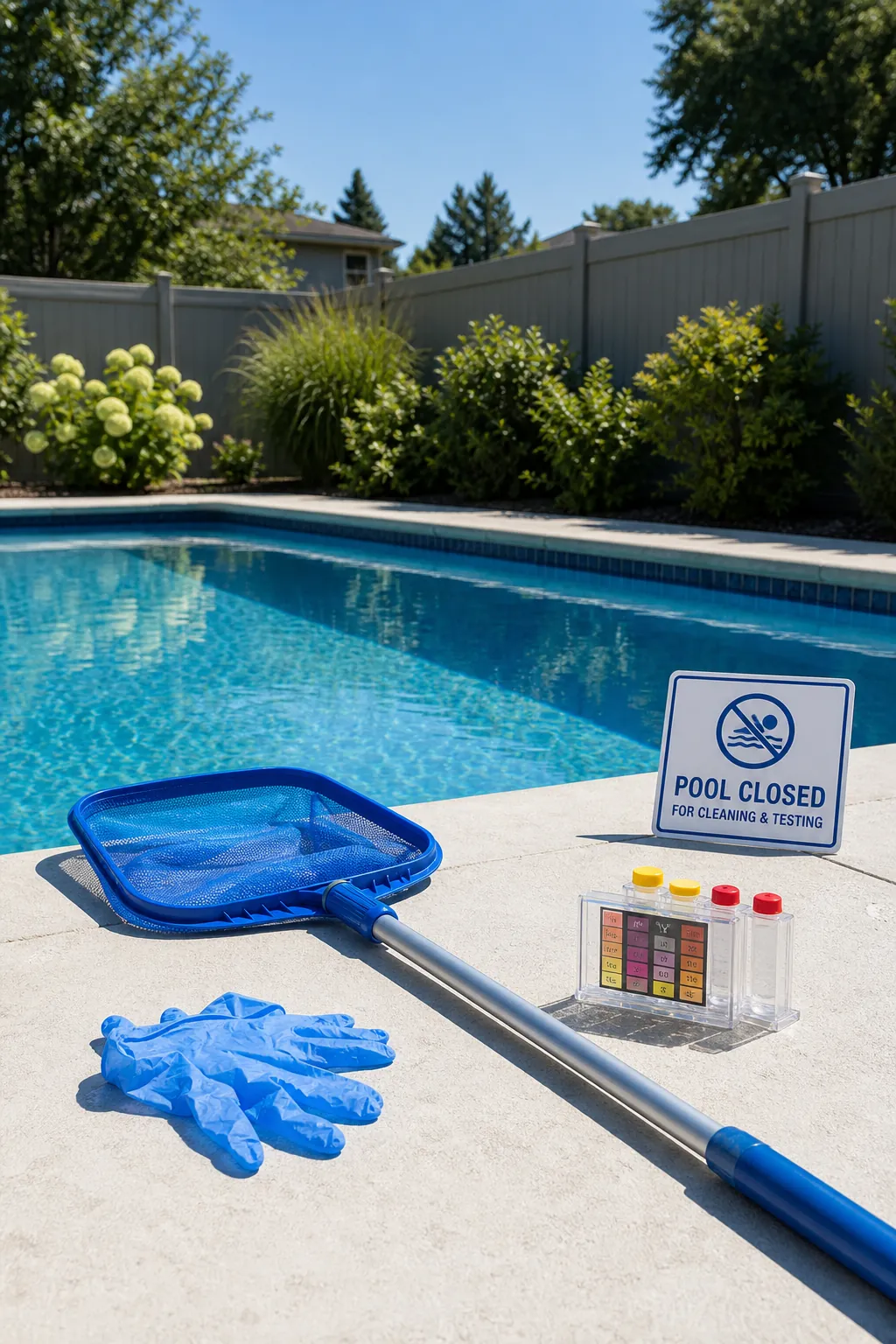
Short answer: most pool poop or dead-animal incidents do not mean you automatically drain the pool. For a typical backyard swimming pool, the first move is to close the pool, remove the contamination safely, rebalance pH and free chlorine, run filtration, and keep swimmers out until the water has been properly disinfected.
The exception is where many homeowners get into trouble: raccoon poop, a dead raccoon, diarrhea, hot tubs, and certain farm animals are not the same as a dead frog or a formed dog stool. Those cases need a more cautious plan because some organisms are harder to kill, and some pool surfaces can be damaged if you panic-drain without understanding your pool type.
The Decision Most Owners Are Really Making
When people ask this question, they usually are not looking for a chemistry lecture. They are trying to decide whether their pool is still salvageable tonight or whether they are facing a huge water bill, a damaged liner, a ruined weekend, or a health risk for kids.
The best answer is not “always shock it” or “always drain it.” The right response depends on what got into the water, whether it was formed stool or diarrhea, whether a raccoon was involved, whether this is a pool or hot tub, and whether your filtration is working.
| What happened | Do you usually drain? | Best first response |
|---|---|---|
| Formed poop in a backyard pool | Usually no | Close, remove with net or bucket, disinfect at proper chlorine and pH, filter |
| Diarrhea in the pool | Do not treat casually | Close immediately; consider professional or local health guidance because Crypto is harder to kill |
| Dead frog, mouse, bird, snake, squirrel, or similar small animal | Usually no | Remove safely, double bag, disinfect the water, run filtration |
| Raccoon poop or dead raccoon | Maybe, but not always | Close immediately, remove safely, contact animal control if needed, then filter 24 hours and backwash or drain/hose/refill |
| Poop or dead animal in a hot tub | Yes | Drain, clean surfaces and plumbing as much as possible, clean or replace filter media, refill and disinfect |
| Dead calf, lamb, or goat kid | Professional help | Remove it and contact the local health department or a pool professional for hyperchlorination |
If It Is Poop: Remove First, Disinfect Second
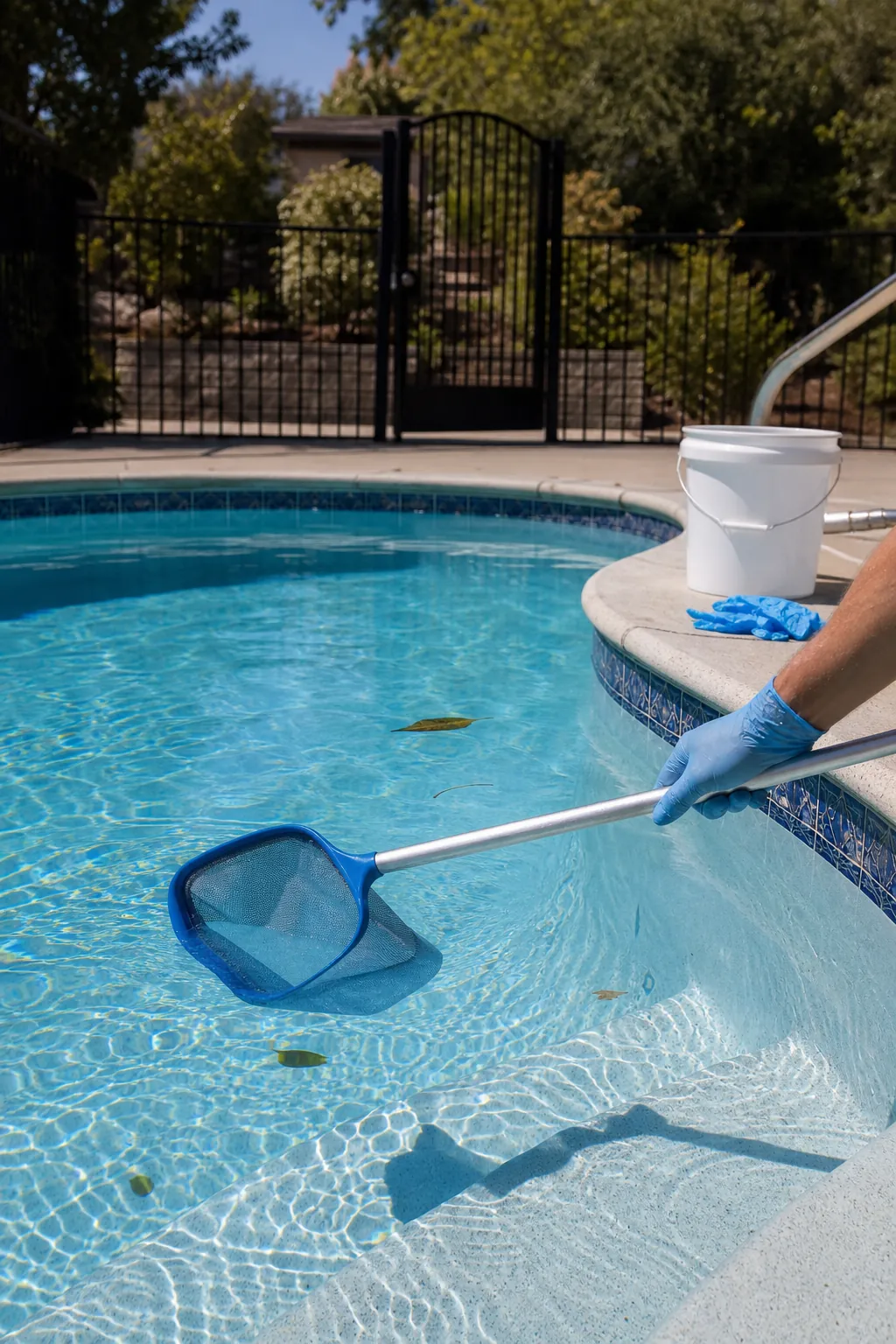
CDC guidance for poop in pool water starts with a simple rule: close the pool to swimmers and remove the poop immediately. Use disposable gloves and remove it with a net or bucket. Do not use the pool vacuum to chase poop around the water; that can spread contamination through hoses and equipment.
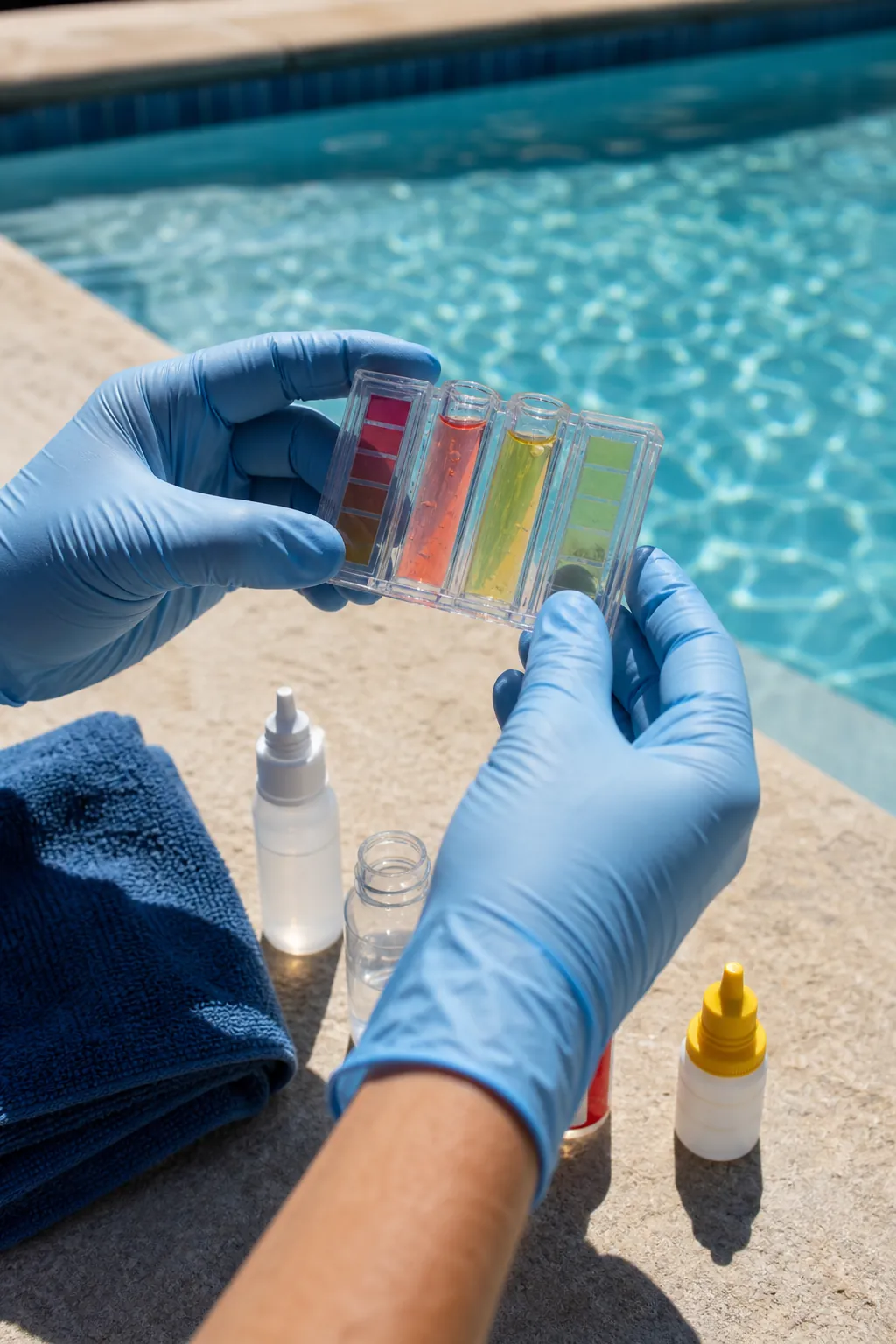
After removal, clean as much material as possible from the tool, dispose of waste sanitarily, remove gloves, and wash your hands. Then bring the water into the disinfection zone: free chlorine at 2 ppm and pH 7.5 or lower for 30 minutes, with the filtration system operating properly. The tool used for removal can be immersed in the pool during that 30-minute disinfection time.
The important distinction is formed poop versus diarrhea. Formed stool keeps many germs contained, but it can also shield germs inside from chlorine until it is removed. Diarrhea is higher risk because it can release millions of germs into the water, including Cryptosporidium, which can survive in properly chlorinated water much longer than most people expect.
That is why the “just dump in a bunch of shock” instinct can be sloppy. The response should be measured: remove the source, verify pH, verify free chlorine, keep the pump moving water, and do not reopen the pool because the water looks clear. Clear water is not proof that the incident was handled.
If It Is a Dead Animal: Most Cases Still Do Not Require Draining
A dead frog, bird, mouse, snake, gopher, rat, squirrel, or similar animal is upsetting, but it usually does not require draining a properly operating pool. CDC guidance says most dead animals found in pools do not pose a health risk to swimmers, with one major exception: raccoons.
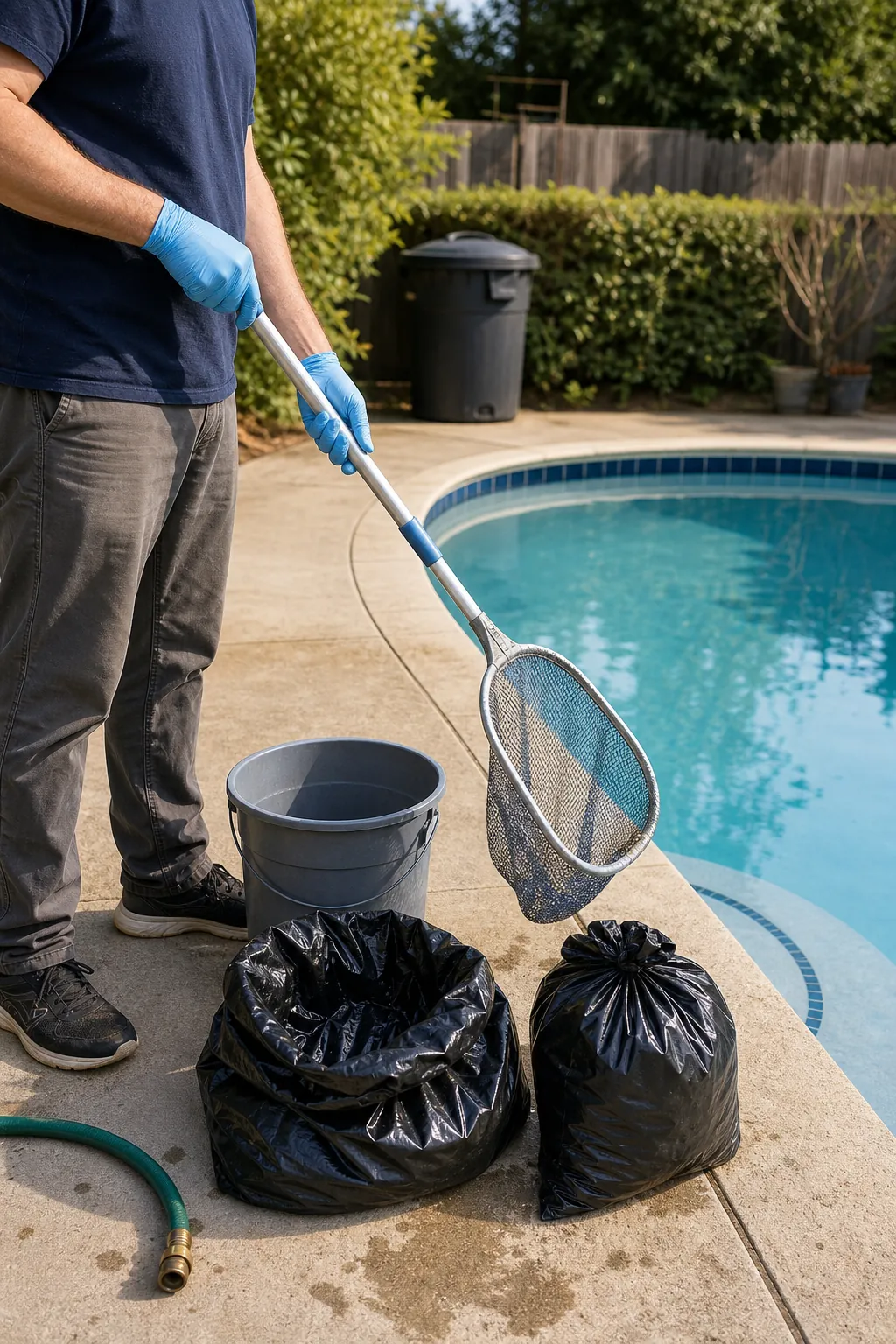
For a typical dead animal, close the pool, wear disposable gloves, remove the animal with a net or bucket, double bag it, dispose of it in a sealed trash can, wash your hands, and disinfect the pool water. The CDC dead-animal response uses the same practical water target: free chlorine at 2 ppm, pH 7.5 or less, water temperature at 77 degrees F or higher, and 30 minutes of contact time with filtration operating.
If the animal was large, badly decomposed, or in a pool that was already swampy or not circulating, the decision becomes less about a single CDC minimum and more about whether you can clean and filter the water effectively. If you cannot clearly remove the material, cannot hold chlorine, cannot verify pH, or cannot run filtration, bring in a pool professional before reopening.
Raccoons Change the Answer
Raccoon poop and dead raccoons are the special case that makes internet advice so confusing. The concern is not ordinary bacteria alone. CDC warns that raccoon poop can contain Baylisascaris procyonis eggs, and chlorine does not kill those eggs. CDC also notes that diagnosed human infections are very rare and that it is not aware of cases linked to swimming pools, but the recommended precautions are still more serious than a normal dead-animal cleanup.
If you find raccoon poop or a dead raccoon in the pool, close the pool immediately. Wear disposable gloves, remove the poop or animal with a net or other item, double bag the waste and the removal item if practical, put it in a sealed trash can, and wash your hands thoroughly. Local animal control may have removal guidance, especially if the animal is dead or if raccoons keep returning.
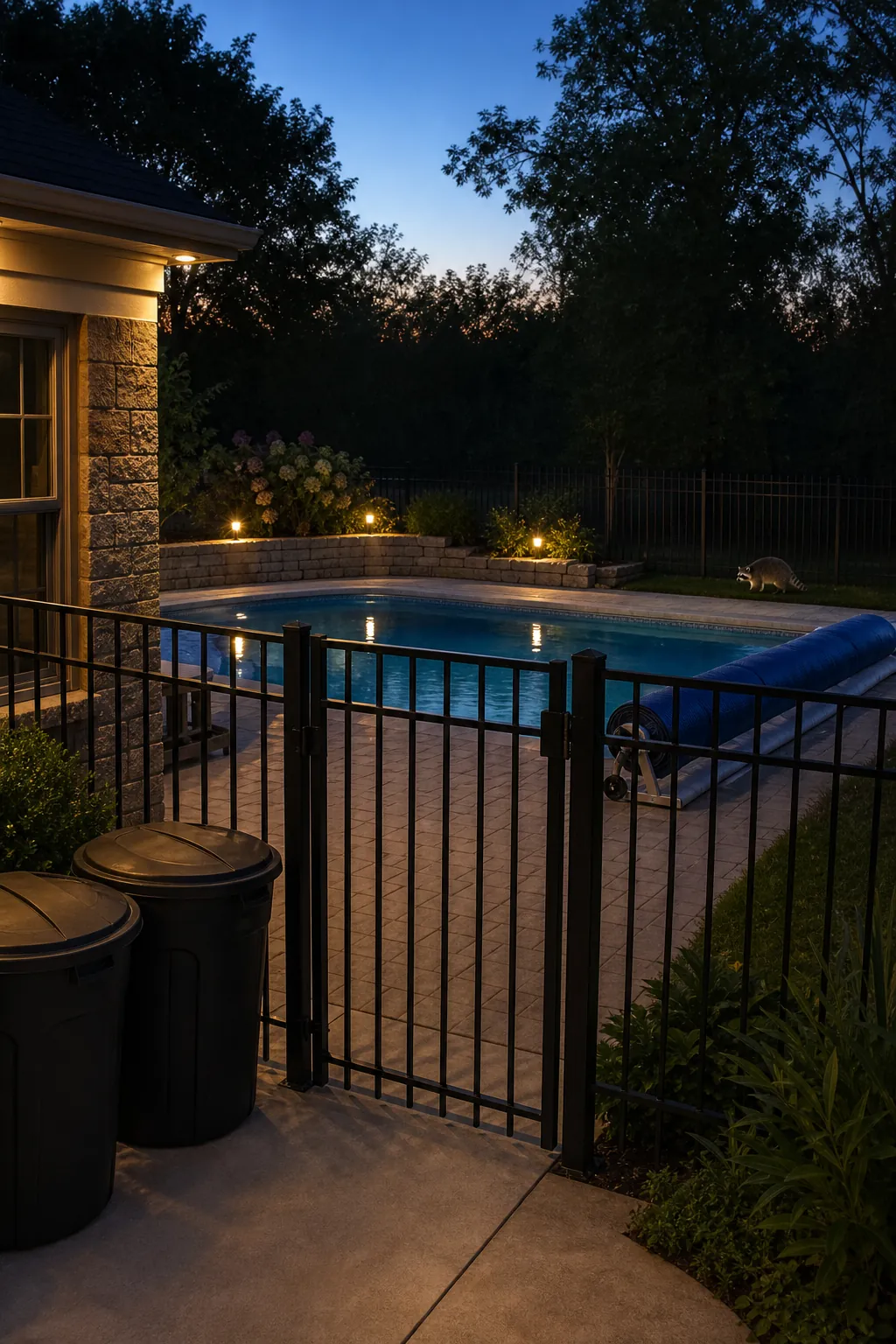
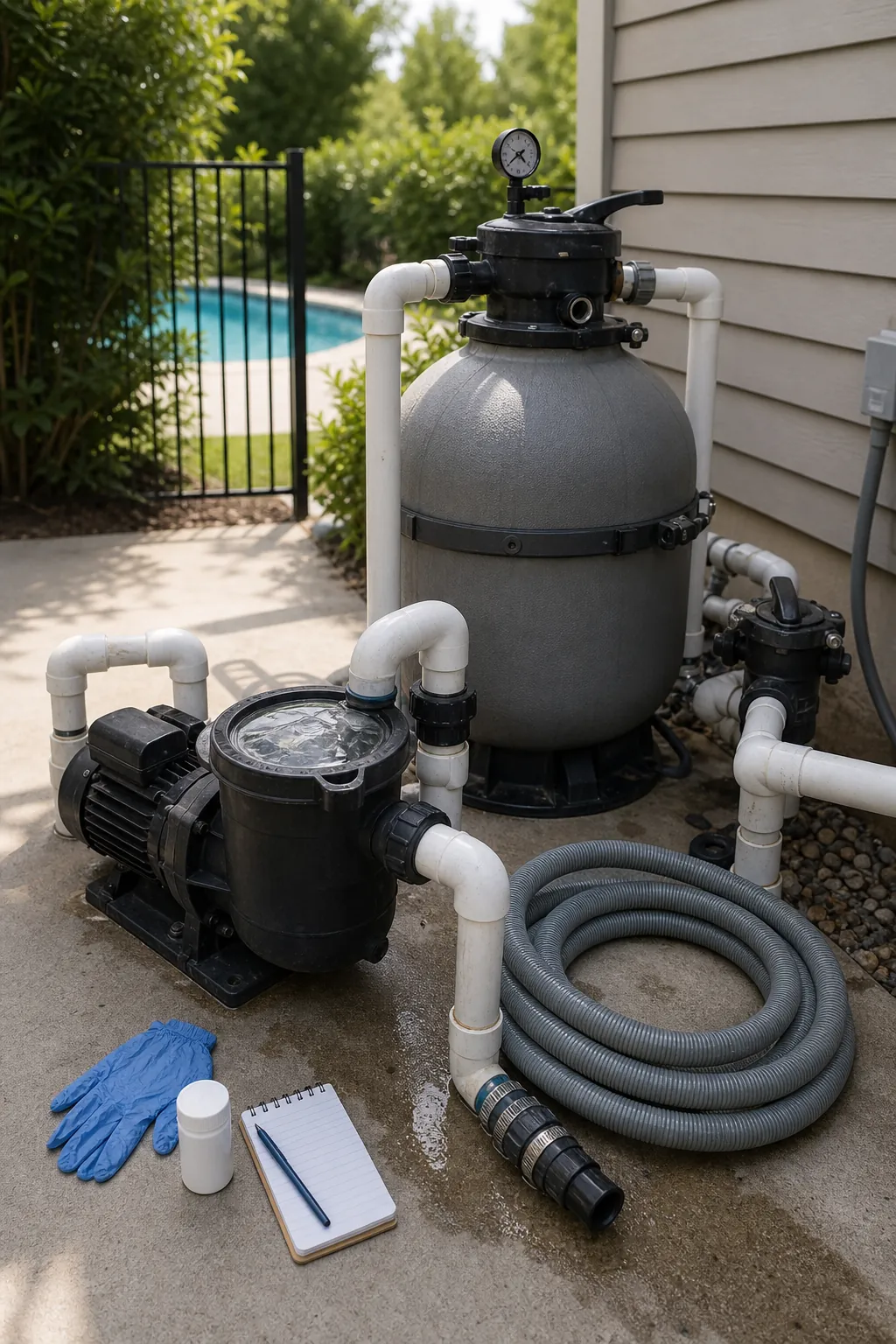
After removal, CDC gives two risk-reduction options. Option one is to filter the pool for at least 24 hours, backwash the filter, and replace filter material if possible while wearing gloves. Option two is to backwash, drain and hose down the pool, replace filter material if possible, and refill. That means draining is an option for raccoon cases, but it is not the only option CDC lists.
This is where pool type matters. A concrete pool may be more forgiving, while a vinyl-liner or fiberglass pool can be damaged by unnecessary draining, especially with high groundwater. If raccoon contamination makes you lean toward draining, talk to a pool professional first so you do not trade a sanitation problem for a structural or liner problem.
Hot Tubs Are Different From Pools
Do not handle a contaminated hot tub the same way as a swimming pool. The water volume is smaller, the temperature is higher, people sit closer together, and plumbing can hold contaminated water. For poop in a hot tub, CDC guidance is to drain the water, drain piping as much as possible, scrub accessible surfaces, clean or replace filter media where appropriate, refill, then reach pH 7.0 to 7.8 and at least 3 ppm free chlorine for 30 minutes.
That is one of the cleanest answers in this whole topic: if it is a hot tub, drain and clean it. The cost and risk of replacing a small volume of hot water is much lower than gambling with contaminated plumbing.
When Draining Makes Sense
Draining can make sense, but it should be a deliberate decision rather than a panic response. Consider draining or partial draining when the contamination is from a raccoon and you choose CDC’s drain-and-hose option, the water is already opaque and full cleanup is impossible, a hot tub is involved, a farm animal case requires professional hyperchlorination advice, or a pool professional says the water cannot be reliably recovered.
Do not overlook the downside. A drained pool can be vulnerable to groundwater pressure, liner movement, wrinkles, cracking, or other damage depending on construction and site conditions. This is why many experienced pool owners hesitate to drain vinyl-liner and fiberglass pools unless they have to.
- Vinyl liner: ask a professional before lowering water aggressively, especially if the liner is older.
- Fiberglass: be careful with groundwater pressure and empty-shell movement.
- Concrete or plaster: more drain-tolerant, but still not risk-free in high-water-table areas.
- Above-ground pools: full draining can affect liner fit and wall stability.
How Long Until You Can Swim Again?
For a normal formed-stool incident or a typical small dead animal, the CDC minimum disinfection window is 30 minutes once the pool is at the target chemistry and filtration is running. In real backyard conditions, many owners wait longer because they need time to remove debris, confirm chlorine, confirm pH, brush the area, and make sure the filter has circulated the water.
Do not reopen because someone is impatient. Reopen when the contamination has been removed, pH is in range, free chlorine is in range for swimming, filtration has run, the water is clear enough to see the bottom, and any special case has been handled. For raccoon cases, that means completing the extra filtering and backwashing or the drain-and-refill path. For hot tubs, that means the full drain, clean, refill, and disinfect process.
A Practical Cleanup Checklist
- Close the pool immediately. Nobody swims while cleanup is in progress.
- Identify the incident. Formed poop, diarrhea, dead animal, raccoon, hot tub, or farm animal case.
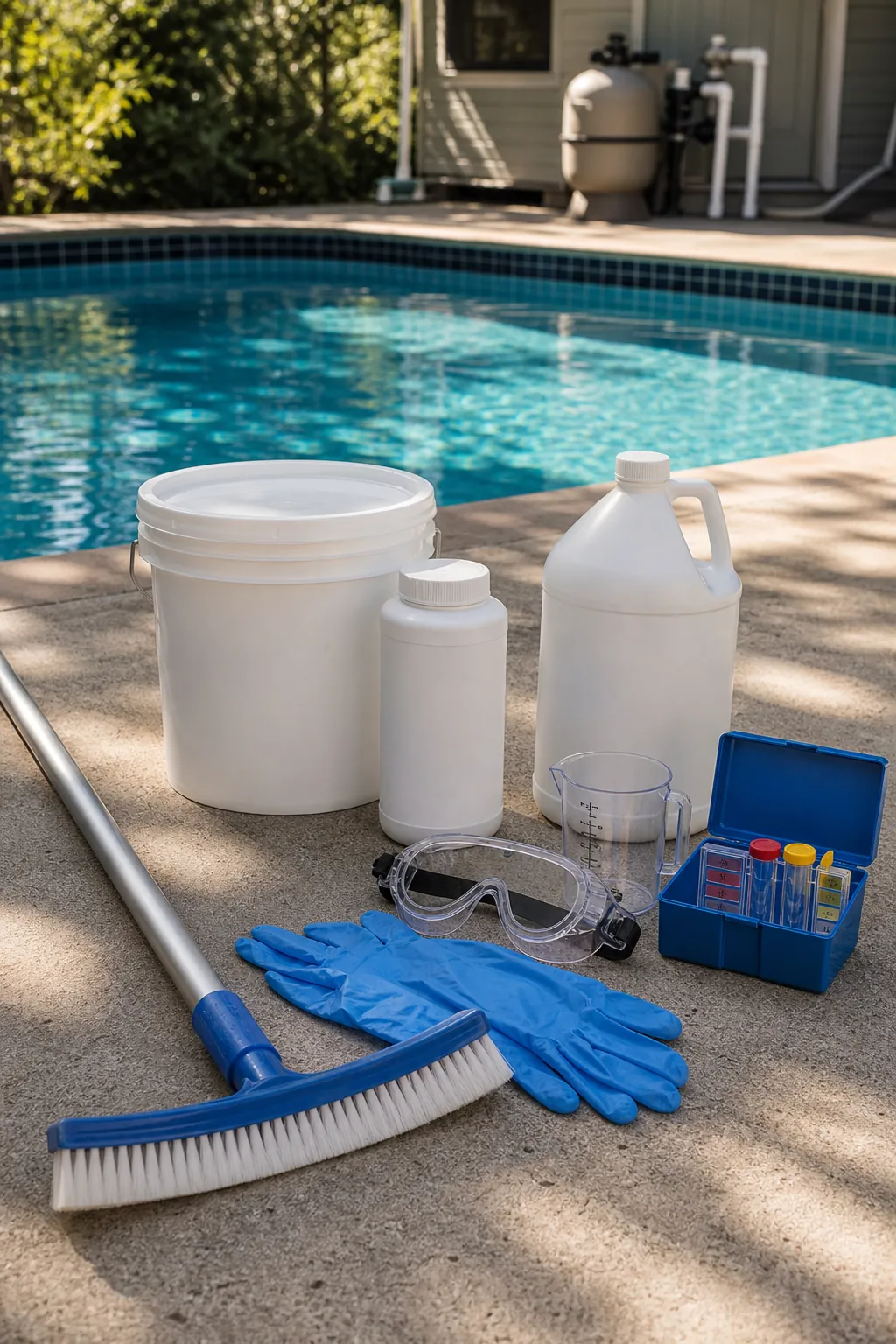
- Put on disposable gloves. Use eye protection if splashing is likely.
- Remove the contamination with a net or bucket. Do not vacuum poop from the pool.
- Bag and dispose of waste safely. For dead animals or raccoon waste, double bag and use a sealed trash can.
- Wash hands and disinfect tools. Tools can be immersed during the pool disinfection period when appropriate.
- Test water, then adjust. Do not guess pH or chlorine.
- Run filtration. Backwash or clean filter media when the incident requires it or when pressure indicates it.
- Use the special-case rule. Raccoon, hot tub, diarrhea, and farm animal events deserve extra caution.
- Reopen only after chemistry and clarity are back. The water should be visibly clean and chemically ready for swimming.
Sources Used
This guidance is based on CDC Healthy Swimming recommendations for poop in pool water, dead animals in pools, raccoons in and around pools, and general pool chemistry and swimmer health.
The practical takeaway is simple: close first, remove safely, test instead of guessing, disinfect according to the incident, and reserve draining for the cases where it truly reduces risk. The pool may be gross for a moment, but it usually does not have to become an expensive repair job.