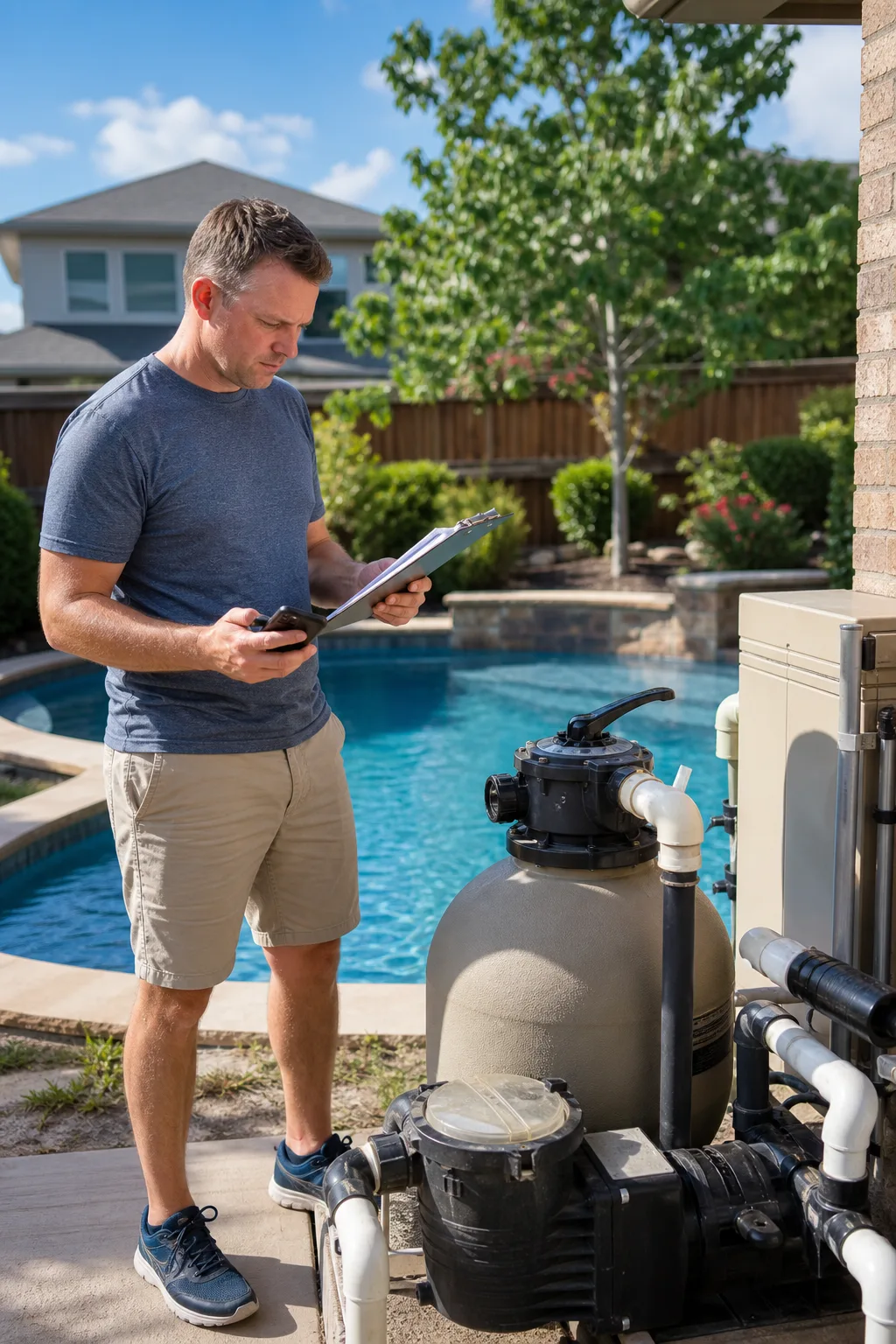
A pool repair quote can feel unfair even when the number is technically defensible. That is the frustrating part. A $350 pump repair can be padded. A $4,000 heater replacement can be reasonable. A $10,000 pool project can be either a necessary renovation or a sales pitch dressed up as urgency.
The mistake is asking only, “Is this too expensive?” A better question is: “What has this company actually proven, and what am I paying them to solve?”
Use this checklist before approving a pool repair quote, especially if the estimate involves a pump, filter, heater, leak, plumbing work, resurfacing, or multiple pieces of equipment at once.
The Short Answer
A pool repair quote is probably reasonable when it names the failure, explains how the failure was diagnosed, lists the parts or scope of work, includes labor and access assumptions, and makes the warranty clear.
A quote deserves a pause when it is vague, bundles several guesses into one large number, skips diagnosis, pressures you to decide immediately, or jumps straight to replacement without explaining why repair is off the table.
1. Start With The Diagnosis, Not The Price
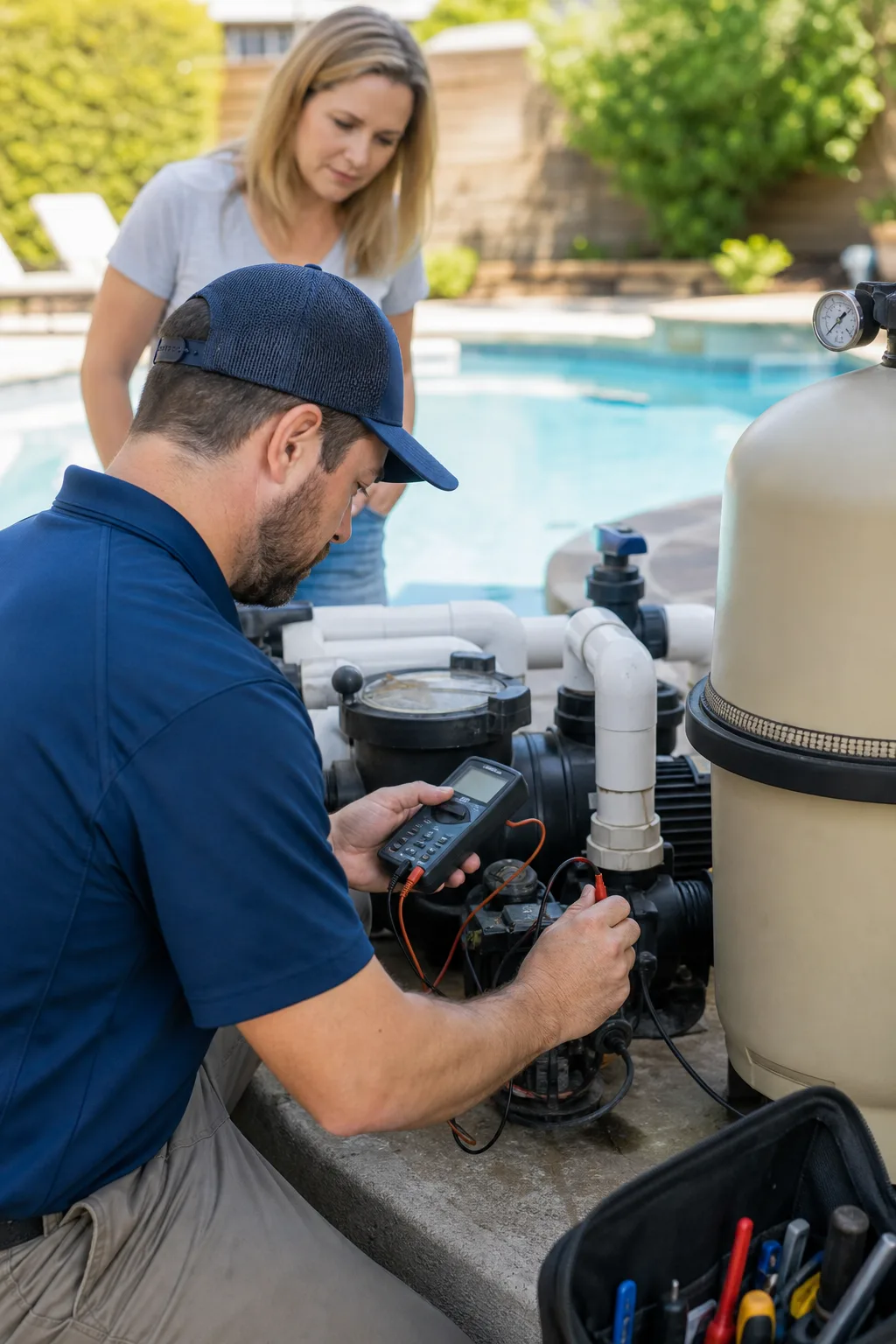
The quote should tell you what failed. Not just “replace pump” or “repair leak.” It should explain the symptom, the test, and the conclusion.
- For a pump: Was the motor tested? Is the housing cracked? Is the shaft seal leaking? Is the impeller clogged? Is the breaker tripping?
- For a filter: Was pressure checked before and after cleaning? Is the tank cracked? Are cartridges collapsed? Is the valve failing?
- For a heater: Was water flow confirmed? Were gas, ignition, sensors, board, and venting checked by someone qualified?
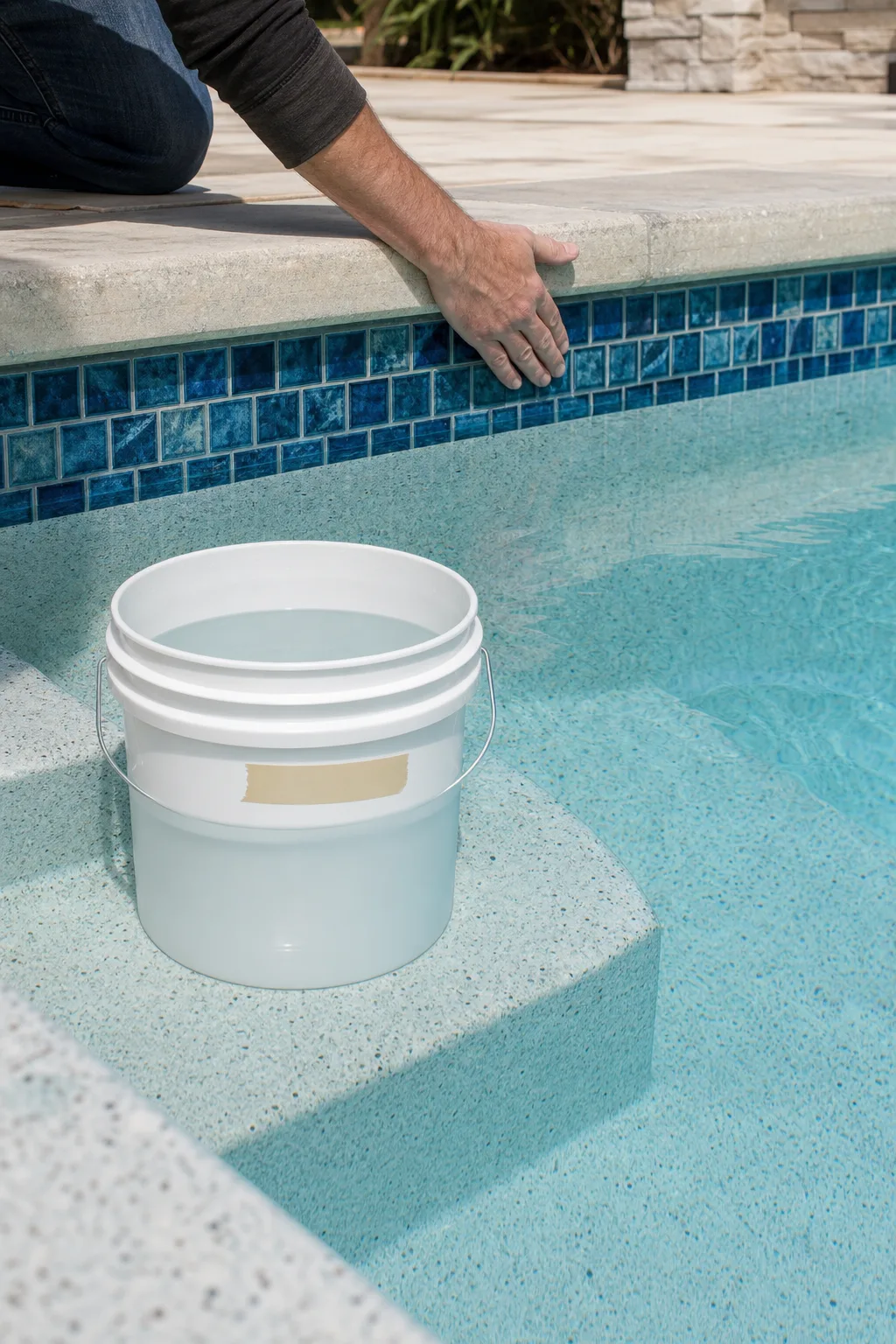
- For a leak: Was a bucket test, dye test, pressure test, or leak detection performed before demolition was proposed?
If the quote came after a five-minute look and no testing, treat it as a rough guess. That does not mean the company is dishonest. It means you should not approve a major repair as if the problem has already been proven.
2. Compare The Quote To Cost Bands, But Do Not Worship Averages
National cost guides are useful for spotting obvious outliers, but they cannot see your equipment pad, access, local labor rates, code requirements, or the age of your system. Use them as a sanity check, not as a final verdict.
For 2026, ConsumerAffairs places most pool repairs in the $250 to $1,200 range, with many homeowners around $750. HomeGuide shows how fast the range changes by repair type: leak repair, pump replacement, filter replacement, heater work, tile, and resurfacing all live in different price neighborhoods.
| Repair type | Common cost range | Why your quote may be higher |
|---|---|---|
| Pool pump repair | $50 to $300 for many repairs; motor replacement can run higher | Variable-speed pump, plumbing changes, warranty requirements, automation compatibility |
| Pool pump replacement | Often $300 to $1,600 depending on pump type | Electrical work, replumbing, old equipment pad layout, professional installation warranty |
| Leak repair | Often $500 to $1,500, but inground leaks can vary widely | Pressure testing, deck or spa demolition, underground plumbing, difficult access |
| Filter replacement | Often $250 to $1,700 | Large filter size, valve work, pipe changes, cartridge, sand, or DE system differences |
| Heater repair | Often $150 to $750 | Gas, electrical, ignition, board, sensor, corrosion, or safety issues |
| Heater replacement | Often $1,600 to $5,200 | Gas line, electrical, venting, permits, disposal, code upgrades |
| Resurfacing | Often $6,000 to $15,000 or more | Pool size, surface material, tile/coping, plaster condition, prep work |
If your quote is far above the usual band, ask what factor pushes it there. “Because that is the price” is not an answer. “The heater is being replaced, the gas line must be corrected, the pad needs replumbing, and the permit is included” is an answer you can evaluate.
3. Separate Diagnosis, Repair, And Replacement
Many confusing pool quotes mix three different decisions into one line item:
- What is wrong?
- Can it be repaired?
- If repair is possible, is replacement still the better long-term choice?
Homeowners on pool forums often get stuck because the contractor gives only the third answer. The quote says “replace equipment,” but the homeowner still does not know whether the actual failure is a bad seal, cracked housing, dead motor, failing control board, plumbing leak, or old single-speed equipment that no longer makes sense to service.
Ask for the quote to separate these pieces. You do not need a microscopic line-by-line breakdown of every screw, but you do need enough detail to compare the same scope with another company.
4. If The Quote Replaces Equipment, Ask Why Repair Is Off The Table
Replacement is sometimes the right call. Old pool pumps, obsolete automation, corroded heaters, cracked filter tanks, and mismatched plumbing can turn a small repair into repeat service calls. But the contractor should be able to explain the line between “repairable” and “not worth repairing.”
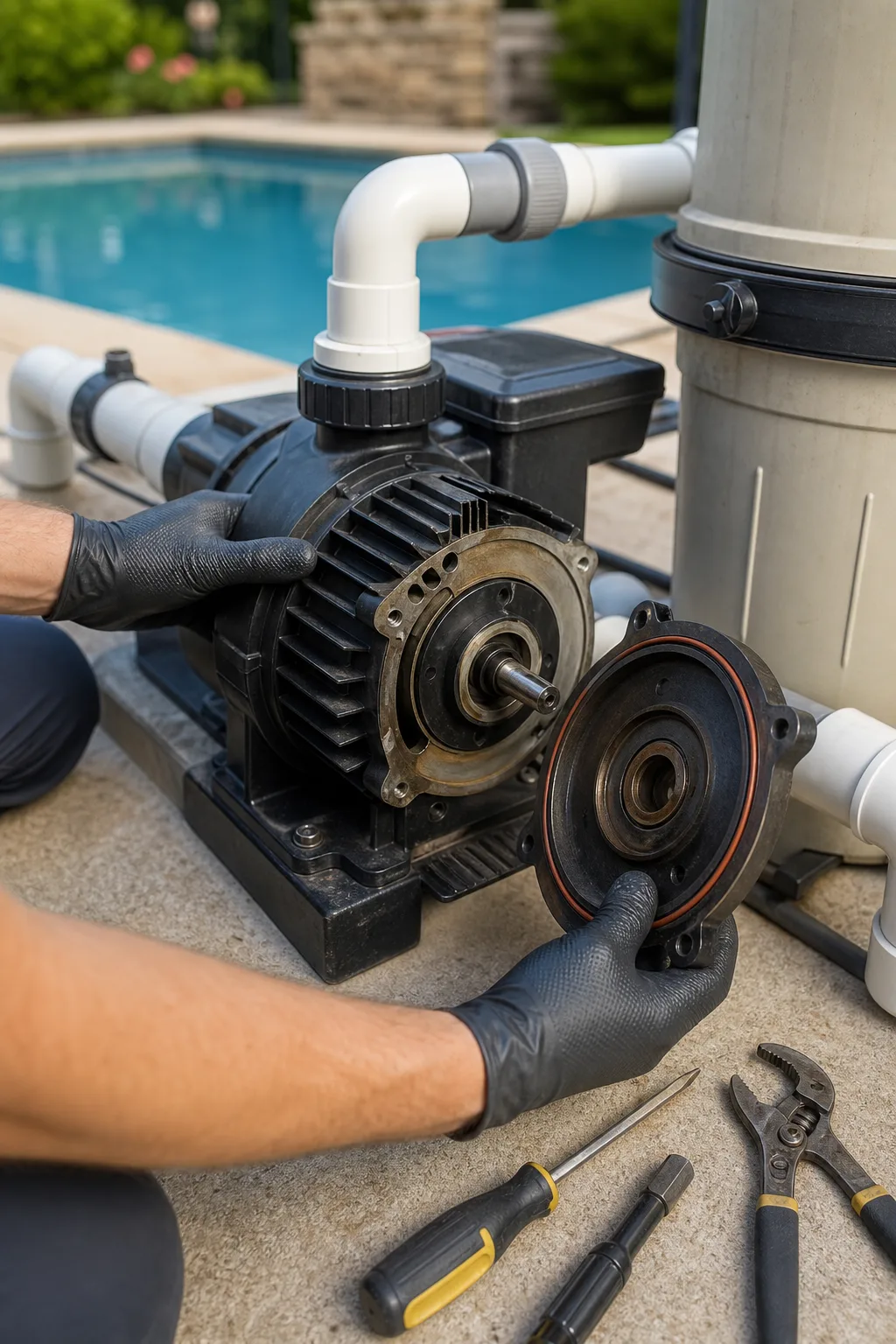
For a pump quote, ask these questions before approving a full replacement:
- What exact part failed?
- Is the wet end still usable?
- Is the motor the only failed component?
- Are replacement parts available from normal supply channels?
- Does a new variable-speed pump require electrical, programming, or plumbing changes?
- What warranty applies if the company installs it?
- What warranty is lost if I supply the part myself?
This is where some “high” quotes become understandable. A drop-in pump swap is one thing. A new variable-speed pump that needs plumbing correction, automation setup, warranty handling, and code-aware electrical work is another.
5. For Leaks, Pay For Proof Before Paying For Demolition
Leak quotes can get expensive because the visible symptom is rarely the full problem. Water loss could come from evaporation, a fitting, skimmer throat, light niche, liner puncture, cracked shell, underground line, spa spillover, equipment pad plumbing, or a valve problem.
Before approving demolition, ask what test found the leak and how confident the technician is about the location. A serious leak quote should explain the evidence: water level behavior, pressure test results, dye test results, equipment pad inspection, and why access work is needed.
If the pool is losing water quickly, do not ignore it. Fast water loss can damage equipment, soil, decking, and the pool shell. But urgency should lead to better diagnosis, not blind approval.
6. Filter And Heater Quotes Need Different Skepticism
Filter quotes often look high when the homeowner is comparing them to the cost of one cartridge online. That comparison misses the real scope. A filter job may include the tank, valve, unions, plumbing changes, media, startup, leak testing, and disposal.
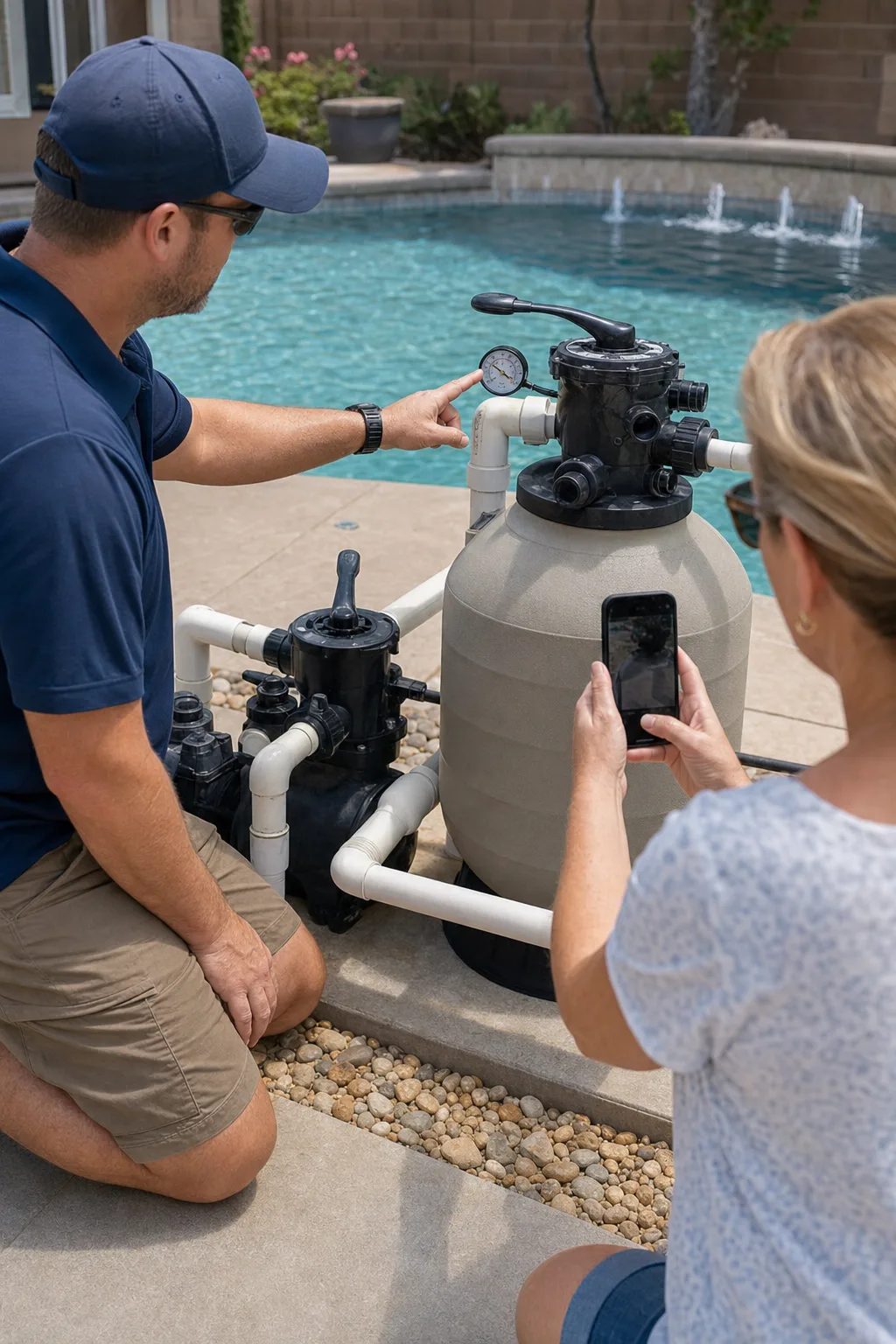
Still, the company should show why cleaning, media replacement, new cartridges, or a valve repair will not solve the problem. High filter pressure alone does not automatically mean the whole filter must be replaced.
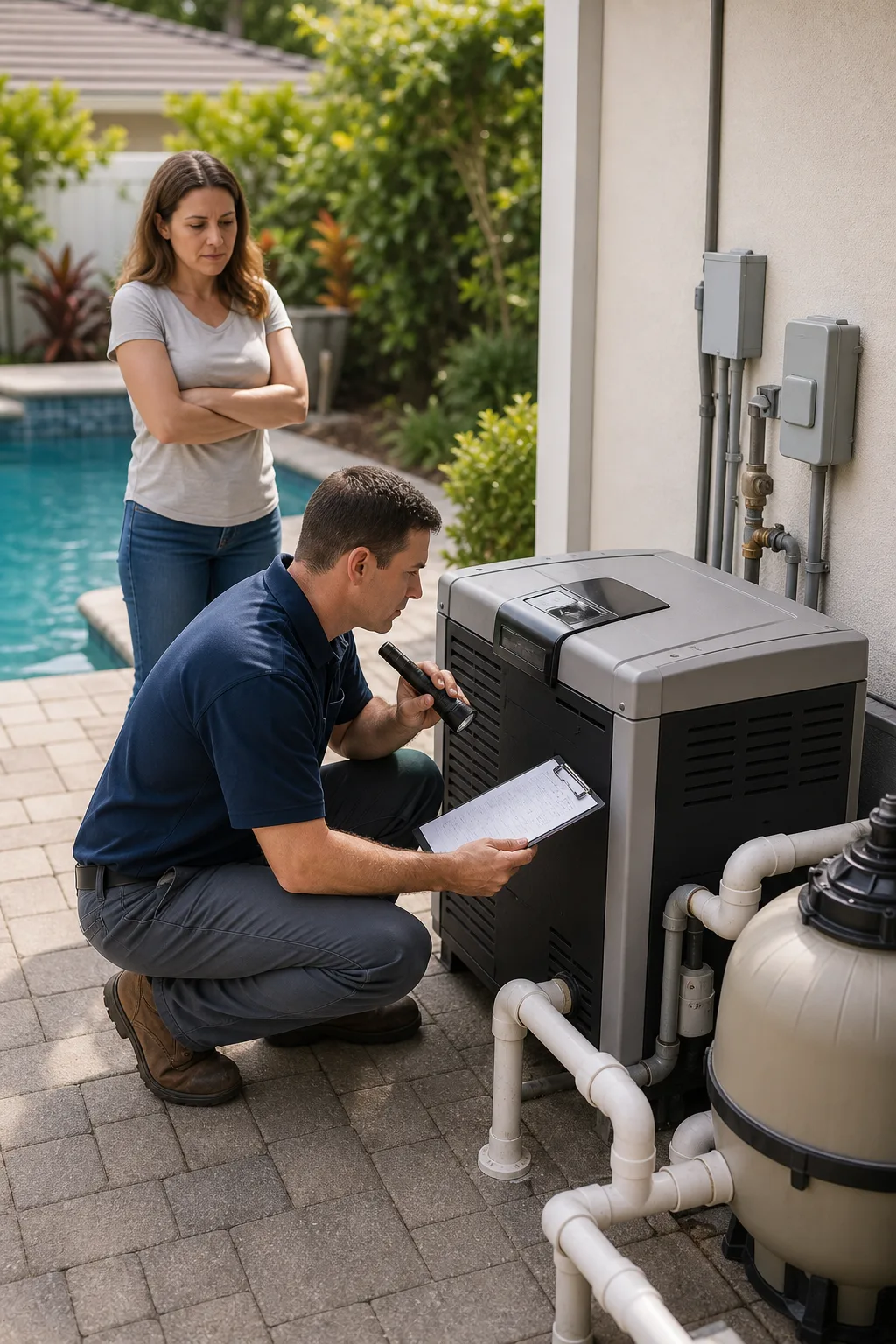
Heater quotes need a different level of caution because gas, electrical, water flow, corrosion, and combustion safety can all be involved. Do not treat a heater like a simple pool accessory. Ask whether the quote includes permits or inspections if your jurisdiction requires them, and make sure the person doing the work is properly qualified for gas, electrical, or heat pump service.
7. Red Flags That Matter More Than The Price
The worst pool quote is not always the highest. It is the one that leaves you unable to tell what you are buying.
- The estimate says “pool repair” with no specific scope.
- The company will not identify the equipment model, part, or failure.
- The quote pushes full replacement before testing obvious repair paths.
- The price changes dramatically when you ask for details.
- The warranty is verbal only.
- The company avoids permit or licensing questions for heater, gas, or electrical work.
- You are told the price is valid only if you approve immediately.
- The quote includes demolition but does not explain what test located the problem.
- The contractor dismisses your request for photos, measurements, or model numbers.
One red flag does not always mean you should walk away. Several red flags together usually mean you should slow down and get another opinion.
8. What To Send When You Ask For A Second Quote
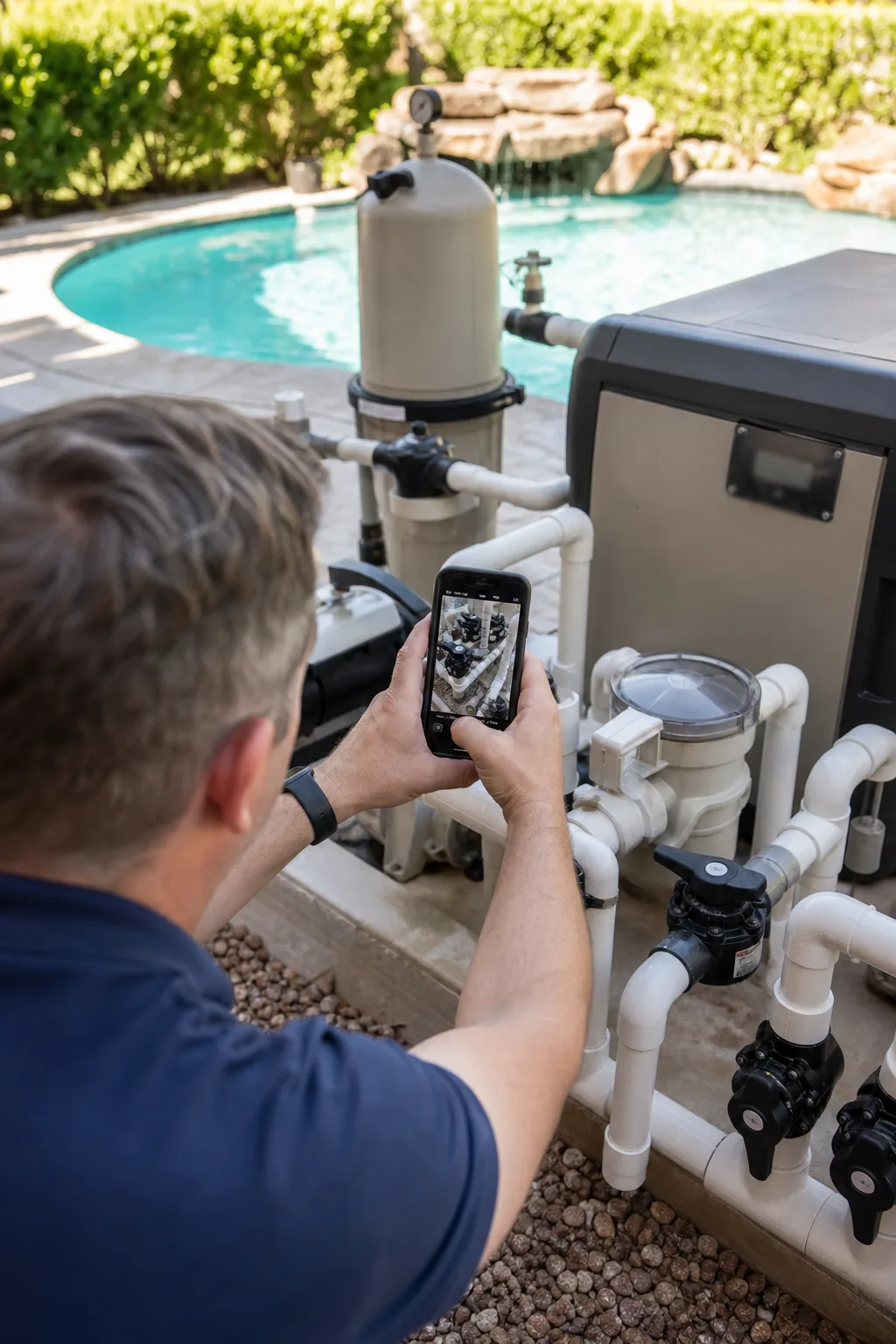
A second quote is only useful if the second company sees the same problem. Before you call, gather enough information to make the comparison fair.
- Photos of the full equipment pad from several angles.
- Close photos of pump, filter, heater, automation, valves, and any leaks.
- Equipment model numbers and approximate age.
- Pool type: concrete, fiberglass, vinyl, above-ground, or inground.
- Symptoms: noise, low flow, high pressure, water loss, cloudy water, heater error, tripped breaker.
- How fast water is being lost, if a leak is suspected.
- The first quote, with pricing hidden if you want an independent scope first.
- Any deadline, safety concern, or access issue.
Get another quote when the repair is over roughly $1,500, when demolition is involved, when a full equipment replacement is recommended, when heater gas or electrical work is part of the scope, or when the explanation does not match the price.

9. A Simple Decision Rule
Approve the quote when the diagnosis is clear, the scope is specific, the price makes sense for your region and equipment, the warranty is written, and the contractor answers questions without turning defensive.
Negotiate or request a revised scope when the diagnosis is sound but the quote includes optional upgrades you do not need right now.
Pause and get another opinion when the quote sells fear, hides the cause, skips testing, or turns one failed part into a full equipment-pad replacement without showing the math.
A high pool repair quote is not automatically a bad quote. A vague quote is. The number should buy a solved problem, not your anxiety.