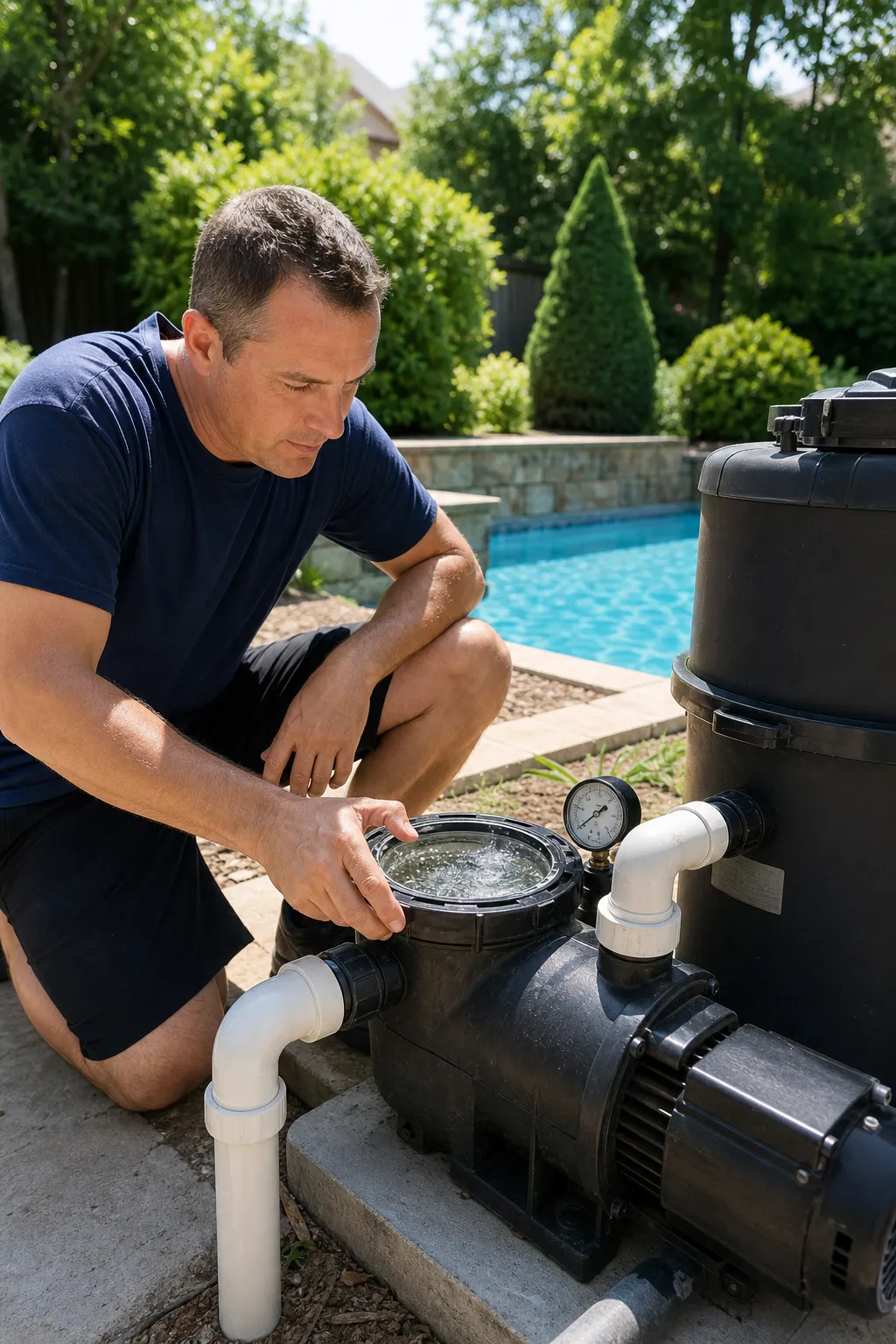
A pool pump with bubbles and low pressure makes owners nervous for a good reason. Sometimes it is a five-minute fix: low water, a dirty basket, or a dry lid O-ring. Sometimes it is the early warning before the pump loses prime, runs hot, and turns a small air leak into a service call.
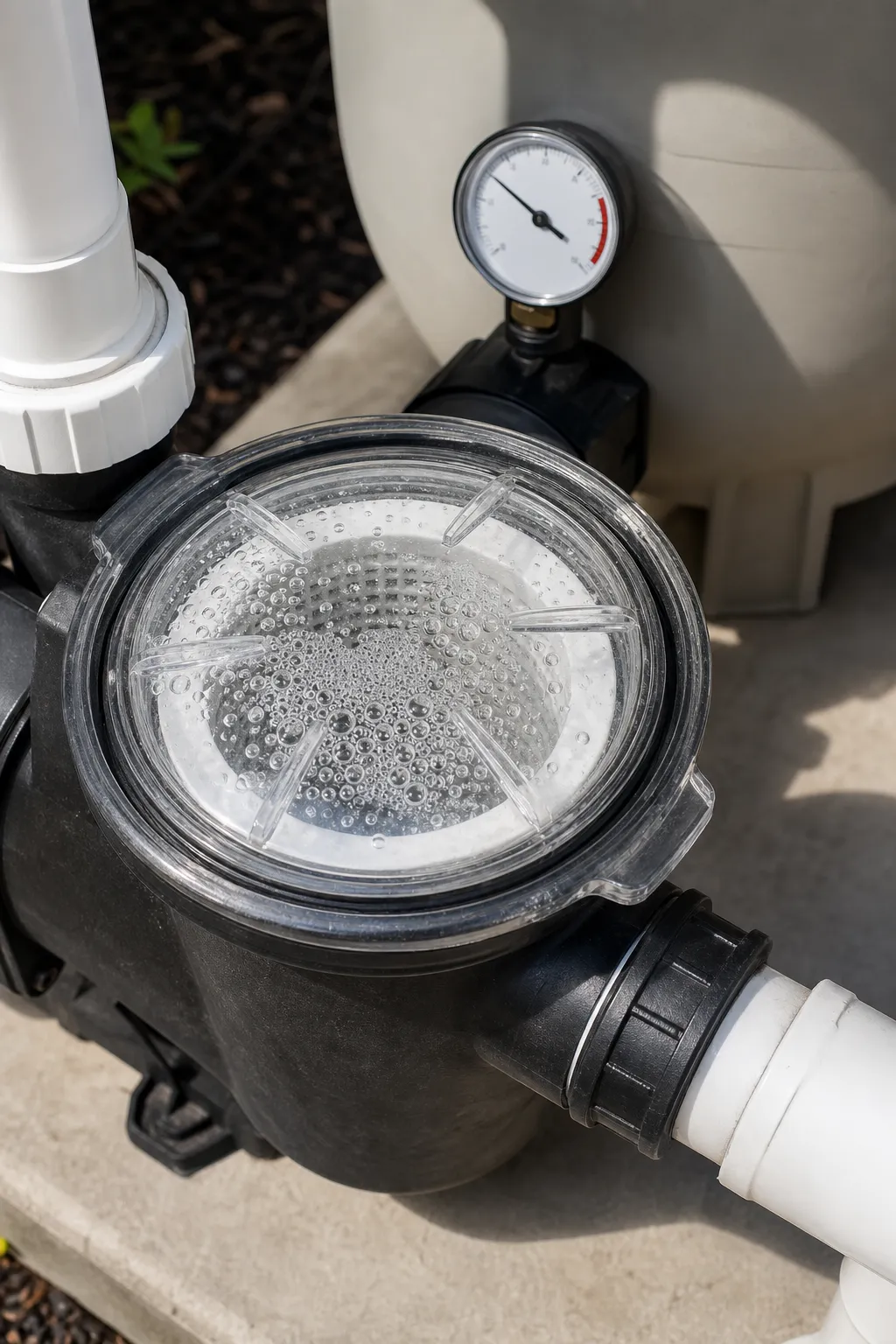
The frustrating part is that the symptoms overlap. A clear pump lid with one small bubble can be normal on a variable-speed pump running low. A pump basket that looks half-empty, return jets that spit air, and a pressure gauge near zero are a different conversation.
Before calling a pool pro, work through these checks in order. Do not start by buying a new pump. Start by proving whether the pump is being starved for water, pulling air, blocked by debris, or fooled by a bad gauge.
The Short Answer
Pool pump bubbles with low pressure usually point to a suction-side problem: the pump is not getting a solid column of water from the pool. The most common causes are low pool water, a stuck skimmer weir, clogged baskets, a leaking pump lid O-ring, loose suction unions, valve-stem air leaks, a clogged impeller, or a blocked suction line.
If the pump will not prime, keeps losing prime, sounds like it is grinding or slurping, or the basket runs mostly air instead of water, shut it off and troubleshoot before letting it run. Running a pump dry can damage seals and shorten motor life.
First, Read The Symptoms Correctly
Low pressure means different things depending on what else is happening. Your filter pressure gauge does not measure suction directly. It measures resistance after the pump, so a low reading often means the pump is not moving enough water into the filter.
| What you see | What it usually suggests | How urgent it is |
|---|---|---|
| One small bubble under the pump lid, steady flow | Often normal, especially at low RPM | Watch it |
| Air bubbles shooting from returns | Likely suction-side air entering before the pump | Check now |
| Pump basket only partly full and flow surges | Air leak, low water, clogged intake, or priming issue | Check now |
| Gauge near zero and weak returns | Pump is not moving enough water or gauge failed | Check now |
| High pressure and weak returns | Dirty filter or return-side restriction | Clean filter/check valves |
| Pump will not prime at all | Air leak, blockage, empty pump pot, or pump failure | Shut down and troubleshoot |
That distinction matters. Some homeowners on pool forums chase phantom suction leaks because a variable-speed pump basket does not look completely full at low speed. Others ignore real return bubbles because the pump still runs. Neither shortcut is reliable.
1. Check Whether The Water Level Is Starving The Skimmer
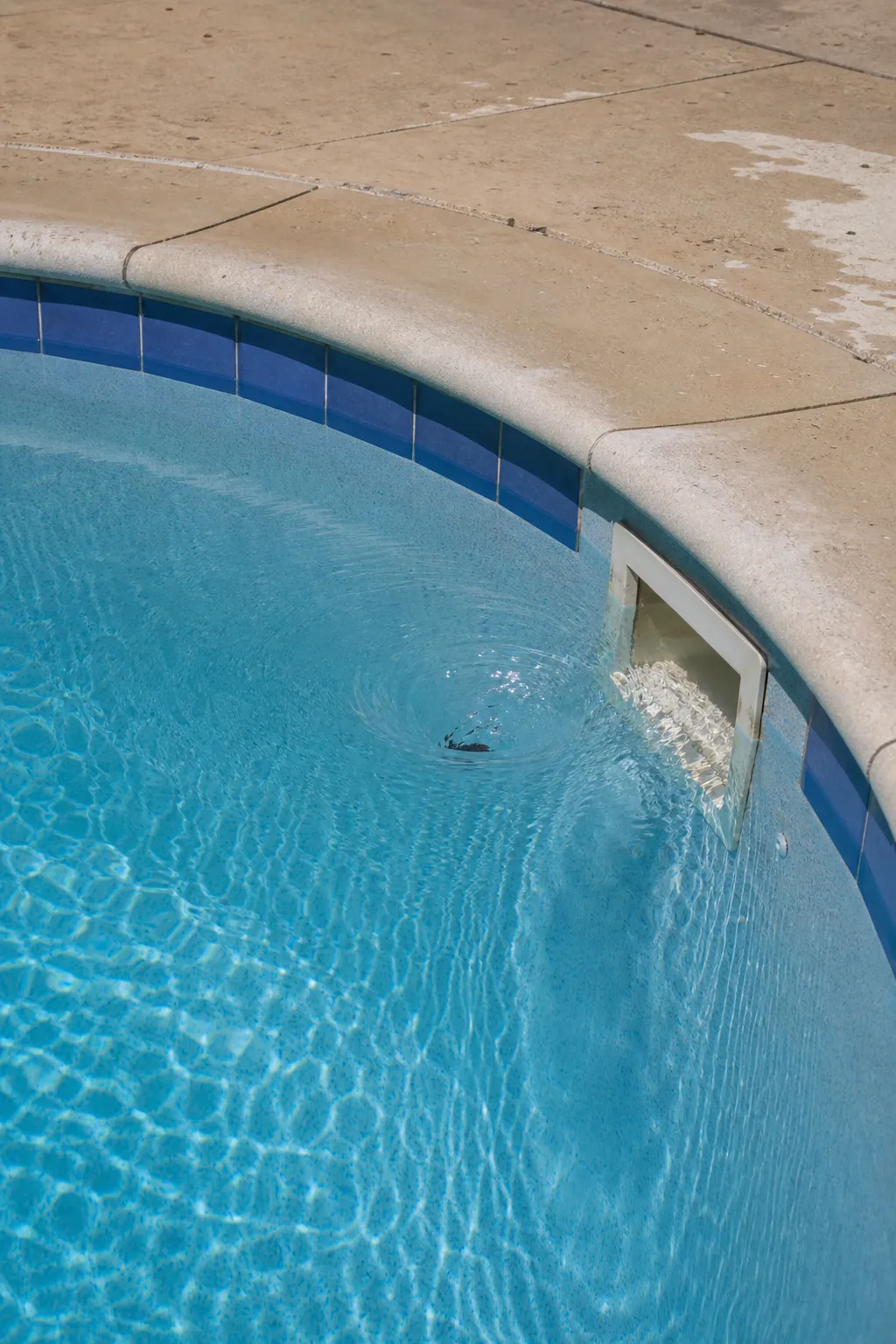
Start at the pool, not the equipment pad. If the water level is below the middle of the skimmer opening, the skimmer can pull air along with water. That air travels to the pump basket, then out through the return jets as bubbles.
Fill the pool until the water sits around the middle of the skimmer mouth. Then run the pump and watch the skimmer. If you see a whirlpool or hear slurping, the pump is still pulling air. A stuck skimmer weir door can do the same thing even when the water level looks acceptable.
This is the cheapest fix on the list, and it is also the easiest one to miss after hot weather, splash-out, vacuuming to waste, a leak, or a long backwash.
2. Empty The Skimmer And Pump Baskets
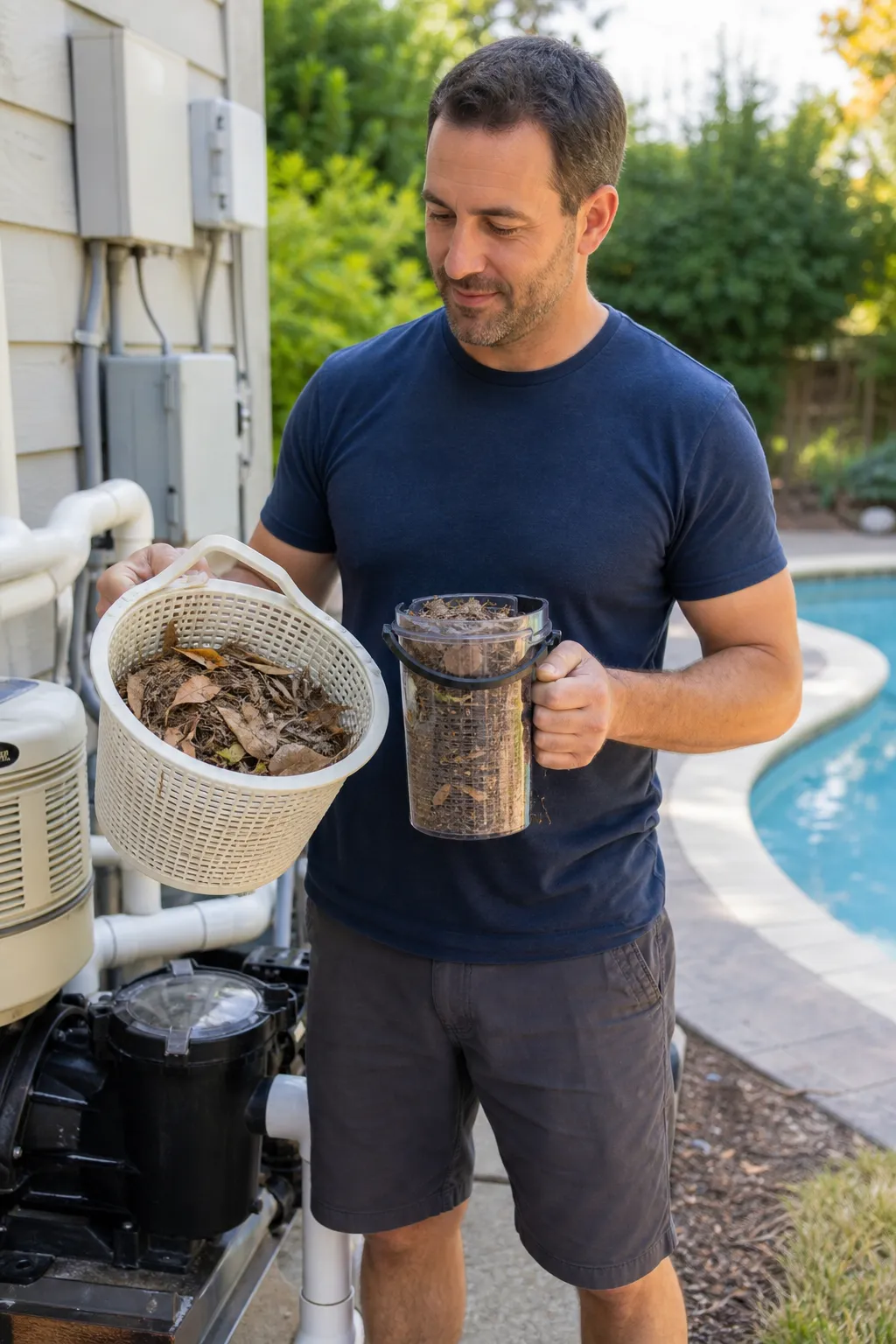
A packed basket can imitate a bigger problem. Leaves, seed pods, toys, hair, and pine needles reduce the water reaching the pump. Less water through the pump means weaker return flow and a lower filter-pressure reading.
- Turn the pump off before opening the pump basket lid.
- Empty every skimmer basket, not just the one closest to the equipment.
- Remove and rinse the pump strainer basket.
- Check that the pump basket is seated correctly before restarting.
- Refill the pump pot with water before putting the lid back on if the pump lost prime.
If pressure and flow improve immediately after cleaning baskets, do not stop there. Mark the clean pressure on your filter gauge or write it down. That baseline is how you tell later whether the filter is dirty, the suction side is starved, or the gauge is lying.
3. Inspect The Pump Lid, O-Ring, And Lid Seat
The pump lid O-ring is one of the most common air-leak points because it has to seal under suction. It can look fine at a glance and still leak because of grit, a flat spot, a twist, a tiny crack, or a lid that is not seated evenly.
Turn off the pump. Remove the lid. Clean the lid, groove, O-ring, and pump housing seat with a damp cloth. Inspect the O-ring for cracks, stretching, flattening, or sticky residue. Apply a thin coat of silicone-based pool lube if the O-ring is still usable. Do not pack it with petroleum grease.
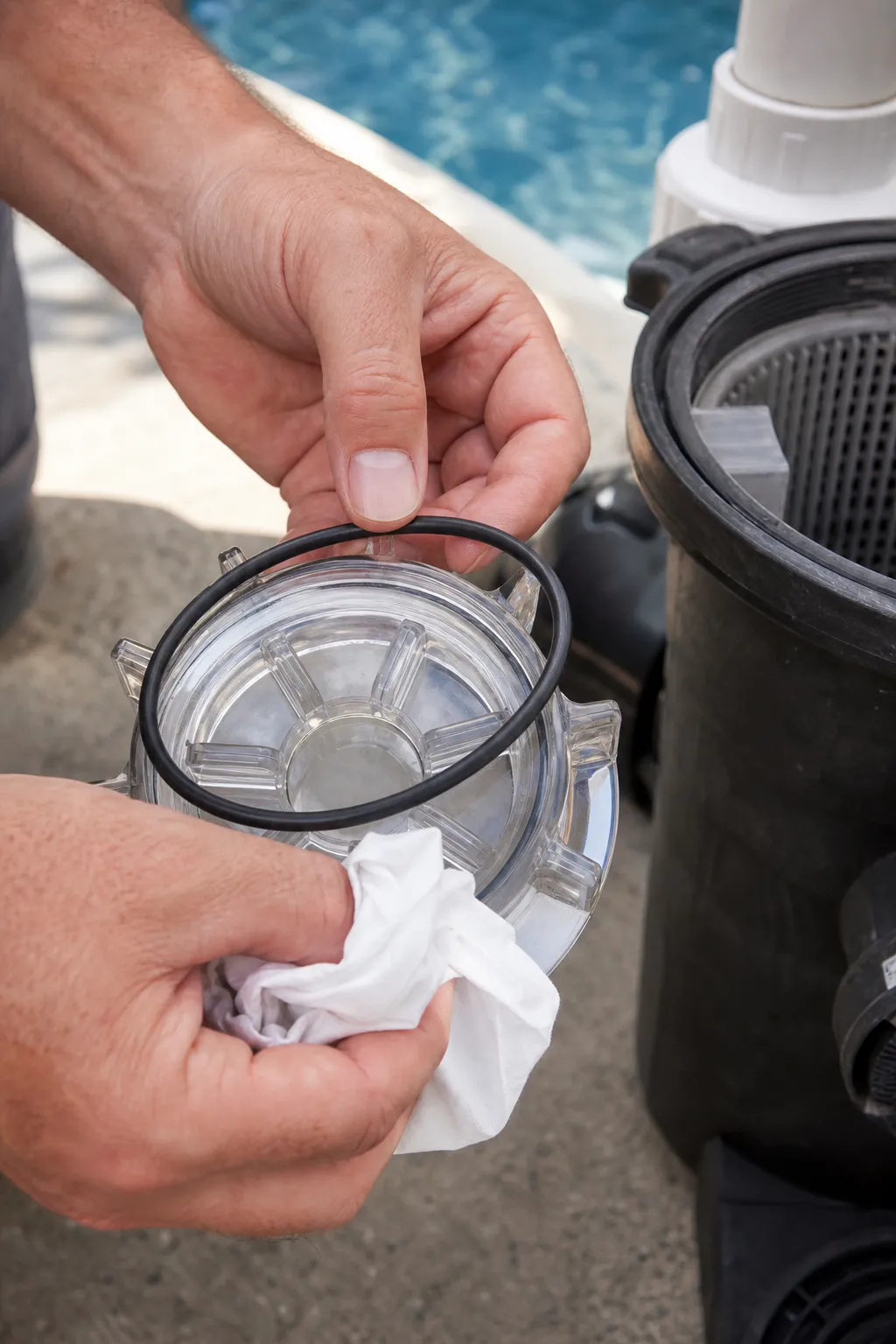
Restart the pump and watch the lid. If the basket fills better, the lid seal was probably part of the problem. If the lid has a visible crack or the O-ring keeps slipping out of place, replace the part rather than overtightening it.
4. Check Drain Plugs, Unions, And Suction Valves
Air leaks before the pump often do not drip water while the pump is running. That confuses people. The suction side is under vacuum, so a tiny opening can pull air in without leaving an obvious wet spot.
Look closely at the pump drain plugs, suction-side unions, threaded fittings, valve lids, and valve stems. These are the pieces between the pool and the front of the pump. A worn valve O-ring or loose union near the pump can create a stream of bubbles even when everything looks dry.
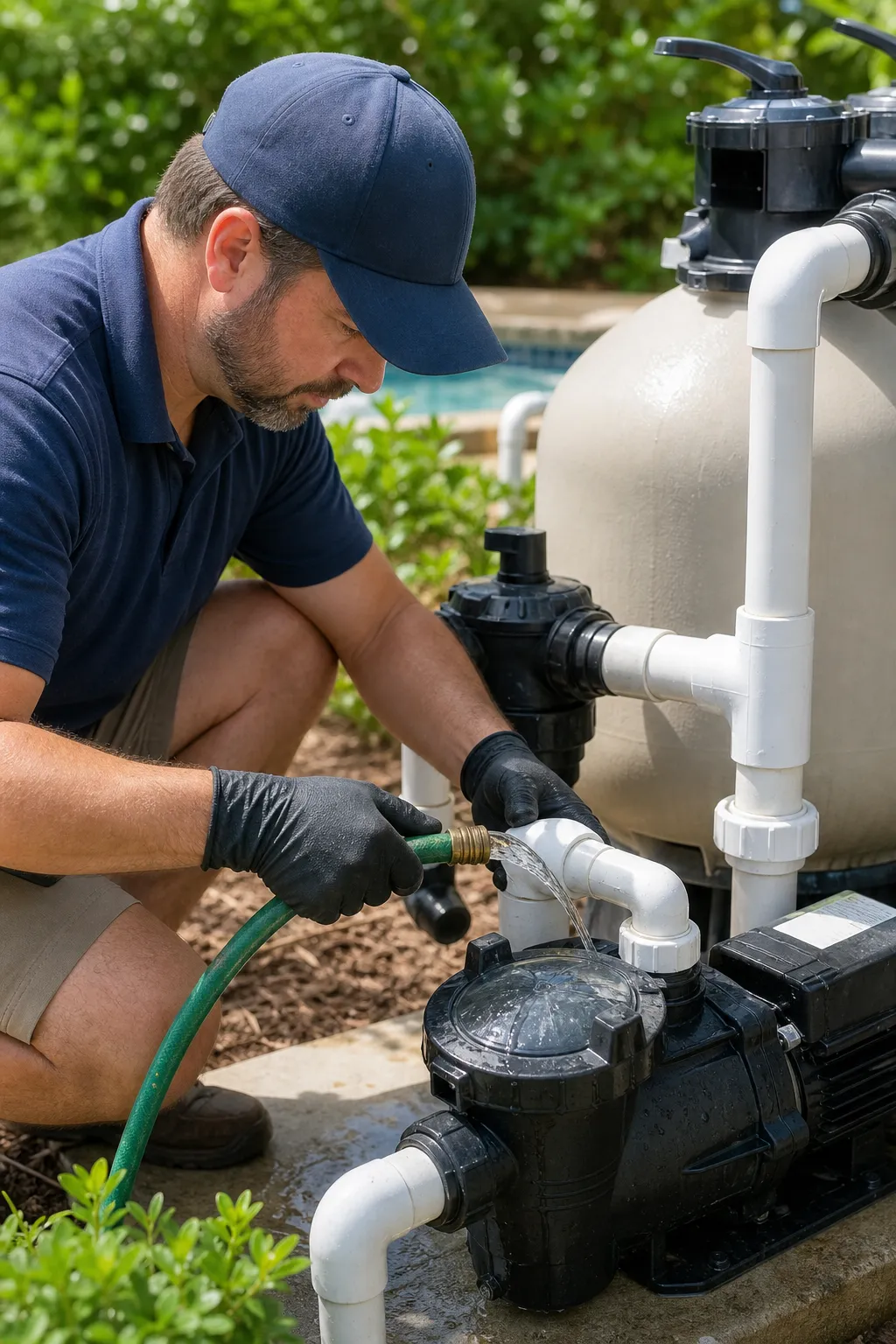
One practical field test is to run a slow stream of water over one suspected joint at a time while the pump is running. If the pump basket suddenly fills more completely or the bubbles change, you have likely found the leak area. Some techs use shaving cream around valve stems and unions because suction can pull the foam inward at the leak point.
Do not loosen fittings while the pump is running. If you need to reseat a union, replace an O-ring, or remove a drain plug, shut the system off first and relieve filter pressure.
5. Isolate Skimmer, Main Drain, And Vacuum Lines
If your plumbing has individual valves for skimmers, main drain, spa suction, or a dedicated vacuum line, use them to narrow the problem. Run one suction source at a time for a short test and watch the pump basket, return bubbles, and pressure gauge.
- Start with the normal valve position and note the symptoms.
- Open only one skimmer line if your system allows it.
- Switch to the other skimmer or main drain line.
- Compare whether the bubbles improve, worsen, or disappear.
- Return the valves to their normal positions after testing.
If one line consistently makes the pump pull air and another line runs clean, the issue may be in that line, valve, skimmer, or fitting. If every suction source behaves the same way, the leak may be closer to the pump lid, pump drain plugs, common suction manifold, or pump itself.
6. Look For A Clogged Impeller
A clogged impeller can produce weak flow and low pressure even when the basket is clean. Small debris slips through baskets and lodges in the impeller vanes. The pump runs, but it cannot move water effectively.
Signs that point toward the impeller include weak returns after all baskets are clean, no obvious air leak, a pump that sounds different than normal, and pressure that stays low after priming. Turn off power at the breaker before reaching into the pump area. Many homeowners can feel debris through the pump basket opening with care, but disassembly is often better left to a technician if access is tight or the pump is unfamiliar.
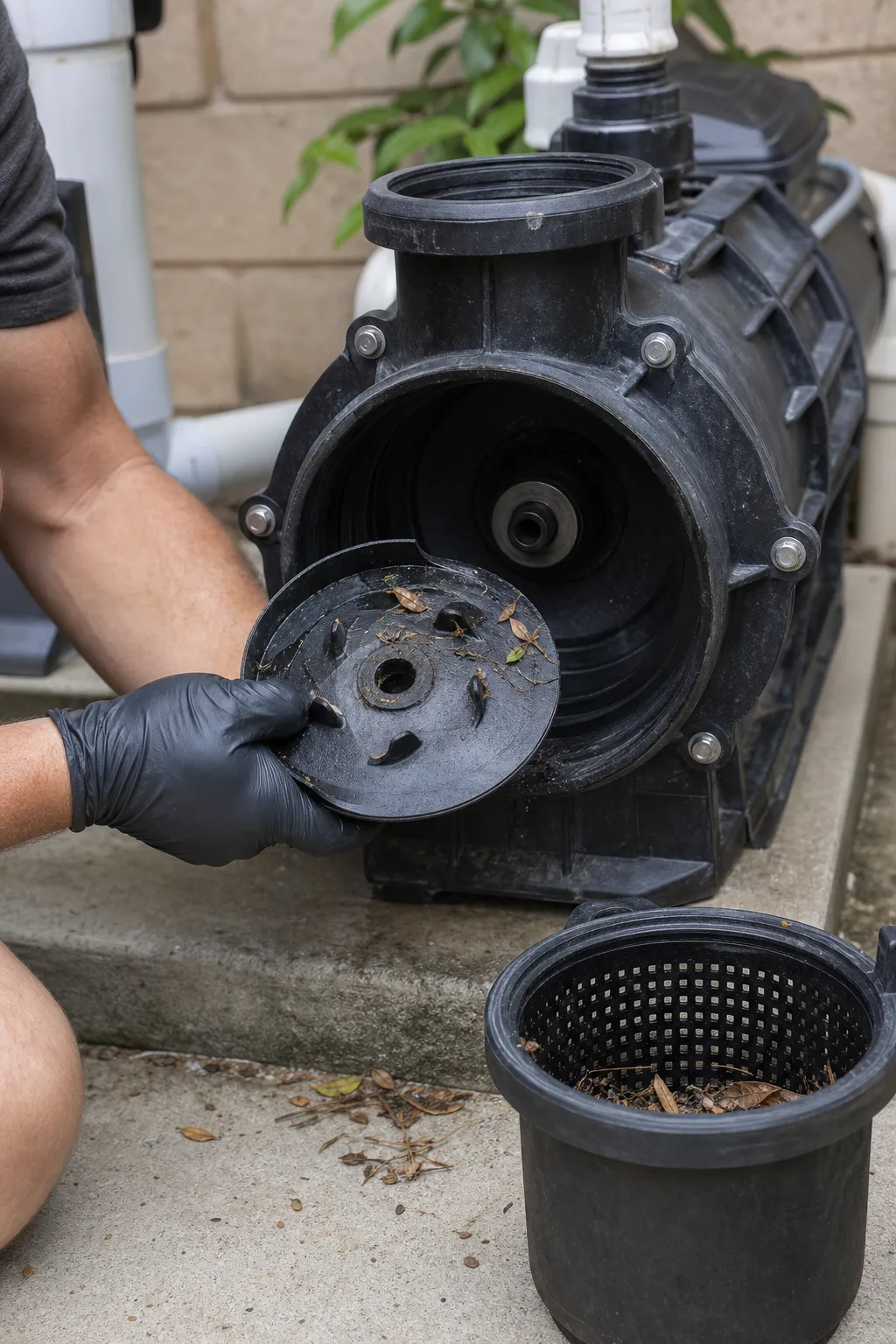
If the impeller is cracked, damaged, or packed with debris that keeps returning, the problem is no longer a simple bubble diagnosis. That is a good point to call a pro, especially if the motor has to be separated from the pump housing.
7. Compare Low Pressure With High Pressure
Low pressure and high pressure point in different directions. Low pressure usually means the pump is not receiving or moving enough water. High pressure usually means the pump is pushing against a restriction after the pump, most often a dirty filter, closed return valve, blocked return line, or clogged heater bypass path.
Check the gauge against your clean-filter baseline. Many pool guides use a rise of about 8 to 10 PSI above clean pressure as a practical signal to clean the filter. But if the gauge is low, do not assume the filter is clean. A dirty filter can sometimes create confusing flow behavior, especially on variable-speed systems, and a failed gauge can mislead the whole diagnosis.
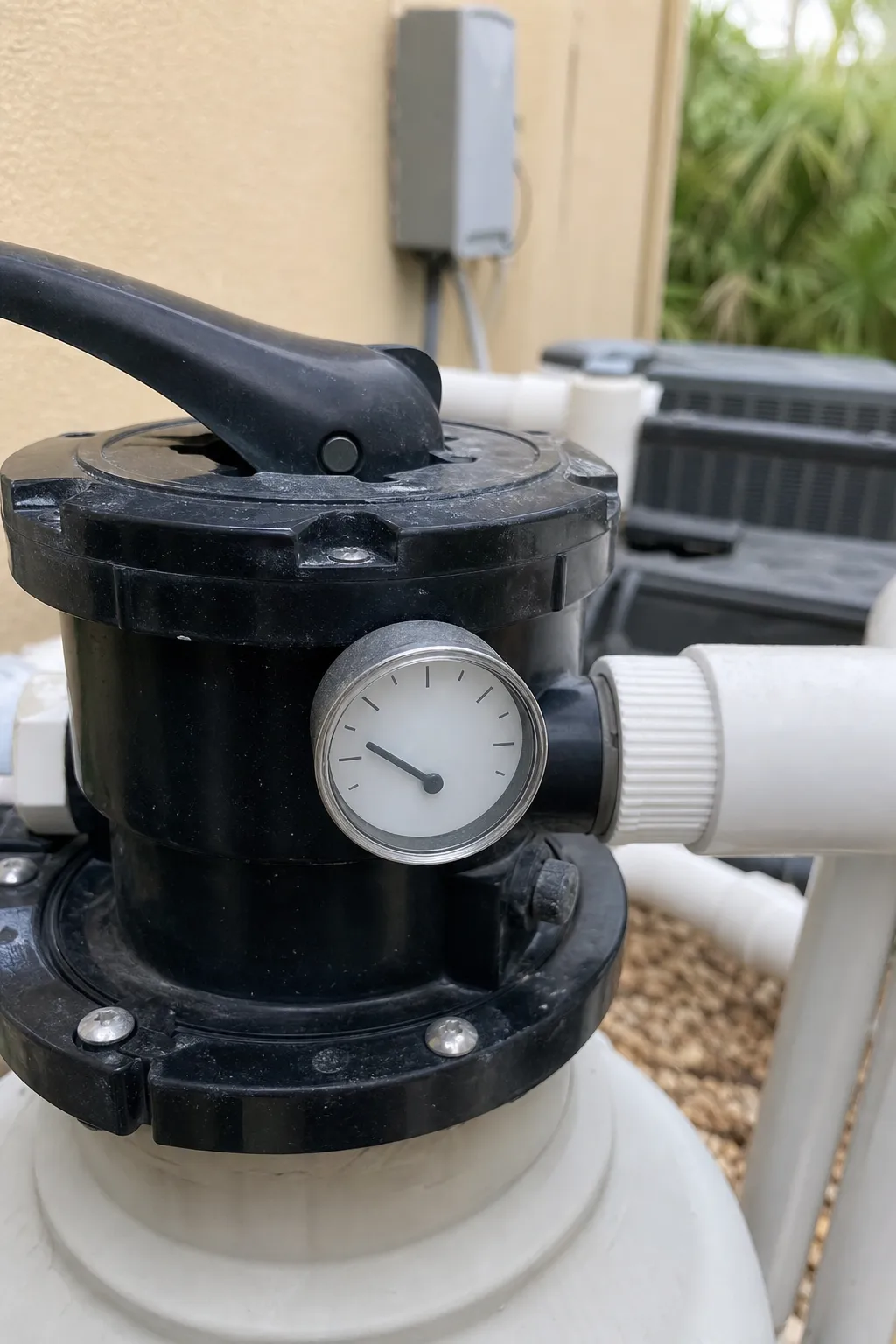
If the return flow feels strong but the gauge reads zero, tap the gauge gently and consider replacing it. Pressure gauges are cheap compared with chasing the wrong repair.
8. Account For Variable-Speed Pumps And Salt Systems
Variable-speed pumps make this issue harder to read. At low RPM, some pump baskets do not look as full as they did with an old single-speed pump. A small stable air pocket under the lid may not be a problem if the pump stays primed, flow is steady, and bubbles do not stream from the return jets.
Salt chlorine generators can also create tiny bubbles at the returns while they are producing chlorine because electrolysis produces gas byproducts in the cell. The useful test is simple: raise the pump speed and temporarily turn the salt cell output off if your system allows it. If the return bubbles disappear only when the cell is off, you may be seeing normal salt-cell bubbles rather than a suction leak.
Do not use that explanation to ignore a pump basket that keeps filling with air. Salt-cell bubbles normally show up downstream at the returns. A pump that is losing prime still needs a suction-side diagnosis.
9. Know When To Stop And Call A Pro
The goal is not to become a pool technician in one afternoon. The goal is to avoid paying for a service call before checking the obvious, and also to avoid burning up equipment because you kept testing after the pump was clearly unhappy.
- Call a pro if the pump will not prime after the pot is filled with water.
- Call if the pump repeatedly loses prime after lid, basket, water level, and valve checks.
- Call if one underground suction line seems to be pulling air.
- Call if the pump runs hot, trips breakers, squeals, or sounds like gravel.
- Call if you suspect a cracked pump housing, damaged impeller, bad shaft seal, or motor issue.
- Call if you are not comfortable opening equipment or shutting off power safely.
Pentair’s IntelliFlo troubleshooting chart lists air in suction, not enough water, a clogged pump strainer basket, a defective strainer gasket, suction-line air pockets, and a clogged impeller among common pump and flow problems. Leak Wizard’s pump-priming guide points homeowners toward the same practical order of operations: water level, baskets, pump lid O-ring, suction fittings, valves, restrictions, and only then more invasive repairs.
A Simple 10-Minute Test Sequence
If you want the fastest path, use this sequence before calling for service:
- Confirm the water is at mid-skimmer and the weir door moves freely.
- Empty skimmer baskets and the pump basket.
- Prime the pump pot with water if it lost prime.
- Clean and lube the pump lid O-ring with silicone pool lube.
- Check pump drain plugs and suction-side unions.
- Run water over the lid, unions, and suction valves one spot at a time.
- Isolate suction lines if your valves allow it.
- Compare filter pressure with your normal clean pressure.
- Raise a variable-speed pump temporarily and watch whether the bubble clears.
- Stop if the pump cannot hold prime or the basket runs mostly air.
The important clue is change. If a test changes the bubble, changes the pump sound, or changes the pressure, you have narrowed the problem. That is useful even if you still call a pro, because you can explain what you tested instead of approving a blind repair.
Pool pump bubbles and low pressure are not one problem. They are a symptom cluster. Treat them like a decision tree, and the repair conversation gets much easier: water first, baskets second, air seals third, plumbing isolation fourth, pump internals last.