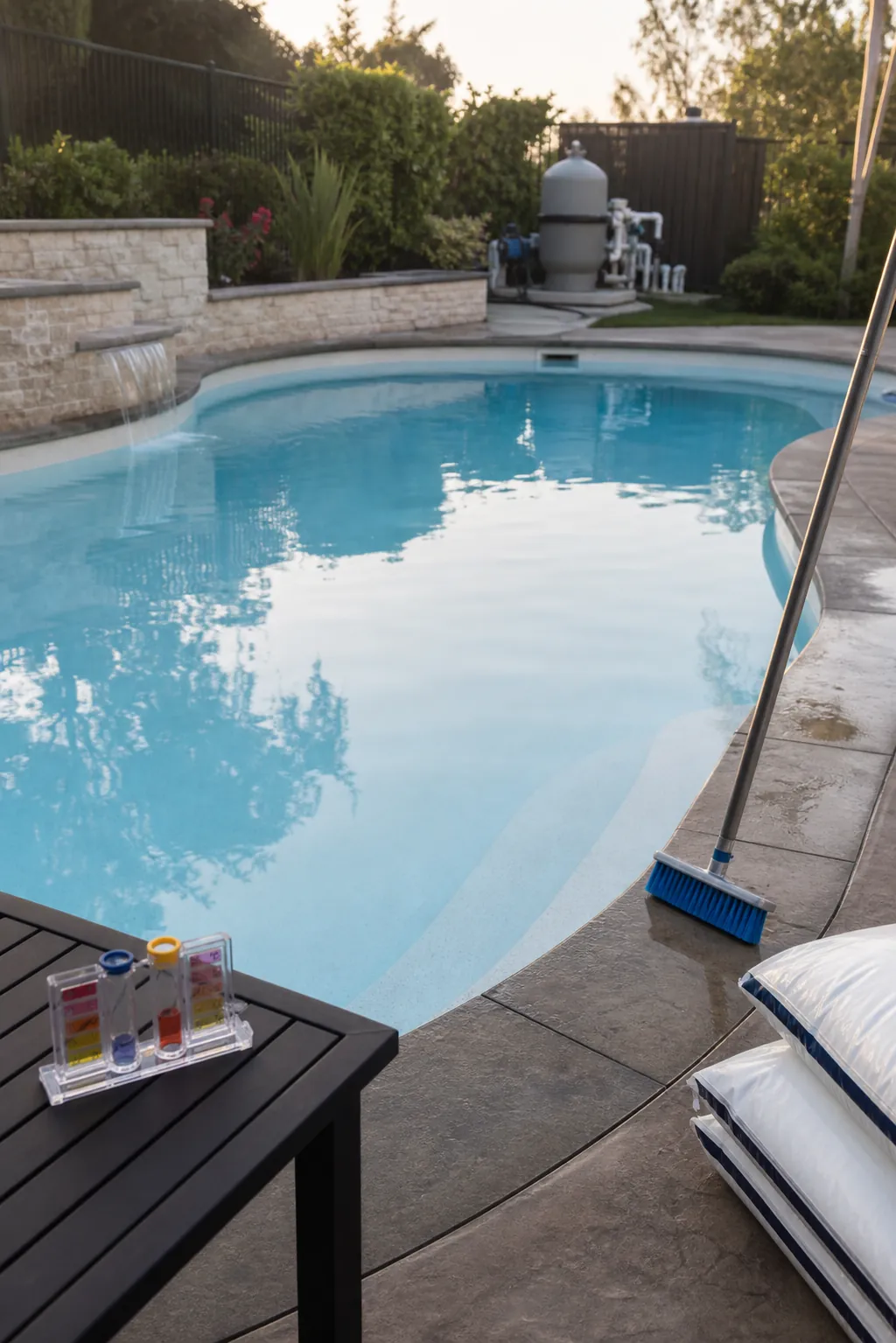
Your builder is not necessarily being careless when they say, “No salt yet.” On a new plaster, quartz, or pebble-finish pool, that instruction is usually about protecting a surface that is still curing. But when the message becomes “no salt or chlorine for 30 days,” owners have a right to slow down and ask for specifics.
The important distinction is simple: salt and a salt chlorine generator are usually delayed during startup, but that does not automatically mean the pool should sit with zero sanitizer for the entire first month. Many startup procedures call for no chlorine during the first 48 hours, then carefully controlled chlorine after that while salt waits until the plaster has cured.
Why The First Month Is Different
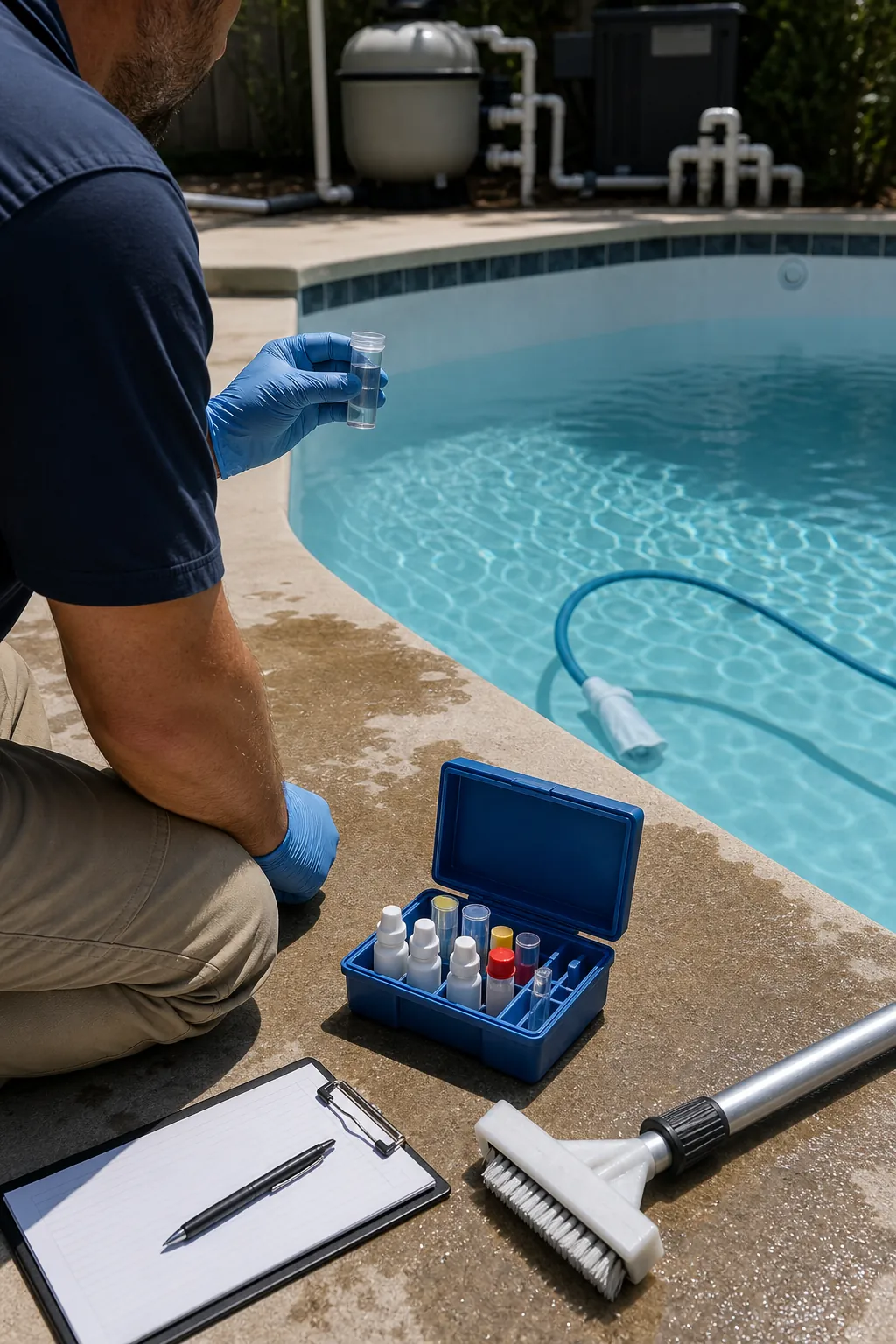
A newly finished pool is hard enough to hold water, but the surface is still chemically active. Fresh cement-based finishes hydrate, shed plaster dust, and push water balance around during the first 28 to 30 days. This is why the startup period feels stricter than normal pool care.
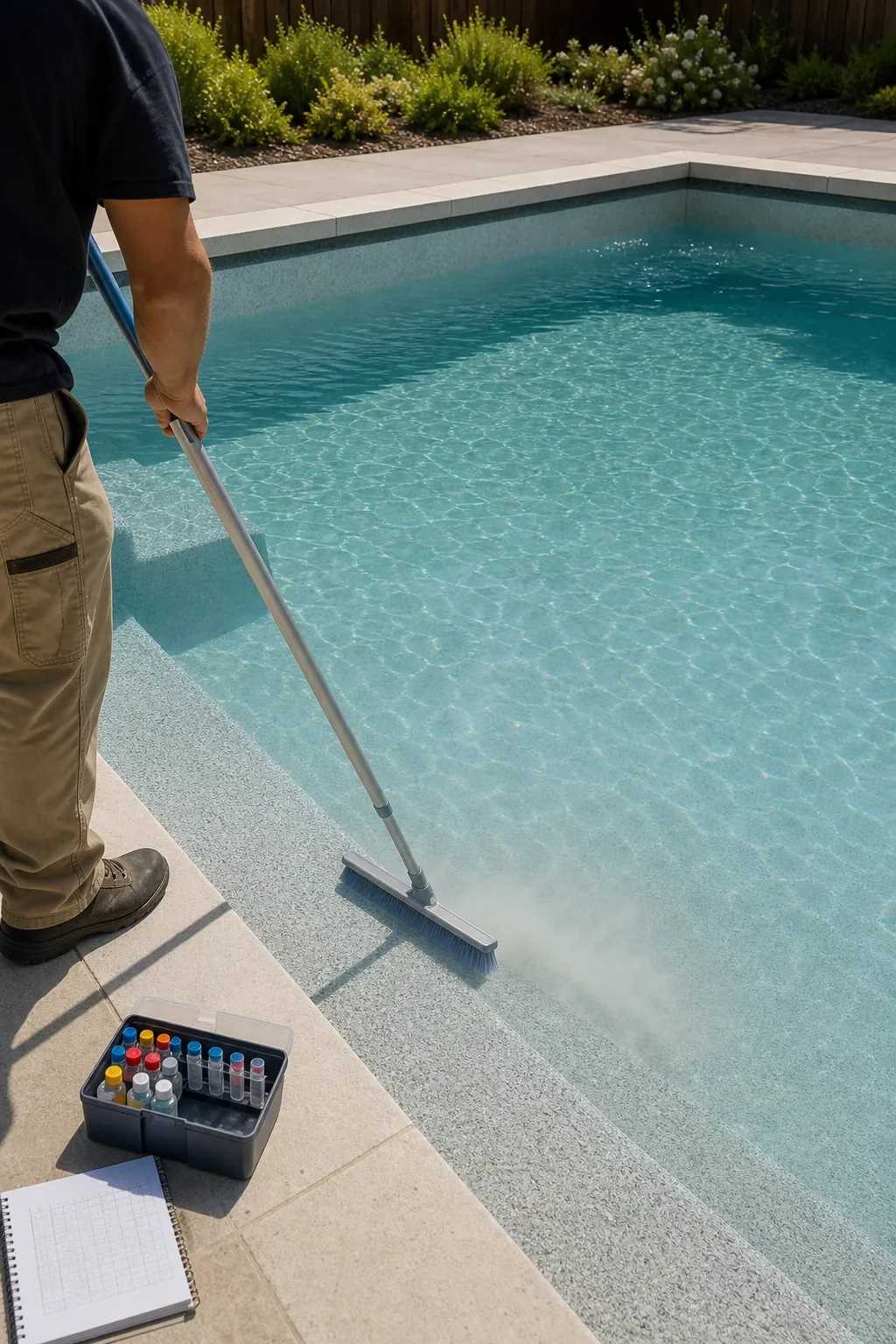
The National Plasterers Council startup card treats this period as a step-by-step process: test fill water, adjust pH, alkalinity, and calcium hardness, brush the finish, keep filtration running, and avoid certain equipment until plaster dust is gone. NPT’s startup guidance describes the same first 28 days as a dedicated process for protecting the finish and maintaining warranty-sensitive care.
That is the frame your builder is usually working from. They are trying to prevent scale, staining, discoloration, etched plaster, salt-related surface damage, and equipment problems before the finish has stabilized. The frustrating part is that homeowners often hear a short rule without the chemistry behind it.
Why Builders Delay Salt
Salt is not just a comfort feature. In a saltwater pool, salt is the raw material your salt chlorine generator uses to produce chlorine. The problem is timing: new plaster is still curing, pH is often moving quickly, plaster dust may still be circulating, and the surface is vulnerable to roughness or discoloration if chemistry gets away from the startup plan.
The common industry answer is to wait until the startup window has passed. The NPC card says not to add salt within the first 30 days for salt water chlorine generator pools. NPT says no salt should be added for 28 days and notes that waiting up to 6 weeks can be beneficial for salt-water generators. Pentair’s IntelliChlor manual is even more direct for newly constructed or resurfaced plaster pools: wait at least one month before adding salt and operating the salt chlorine generator.
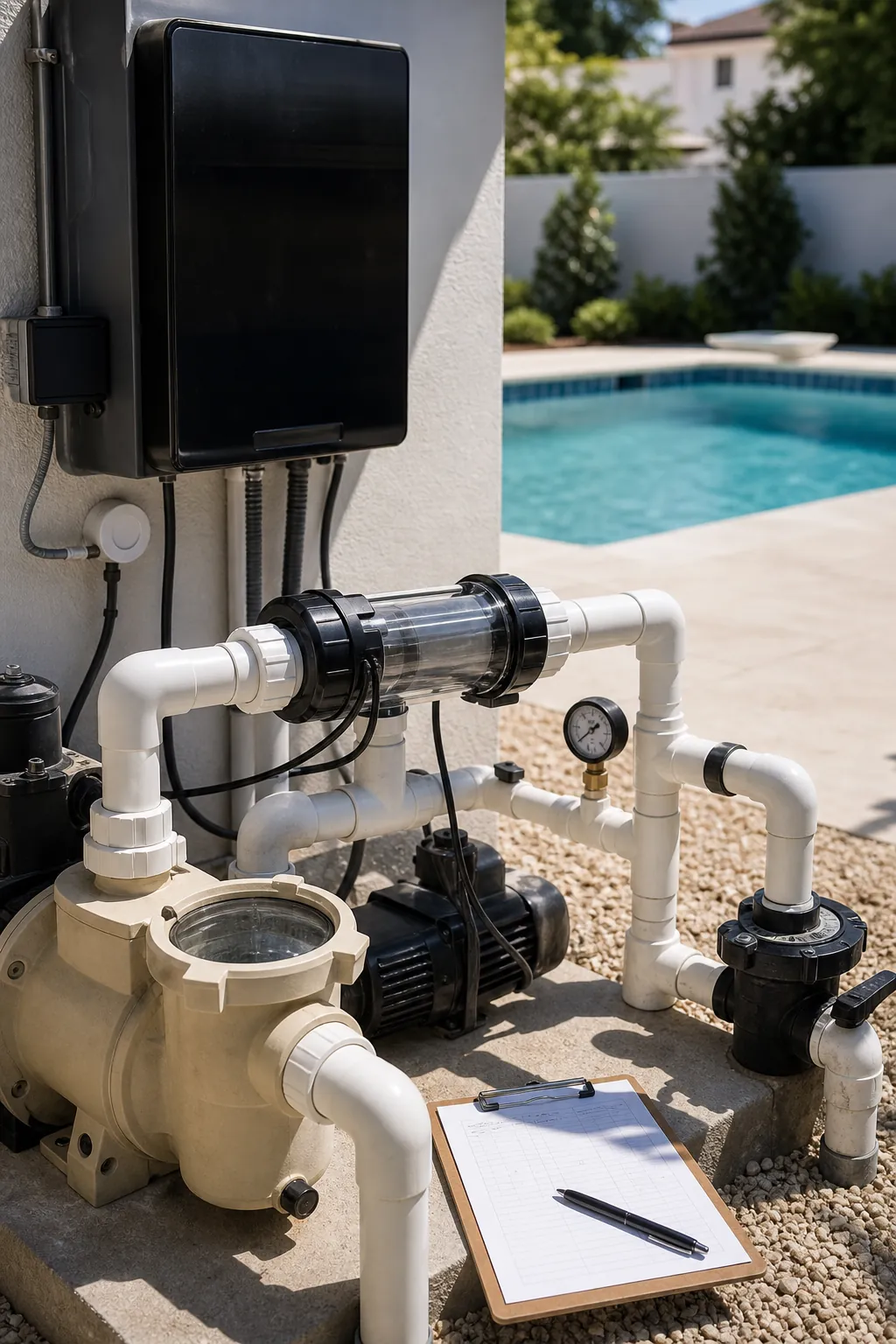
So when a builder says, “No salt yet,” the safest interpretation is usually: do not dump salt in the pool, do not turn on the salt cell, and do not treat the pool as a finished saltwater system until the surface startup is complete. That part is normal.
Why Chlorine Is A Different Question
Chlorine gets confused with salt because a salt pool eventually makes its own chlorine. But during startup, the salt cell is usually off, which means any chlorine has to come from another source if the pool is going to be sanitized.
The NPC startup card says do not add chlorine for 48 hours. Then on Day 3, it calls for pre-diluted chlorine or liquid chlorine to reach a 1.5 to 3.0 ppm level, while still warning saltwater pools not to add salt in the first 30 days. NPT’s version is similar: no chlorine for 48 hours, then pre-diluted chlorine may be added on the third day to reach 1.5 to 3 ppm, with no salt for 28 days.
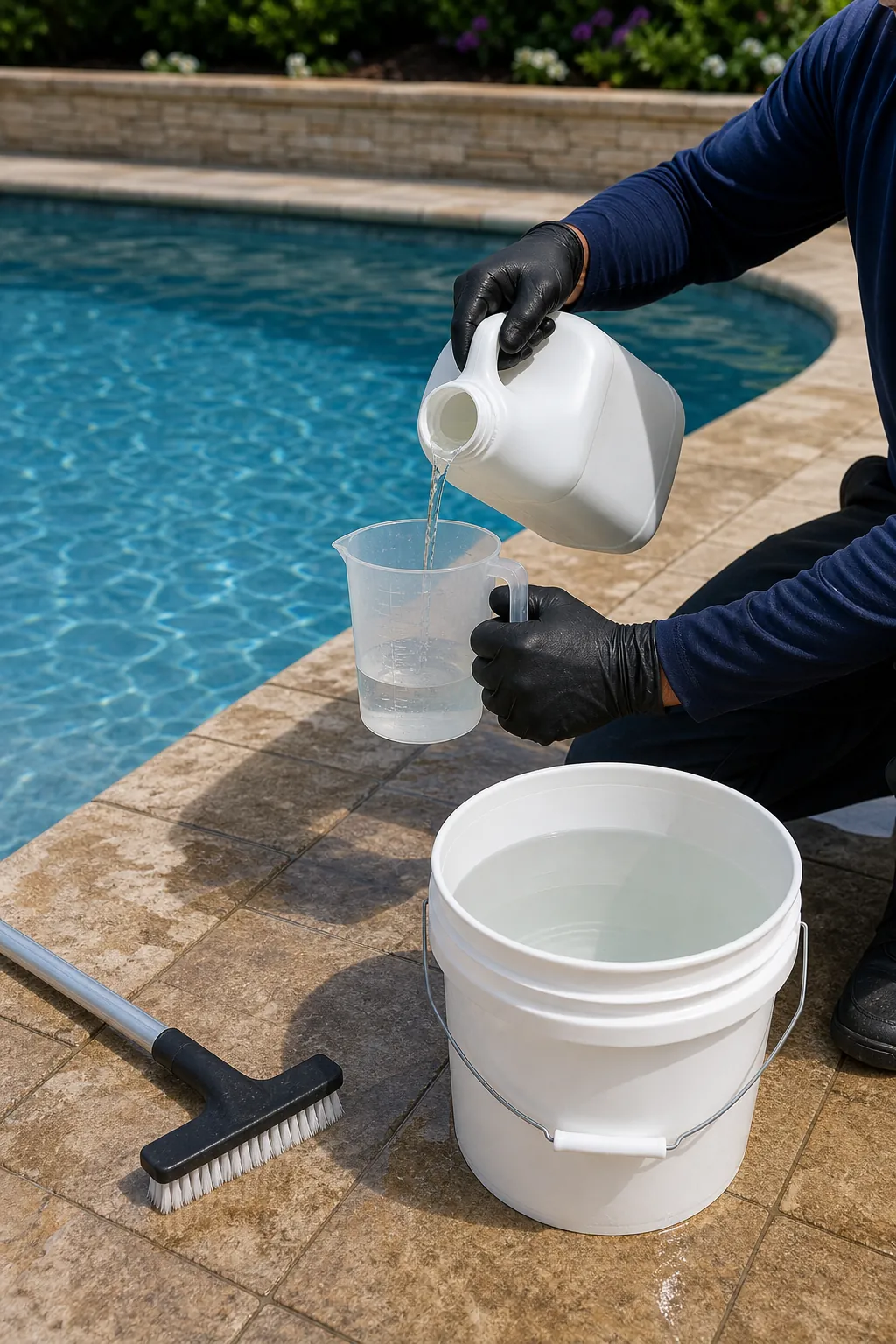
This is where the homeowner’s concern is valid. “No chlorine for the first 48 hours” is not the same as “zero free chlorine for 30 days.” A clear pool can still have no sanitizer reserve. Warm weather, sunlight, rain, construction debris, and early bather load can all increase chlorine demand. If the builder owns the startup and warranty, ask them what sanitizer target they are maintaining after the initial no-chlorine window.
A Practical Startup Timeline
Every finish manufacturer and builder can have specific instructions, so your written warranty documents matter. Still, this is the pattern many owners should expect for a new plaster salt pool.
| Timing | What usually matters most | What to avoid |
|---|---|---|
| Fill day | Fill without stopping, protect the new surface, start circulation when full, test fill water. | People, pets, stop-and-start filling, outside water runoff, heater use. |
| Days 1-2 | Balance pH, alkalinity, and calcium hardness as directed. Brush thoroughly. Keep filtration running. | Chlorine during the first 48 hours if the startup guide says to wait. Wheeled cleaners. Heater use with plaster dust. |
| Day 3 | Carefully add pre-diluted or liquid chlorine if the startup plan calls for it. Keep brushing. | Salt, salt cell operation, shock treatments, dry chemical piles on the surface. |
| Days 4-28 | Daily testing, pH control, brushing, calcium and CYA adjustments as directed, filter cleaning as needed. | Salt, robotic or wheeled cleaners too early, chemical feeders not approved for startup, neglecting pH. |
| After 28-30 days | Confirm the finish is ready, add salt only if allowed, dissolve and verify salinity, then start tuning the salt cell. | Turning on the salt cell before salt is dissolved and verified. Guessing at output without free chlorine testing. |
What Pool Owners Are Really Worried About
Reddit threads on this topic show the same anxiety again and again. Owners test their new salt pool, see 0 free chlorine, and then wonder whether they should intervene or stay out of the builder’s startup process. One recent r/pools question described a South Florida plaster pool where the owner measured 0 free chlorine and was told chlorine would not be introduced until salt was added and the salt cell turned on after startup. Another owner asked whether a startup technician should add salt at 14 days, worried about plaster strength and long-term finish damage.
The pain point is not just chemistry. It is responsibility. Owners are stuck between two bad-feeling choices: touch the water and risk a warranty argument, or do nothing and worry about algae, staining, or unsafe water. That is why the right next move is not sneaking chemicals into the pool at night. It is getting the builder’s startup target in writing.
Questions To Ask Your Builder
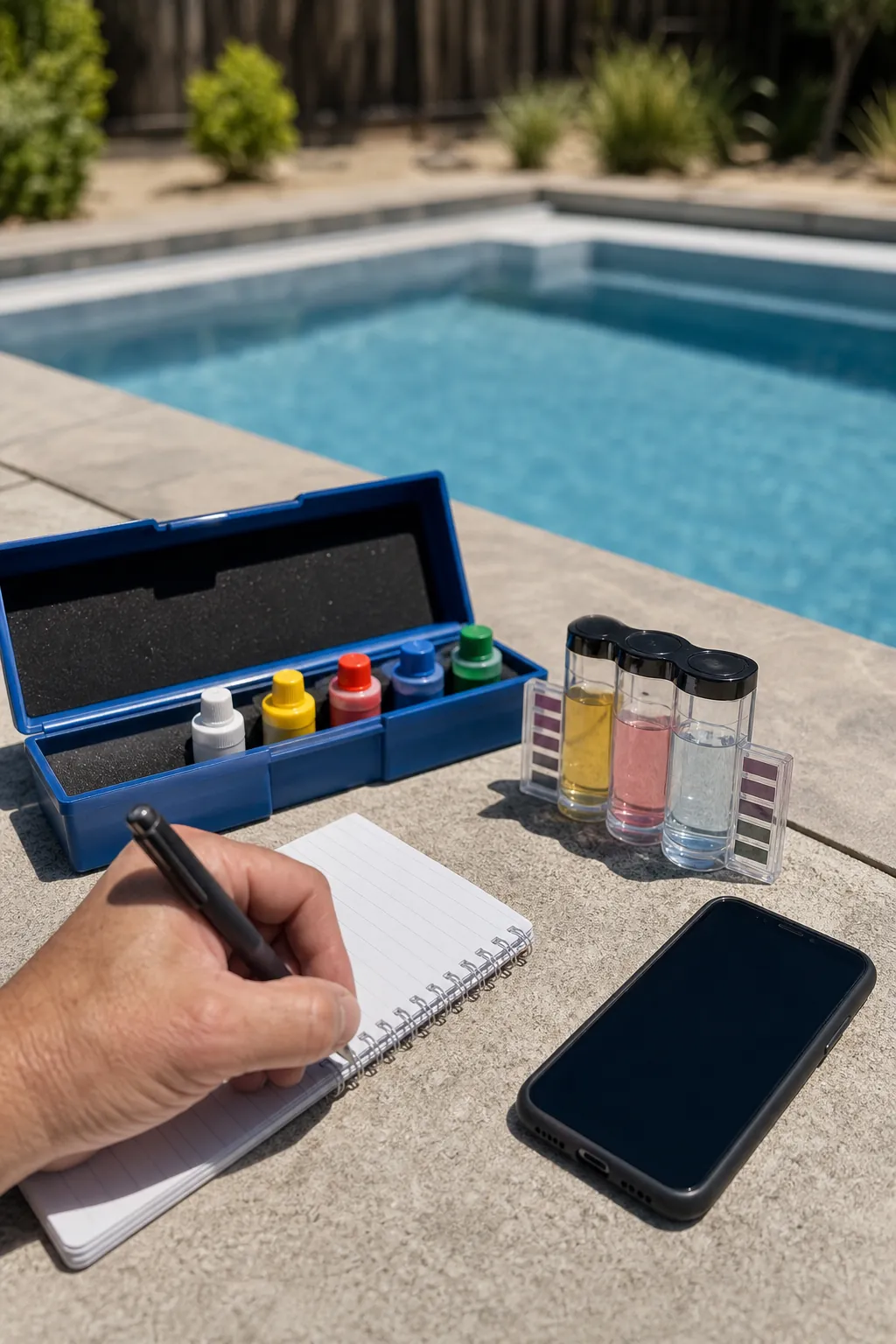
If your builder says “no salt or chlorine yet,” ask calm, specific questions. You are not trying to win an argument. You are trying to learn the exact startup protocol they are following.
- When you say no chlorine, do you mean the first 48 hours only, or no sanitizer for the full 28 to 30 days?
- Which startup guide are you following: NPC, the finish manufacturer’s guide, your company protocol, or something else?
- What free chlorine target are you maintaining after Day 3?
- Who is testing and logging pH, alkalinity, calcium hardness, CYA, and chlorine each day?
- Which chlorine source will be used before the salt cell is activated?
- When exactly will salt be added, and what salt ppm does my cell manufacturer require?
- If I measure 0 free chlorine, what do you want me to do so the warranty stays intact?
The last question is the most important. If the builder is responsible for startup, let them own the answer. Save texts, emails, test logs, and service visit notes. A startup log is not overkill. It is protection for the finish, the equipment, and the homeowner.
What Not To Do During Startup
The first month is not the time for improvising. Avoid these common mistakes unless your builder or finish manufacturer has told you otherwise in writing.
- Do not add salt early just because the bags are sitting by the equipment pad.
- Do not turn on the salt cell early and assume the automation will protect the finish.
- Do not shock the pool in the first 30 days unless your startup professional specifically directs it.
- Do not let dry chemicals sit on fresh plaster. Pre-dilution and brushing matter because concentrated chemicals can discolor or damage the surface.
- Do not run a heater while plaster dust remains. Startup guides commonly delay heater use until the water is balanced and clear of dust.
- Do not use wheeled cleaners or robots too early. Fresh plaster can mark, and dust can clog equipment.
- Do not swim just because the water looks clear. Wait until the pool is balanced and sanitized.
When Salt Finally Goes In
After the startup period, the pool does not become “set and forget.” Salt has to be added correctly, dissolved, verified, and then matched to the salt cell’s operating range. Pentair, for example, lists 3,600 ppm as the recommended salt level for IntelliChlor operation and says to circulate for 24 hours after adding salt before verifying the reading and powering the unit.
Once the salt system is running, you still test free chlorine. A salt cell produces chlorine; it does not magically know whether your pool has enough free chlorine. Pump runtime, output percentage, sunlight, CYA level, water temperature, pool cover use, rain, and swimmer load all change how much chlorine the pool needs.
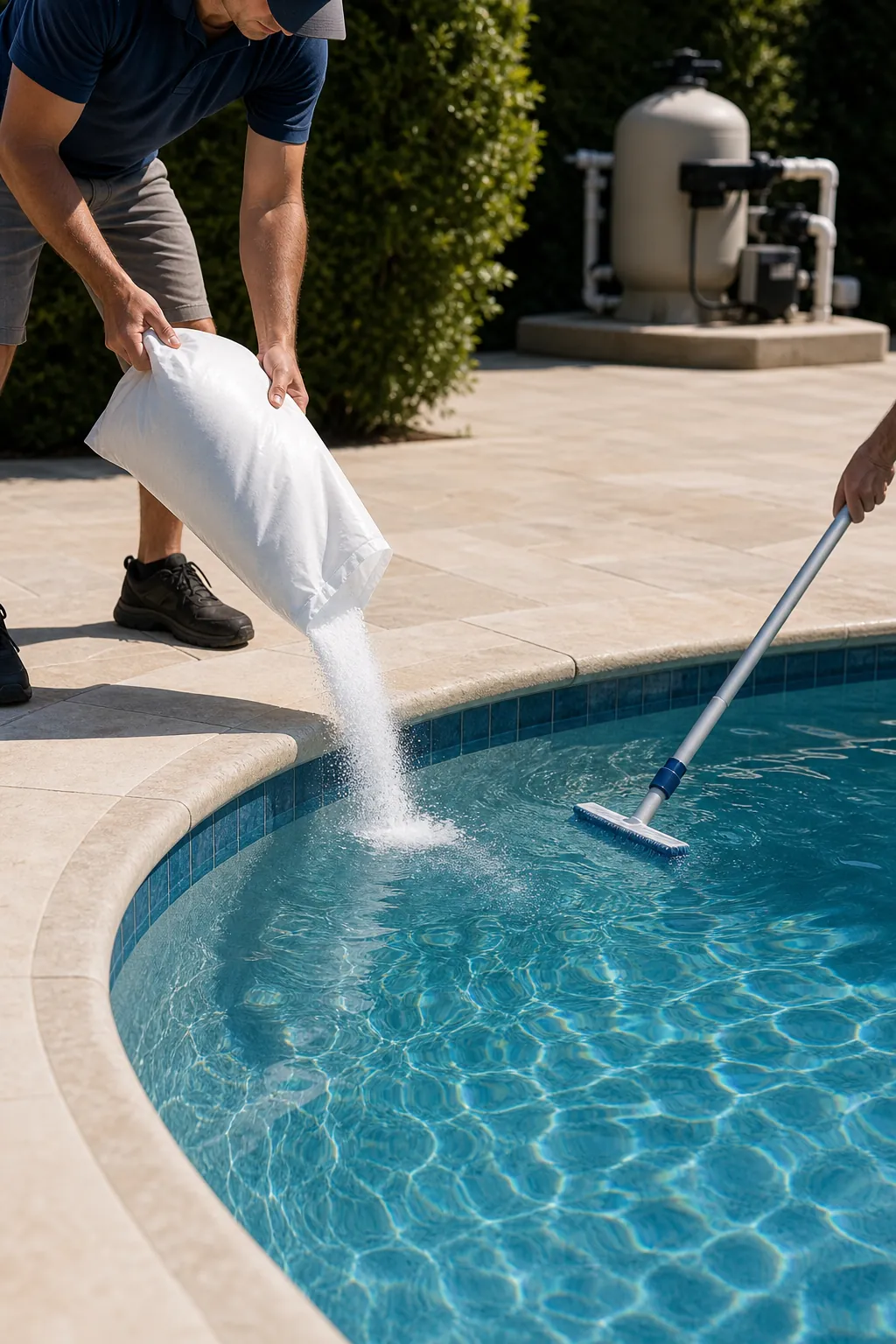
The better handoff looks like this: the builder confirms the finish is ready, the water is balanced, salt is added around the pool perimeter, the salt dissolves fully, salinity is checked with a reliable method, the salt cell is powered on, and output is adjusted over the next several days based on real free chlorine readings.
The Bottom Line
Your builder is probably right to delay salt. New plaster needs a careful startup, and salt chlorine generators are commonly kept off until the surface has had time to cure. That protects the finish and keeps the warranty conversation cleaner.
But “no salt” and “no chlorine” are not the same instruction. A short no-chlorine window at the beginning of startup is common. A full month with no sanitizer is a much bigger claim and should be clarified. Ask what guide is being followed, what free chlorine level will be maintained after the first couple of days, and what you should do if your own test kit reads 0.
A new salt pool is still a chlorine pool. It just needs to become one in the right order: surface first, balanced water second, controlled sanitizer third, salt system last.