If your pool is still cloudy after shock, floc, and clarifier, the problem usually is not that you need a fourth product. It means one of the basic jobs is still unfinished: the chlorine has not killed everything, the water balance is blocking the cleanup, the filter is not removing the fine particles, or the floc/clarifier process was used in the wrong order.
The frustrating part is that the water can look worse right after treatment. Shock can turn algae into a white or gray haze. Floc can settle debris only if the water is still long enough. Clarifier can help the filter catch fine particles, but it cannot fix weak chlorine, high pH, high stabilizer, or a dirty filter. That is why adding more of everything often makes the pool stay milky longer.
The Short Answer
A cloudy pool after shock, floc, and clarifier usually comes down to one of these causes:
- Algae is still alive. The shock dose was not high enough, was not held long enough, or was weakened by high cyanuric acid.
- The filter is overloaded. Shock may have killed the algae, but the dead algae still has to be filtered out.
- pH, alkalinity, or calcium hardness is too high. Scale and calcium clouding can look like a chemical failure.
- Floc was not vacuumed to waste. If settled floc goes through the filter, it can break apart and return to the pool.
- Too many products were layered together. Clarifier, floc, algaecide, and repeated shock can interfere with the cleanup and create more suspended solids.
The fix is to stop guessing and diagnose in the right order: test the water, confirm whether algae is still consuming chlorine, correct the balance, run the filter continuously, and only then use clarifier or floc if the water still needs help.
First, Stop Adding More Clarifier
Clarifier is not a cleaner by itself. It makes tiny particles clump together so the filter can catch them. If the filter is dirty, undersized, bypassing water, or running only a few hours per day, clarifier has nowhere useful to send the debris.
Flocculant works differently. It is meant to drag particles to the floor so you can vacuum them out of the pool. If you add floc, let it settle, then vacuum through the normal filter setting, much of that material can come right back. For most sand and DE systems, floc cleanup usually means vacuuming to waste, slowly, with the pump set correctly for your equipment.
Shock is also not magic. It oxidizes contaminants and kills algae when the free chlorine level is strong enough for the pool’s stabilizer level. If free chlorine falls quickly overnight, the pool is still fighting something. In that case, more clarifier will only hide the real problem for another day.
Run This Diagnosis in Order
1. Test Free Chlorine, Combined Chlorine, pH, CYA, Alkalinity, and Calcium
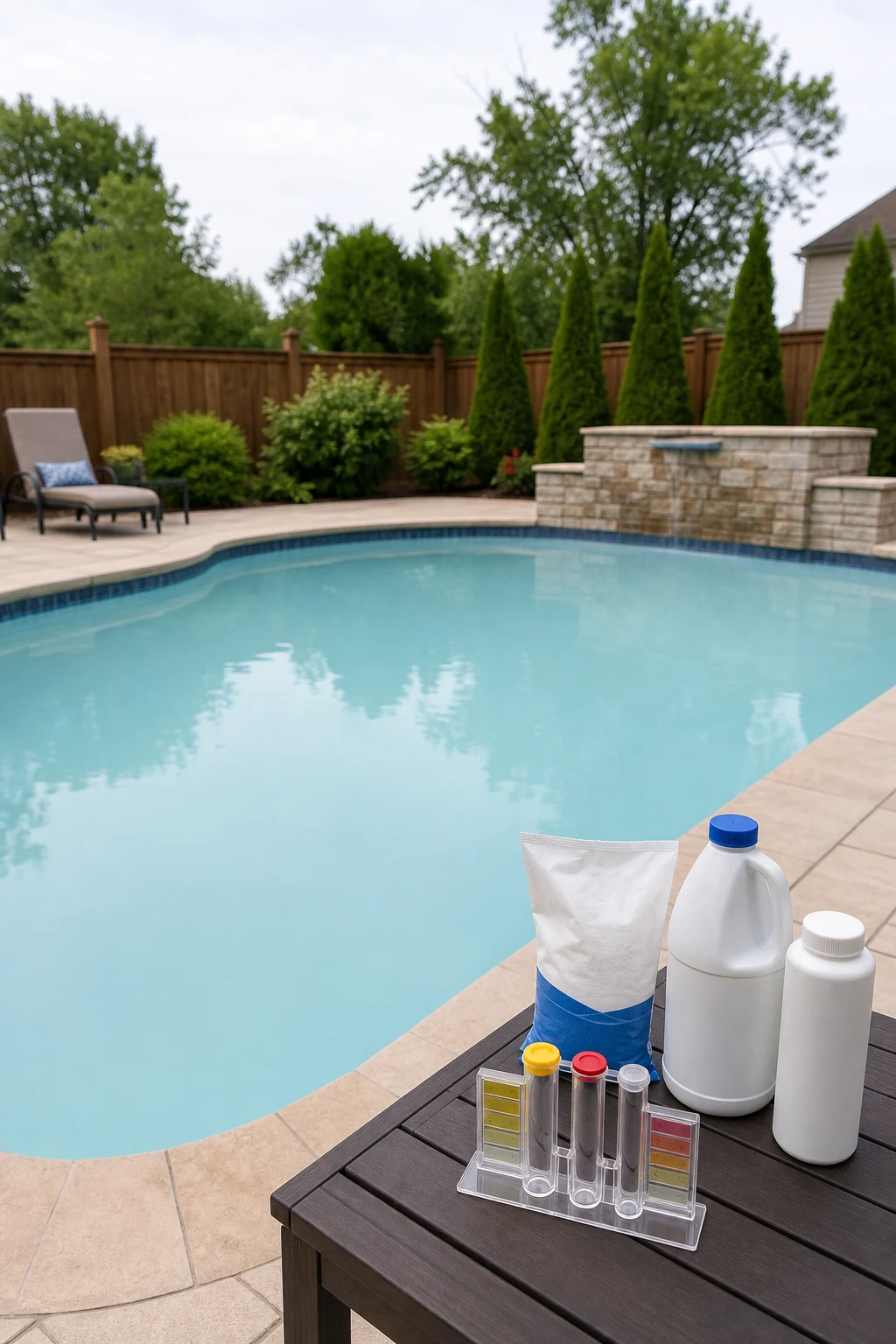
Cloudy water is hard to solve with test strips alone. Use a reliable drop-based kit or a trusted pool store test and write down the actual numbers. The numbers matter more than “looks balanced.”
At minimum, you need free chlorine, combined chlorine, pH, cyanuric acid, total alkalinity, and calcium hardness. The CDC’s home pool guidance emphasizes regular chlorine and pH testing; when cyanuric acid is used, it recommends pH 7.0 to 7.8 and at least 2 ppm free chlorine for pools. That is a safety floor, not a cloudy-water cleanup plan. If the pool has algae or high CYA, you may need a much higher free chlorine level for a controlled cleanup.
2. Check Whether Algae Is Still Active
Blue-white cloudy water often means dead algae is waiting for filtration. Green, dull teal, slippery walls, or chlorine that disappears quickly usually means algae is still alive.
The practical test is overnight chlorine loss. After sunset, bring chlorine to the right shock level for your CYA, run the pump, and test free chlorine. Test again before direct sun hits the pool. If free chlorine drops more than about 1 ppm, or combined chlorine is elevated, the pool is still consuming chlorine and needs a sustained chlorine cleanup rather than clarifier.
This is where many cloudy-pool fixes fail. One bag of shock may raise chlorine for a few hours, then sunlight, organics, and algae consume it. The water looks treated, but the pool never held a killing level long enough to finish the job.
3. Make CYA Part of the Chlorine Decision
Cyanuric acid protects chlorine from sunlight, but too much stabilizer changes how much chlorine you need. A pool with high CYA can show chlorine on a test and still behave like it is under-sanitized. That is why people keep adding tablets, granular shock, and clarifier while the water stays cloudy.
If CYA is high, stop using stabilized chlorine products until you know the plan. Trichlor tablets and dichlor shock add more CYA. In a high-CYA pool, liquid chlorine is often easier to control because it raises chlorine without adding more stabilizer or calcium.
4. Bring pH Down Before You Fight Cloudiness
High pH makes chlorine less efficient and can encourage cloudy scale, especially when calcium hardness is also high. If your pH is above the normal range, lower it before another cleanup attempt. A practical target for clearing a cloudy pool is often around 7.2 to 7.4, as long as that fits your pool surface and product directions.
Cal-hypo shock can also add calcium. If the pool already has high calcium hardness and high pH, repeated cal-hypo doses can leave a chalky haze that looks like dead algae but behaves more like scale. That does not mean cal-hypo is bad; it means the shock type has to match the water you have.
5. Treat Filtration Like the Main Event
Once algae is killed, the filter has to remove the mess. That takes time. Run the pump continuously while clearing the water, brush the pool daily, empty baskets, and clean or backwash the filter when pressure rises according to your filter’s instructions.
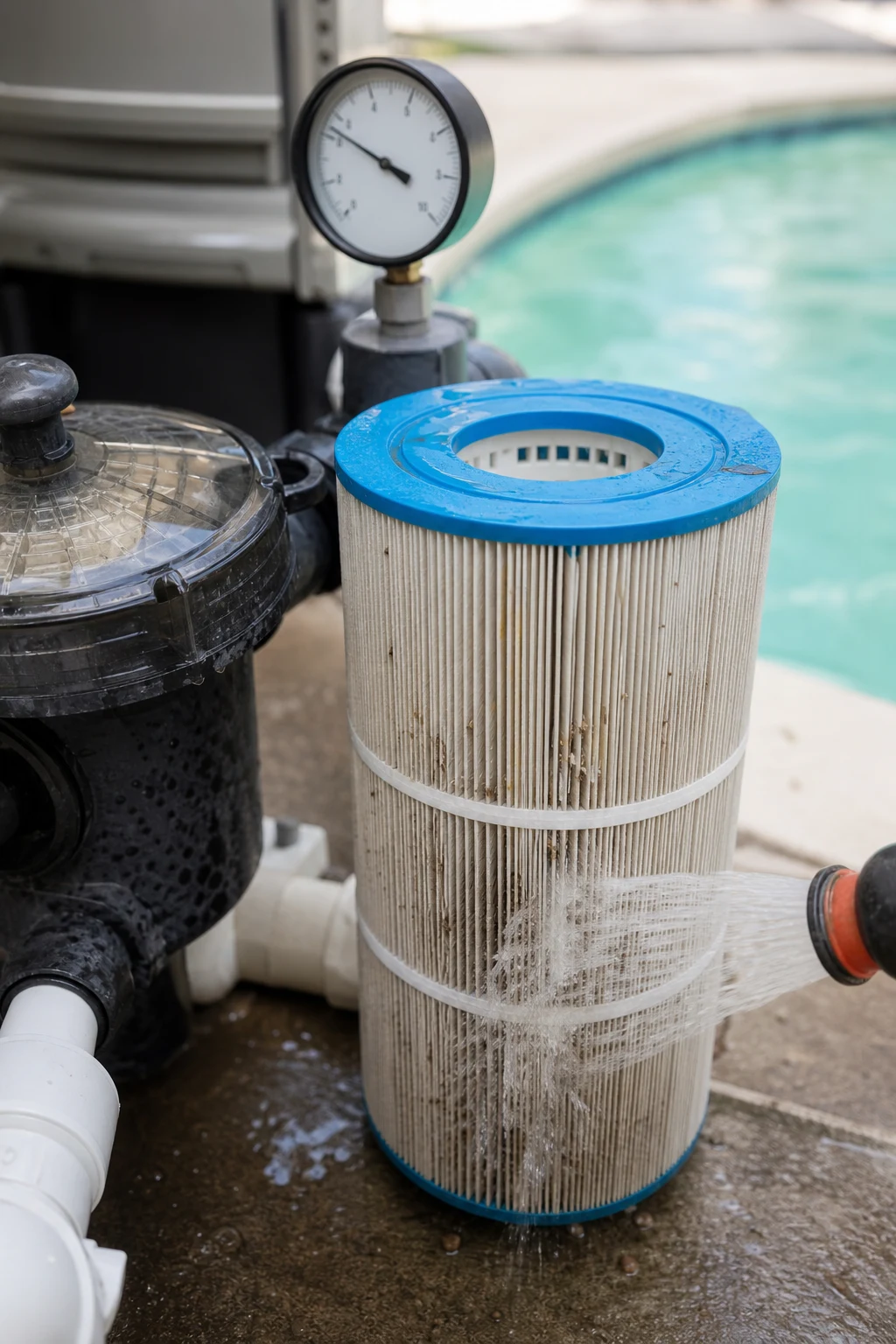
Do not assume a running pump means real filtering is happening. Check for low return flow, a clogged cartridge, channeling in a sand filter, a dirty pump basket, air leaks, a stuck multiport valve, or water bypassing the filter media. If the pool gets clearer only near the returns or clouds up again after vacuuming, the filtration path deserves a closer look.
Clarifier vs. Floc: Use the Right One
Clarifier is slow and filter-dependent. It is best when the water is mostly sanitized and balanced, but has a fine haze that the filter needs help catching. Dose lightly and give it circulation time. Overdosing clarifier can make the water worse.
Floc is more aggressive. It is best when suspended material needs to be dropped to the floor and physically removed. The usual pattern is circulate or recirculate according to the label, shut the pump off long enough for the debris to settle, then vacuum slowly to waste. If your pool cannot vacuum to waste, read the floc label carefully before using it. Some products are not a good fit for every filter setup.
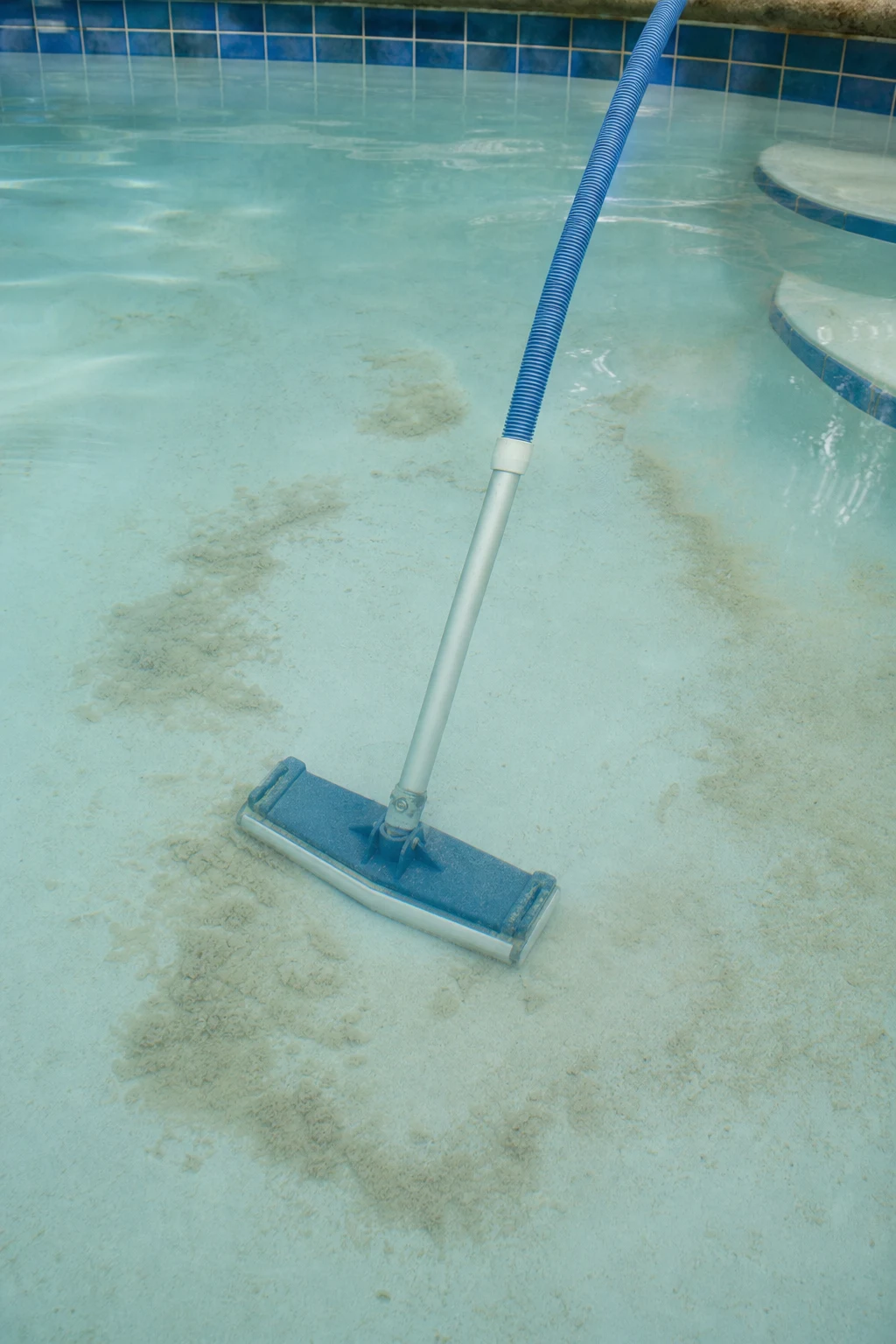
The common mistake is using floc like clarifier. If flocculated debris is sent through the filter, it can clog the filter or break apart and return as a haze. That is why a pool can look promising in the morning, then turn cloudy again after the vacuum starts.
What Your Cloudy Pool Is Telling You
Cloudy Blue or Gray After Shock
This is often dead algae or oxidized debris. Keep chlorine at the correct cleanup level, brush, and filter continuously. If overnight chlorine loss is low and the pool is simply hazy, clarifier can help the filter finish.
Green or Dull Teal After Shock
The pool is probably not done killing algae. Do not move to floc or clarifier yet. Confirm CYA, bring pH into range, and hold the correct chlorine level until the water turns blue and overnight chlorine loss is acceptable.
Cloudy After Floc
Either the floc did not settle, the pump disturbed the settled debris, or the vacuuming step sent material back through the filter. Let the water go still again if the label allows it, then vacuum slowly to waste. Expect water level loss and refill afterward.
Cloudy With “Perfect” Pool Store Numbers
“Perfect” can miss context. A free chlorine number that is fine for a clean pool may be too low for a pool with high CYA or active algae. A pH number that is barely in range may still be high for clearing calcium haze. A clean-looking filter may still be channeling or bypassing fine debris.
A Practical 48-Hour Clearing Plan
Use this plan when the water is cloudy but the pool is not black, swampy, or full of heavy debris.
- Remove leaves and debris manually. Do not ask the filter to do that job.
- Test free chlorine, combined chlorine, pH, CYA, alkalinity, and calcium hardness.
- Lower pH into the lower-normal range before shocking if it is high.
- Raise chlorine to the correct cleanup level for your CYA and hold it there. Retest and redose as needed.
- Run the pump continuously. Brush walls, steps, ladders, and corners.
- Clean or backwash the filter when pressure rises or flow drops.
- Do an overnight chlorine loss check. If chlorine is still dropping, keep sanitizing. If chlorine holds and the water is only hazy, shift attention to filtration.
- Use clarifier only if the water is sanitized and balanced but still has fine haze. Use floc only if you can let it settle and vacuum to waste.
Most cloudy pools clear by patience and filtration after the chemistry is actually corrected. The hard part is not the labor. It is resisting the urge to pour in another bottle before the previous step has had a chance to work.
What Not To Do
- Do not swim if you cannot clearly see the pool floor, drains, and steps.
- Do not add floc and then vacuum through the normal filter setting unless the product specifically says your system can handle it.
- Do not keep adding stabilized chlorine if CYA is already high.
- Do not overdose clarifier. More is not better.
- Do not ignore filter pressure, return flow, or dirty cartridges while chasing chemical fixes.
- Do not rely on “shock once and wait” if algae is still consuming chlorine overnight.
FAQ
How long should a pool stay cloudy after shock?
A light haze can clear in a day or two with good filtration. A pool that had algae, high CYA, high pH, or a dirty filter can take several days because the real work is holding chlorine and removing dead material.
Can too much shock make a pool cloudy?
Yes, especially if the shock adds calcium or if the water already has high pH and calcium hardness. The bigger issue is usually not “too much chlorine” by itself, but the type of shock and the balance of the water before it was added.
Should I use clarifier after floc?
Usually no. Floc is meant to settle debris so it can be vacuumed out. Clarifier is meant to help the filter catch fine suspended particles. Using both back to back can make the cleanup harder unless the water is already sanitized, balanced, and you are following product directions carefully.
Why did the pool clear and then turn cloudy again?
The most common reasons are algae returning because chlorine was not held long enough, debris being blown back through the filter, settled floc getting disturbed, or pH and calcium drifting back into a cloudy range.
Bottom Line
A cloudy pool after shock, floc, and clarifier is not asking for another random chemical. It is asking you to find the unfinished job. Kill the algae completely, make chlorine work with your CYA and pH, clean and run the filter long enough, and use floc or clarifier only for the problem they actually solve. That sequence clears more pools than another bottle on the waterline.