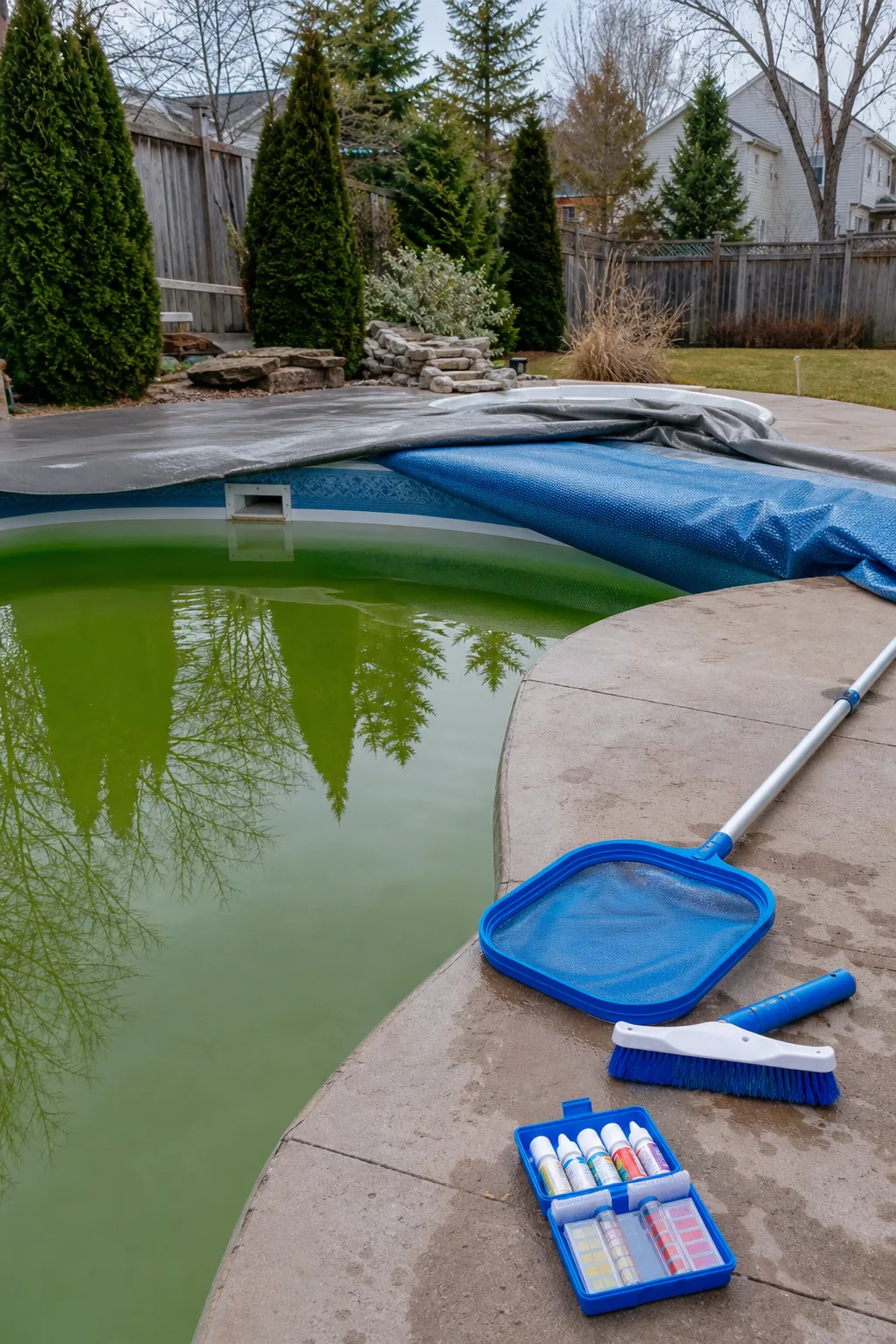
If you open the pool cover and the water is green, the first move is not to pour in shock. The first move is to stop the pool from wasting your money. A green opening usually means algae, leaves, low sanitizer, poor circulation, or all of those at once. If you add chlorine before you remove debris, test the water, and get the equipment moving, you can burn through chemicals while the pool barely changes color.
The right opening sequence is simple: uncover, remove debris, start circulation, test a full water panel, correct pH if needed, then chlorinate hard enough and long enough for your cyanuric acid level. After that, brushing and filtration do most of the cleanup. The pool may turn from green to cloudy blue before it turns clear. That is progress, not failure.
This checklist is for a typical residential chlorine pool that opens green but is still physically serviceable. If the water is black, the pool floor is full of heavy debris, the equipment will not prime, electrical components are wet or damaged, or you smell strong chemical fumes, bring in a pool professional before continuing.
The Short Version
Do these jobs in this order:
- Pull the cover back carefully and keep cover water out of the pool when possible.
- Remove leaves, worms, branches, and sludge before asking chlorine to work.
- Reinstall ladders, baskets, plugs, gauges, returns, and drain fittings.
- Start the pump, check for leaks, prime the system, and clean baskets.
- Test free chlorine, combined chlorine, pH, total alkalinity, calcium hardness, and cyanuric acid.
- Adjust pH before shocking if it is high or dangerously low.
- Use liquid chlorine or the shock type that fits your water chemistry.
- Brush every wall, step, ladder, corner, and floor seam.
- Run the filter continuously while clearing the pool, cleaning or backwashing as pressure rises.
- Do not swim until the water is clear, the floor is visible, and sanitizer and pH are in a safe range.
Before You Touch Chemicals, Remove the Mess
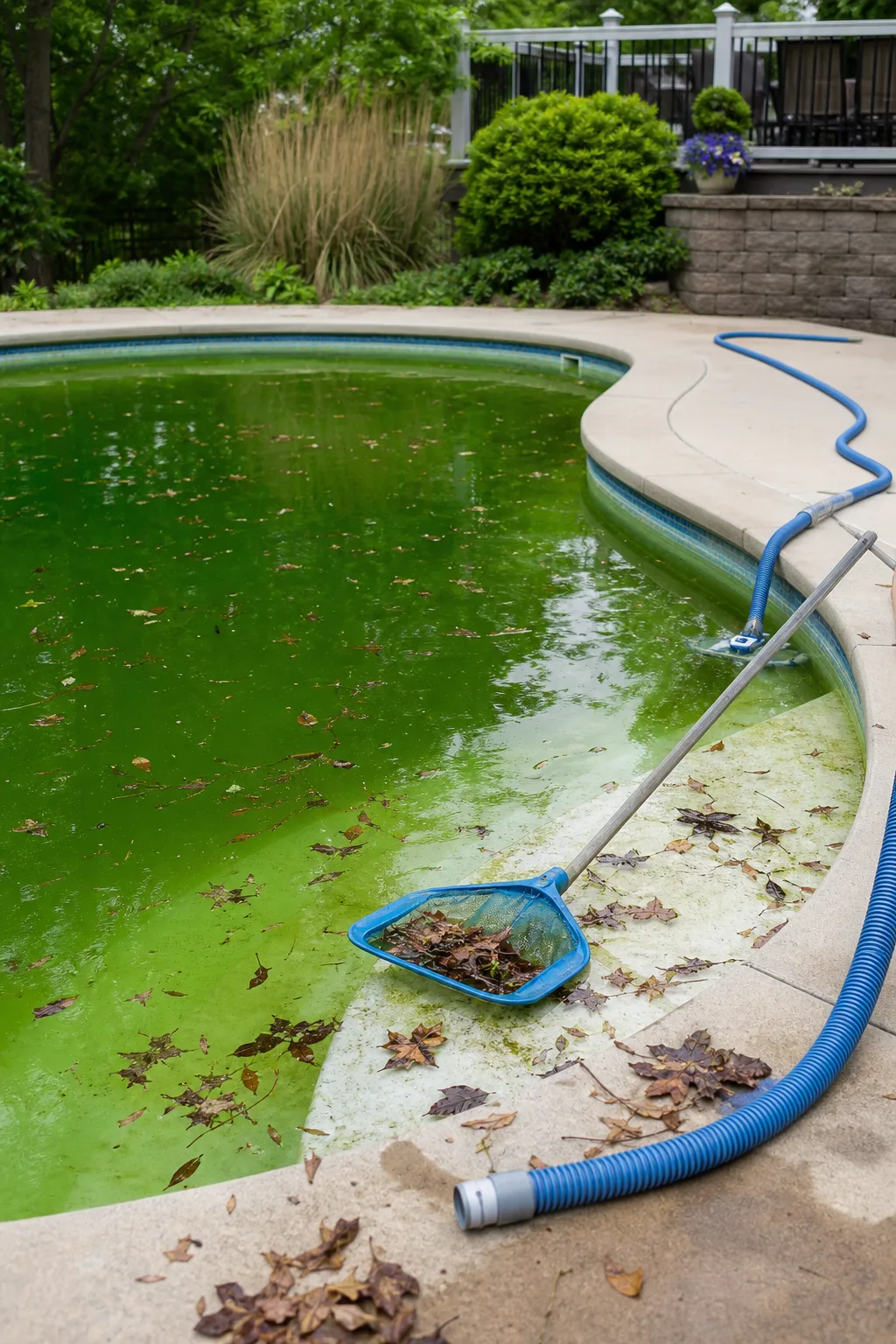
Leaves and organic debris consume chlorine. So does algae. If the pool has a layer of leaves on the bottom, dumping shock into the water is like paying chlorine to compost the winter debris. Net out everything you can reach first. If the water is too dark to see the floor, work slowly with a leaf rake and expect several passes.
Do not rely on the filter to catch heavy debris. Skimmer baskets, pump baskets, cartridges, and multiport valves are not designed to swallow a season of wet leaves. If the pool has a lot of muck, use a leaf rake, a leaf bagger, or a manual vacuum to waste if your plumbing allows it. The more solids you remove now, the less chlorine and filter cleaning you need later.
Be patient with this step. Many green-pool openings stall because the owner shocks the water, sees no change, shocks again, then discovers the floor is still covered in leaves. Chlorine should be fighting algae, not a pile of organic material.
Get the Equipment Running Before You Dose
Once the obvious debris is out, rebuild the circulation path. Reinstall return fittings, skimmer baskets, pump basket, drain plugs, pressure gauge, filter parts, ladders, and any winterized equipment. Open valves to the correct positions and confirm that water can move through the pump, filter, heater, salt cell, chlorinator, and returns.
Prime the pump and watch the system for a few minutes. Look for drips around unions, pump lids, heater headers, filter clamps, drain plugs, and valve stems. Check the pressure gauge after the system stabilizes. If the gauge is broken, replace it. If pressure is much higher than normal, clean or backwash the filter before continuing. If pressure is very low and return flow is weak, look for a clogged basket, air leak, closed valve, or pump-prime problem.
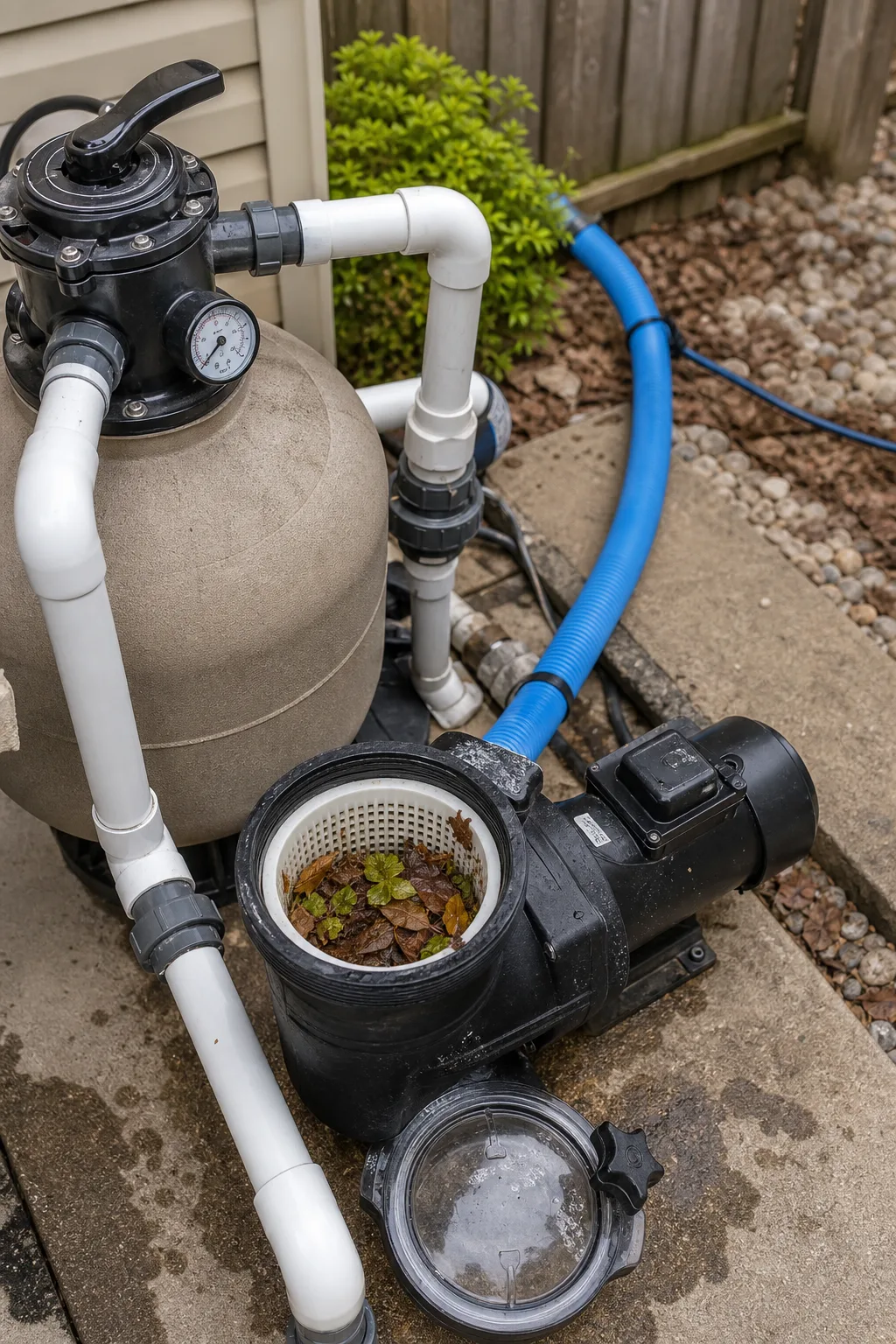
Green water needs movement. During cleanup, run the pump continuously unless your equipment has a specific reason not to. A variable-speed pump can often run longer at a lower speed, but make sure the speed is high enough to skim, mix chemicals, and move water through the filter. You cannot filter water that is sitting still.
Test First, Then Make Decisions
Test strips can give a rough hint, but a green opening deserves actual numbers. Use a reliable drop-based kit or a trusted pool store test and write the results down. At minimum, test free chlorine, combined chlorine, pH, total alkalinity, calcium hardness, and cyanuric acid. Salt pools should also check salt level before depending on the generator.
The CDC says residential pool owners should regularly check chlorine concentration and pH, and it recommends pH 7.0 to 7.8 for pools. It also notes that if cyanuric acid or stabilized chlorine products such as dichlor or trichlor are used, the pool should have at least 2 ppm free chlorine. That is a basic health floor for maintained water, not a green-pool cleanup target. A pool with active algae usually needs a higher chlorine level held over time.
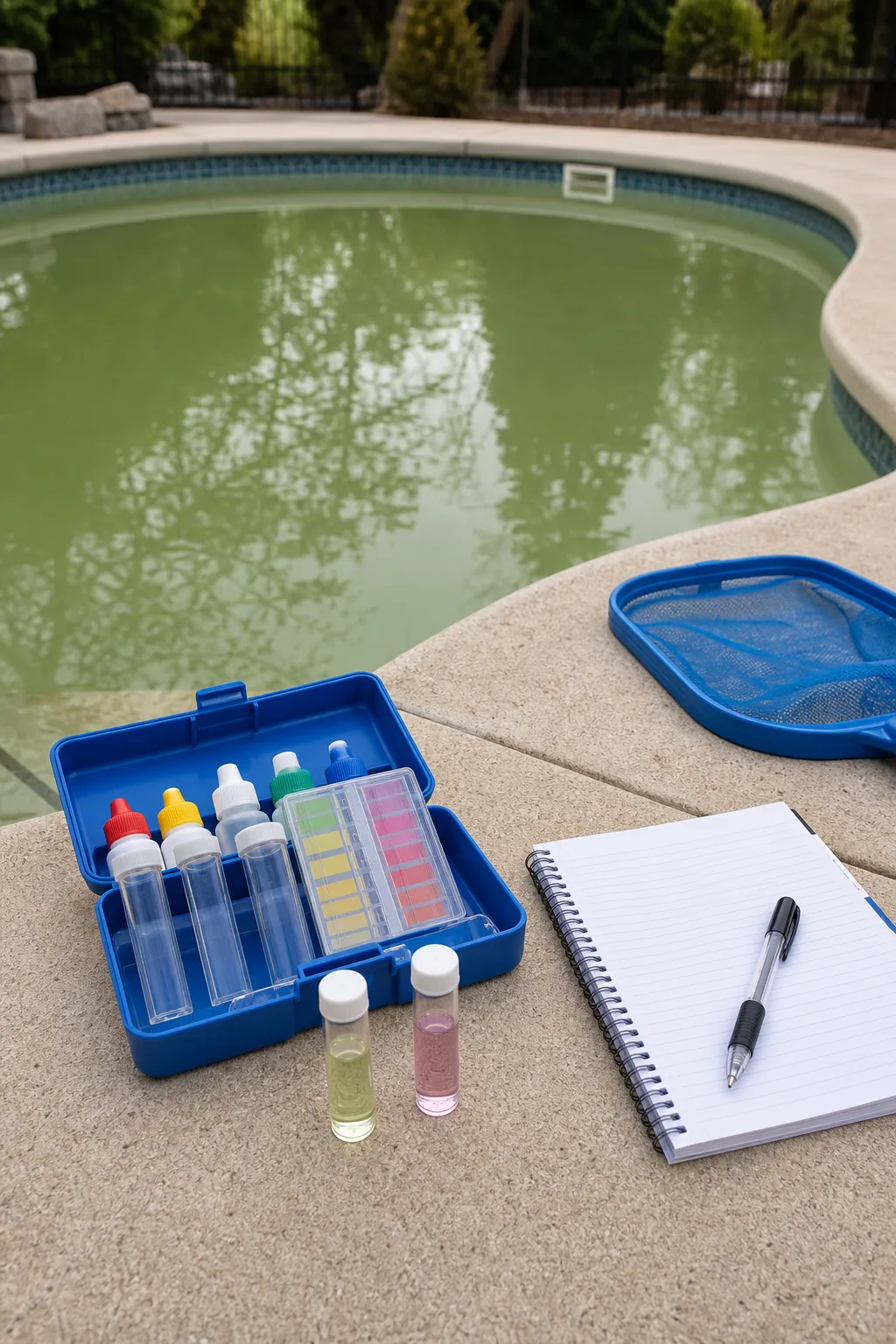
The number that changes the whole plan is cyanuric acid, often called CYA or stabilizer. CYA protects chlorine from sunlight, but higher CYA also means you need more free chlorine to clear algae. If you spent last season using trichlor tablets or dichlor shock, your CYA may already be high when you open. Adding more stabilized chlorine before testing can make the cleanup harder.
Fix pH Before the Big Chlorine Push
If pH is high, chlorine works less efficiently and calcium clouding becomes more likely. If pH is extremely low, the water can be aggressive to equipment and pool surfaces. For a green cleanup, many pool owners aim for the lower-normal pH range before shocking, commonly around 7.2 to 7.4, as long as that fits the pool surface, test results, and product labels.
Do not chase perfect water balance while the pool is still green. You are not trying to polish the water yet. You are trying to make chlorine work, protect the pool, and prevent the filter from fighting chemistry that is obviously out of range. Correct severe alkalinity or pH problems enough to proceed, then do a complete balance once the water is clear.
Be careful with acid and chlorine. Follow the label, wear appropriate protection, add products separately with circulation, and never mix chemicals in a bucket or feeder. The CDC pool chemical safety guidance and the National Pesticide Information Center both emphasize safe handling because pool chemicals can react violently or release gas when mixed incorrectly.
Choose the Right Chlorine for the Water You Have
For many green openings, liquid chlorine is the cleanest tool because it raises free chlorine without adding CYA or calcium. That matters if your stabilizer is already high from tablets or if calcium hardness is already high from hard water or cal-hypo use. Liquid chlorine still needs careful handling, fresh product, and correct dosing, but it avoids stacking another side effect into the pool.
Cal-hypo shock can work well when calcium hardness is low or normal, but it adds calcium. Dichlor and trichlor add CYA. Non-chlorine oxidizer can help with some contaminants, but it is not the main answer to an algae-filled pool. The product is not the plan. The plan is to raise free chlorine to the level your water actually needs, then keep it there until algae is dead.
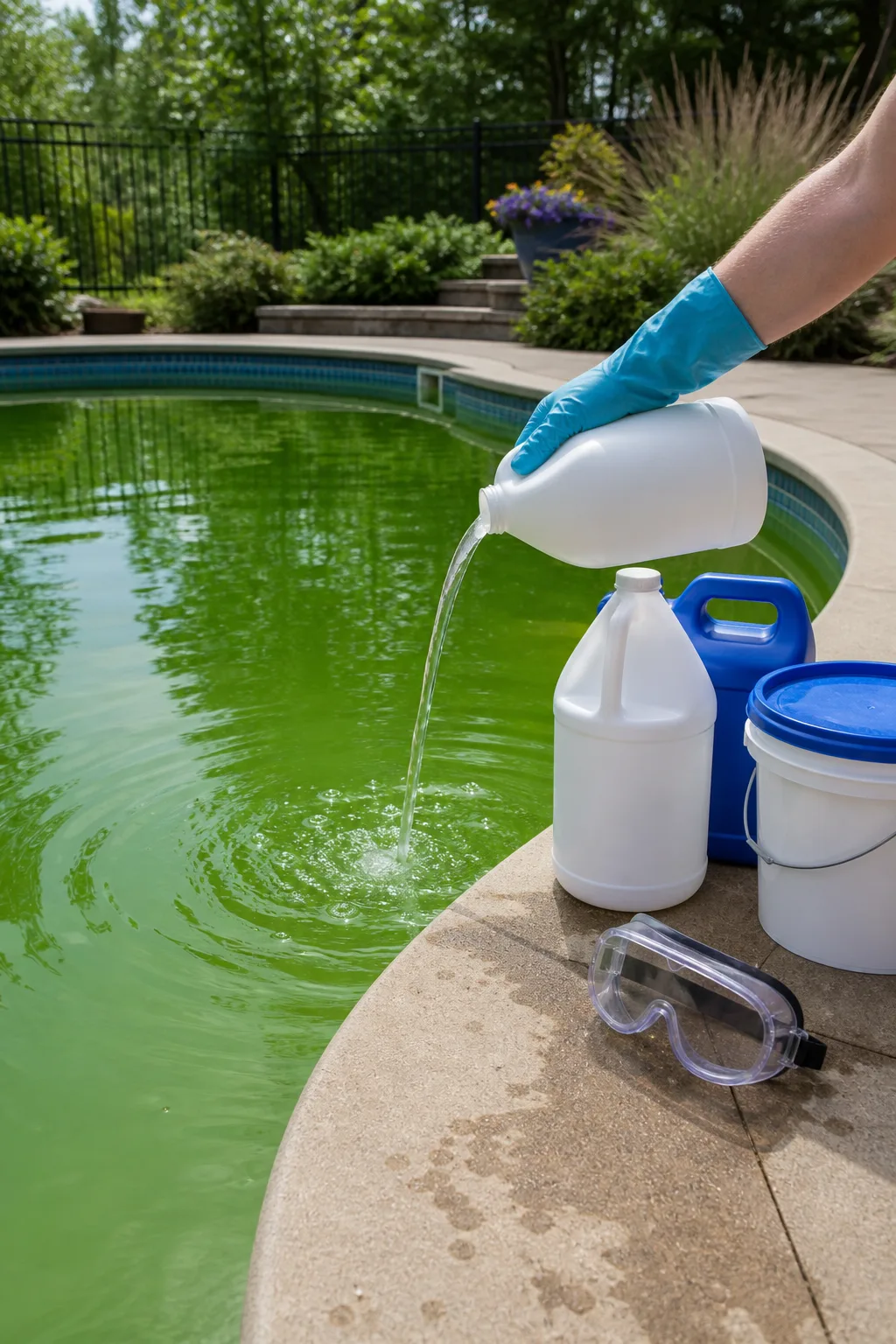
Expect to dose more than once. A one-time bag of shock can disappear quickly in green water because algae, sunlight, and organic debris consume chlorine. If free chlorine falls back near zero the same day, the pool is not done. Test, dose, circulate, brush, and test again. The key is holding a strong enough chlorine level long enough for the cleanup to finish.
Brush Like It Matters, Because It Does
Algae clings to walls, corners, ladders, lights, steps, wrinkles, and shaded areas. Brushing breaks that layer open so chlorine can reach it. Brush before the first major chlorine dose if you can see enough to work safely, then brush daily while the water is clearing.
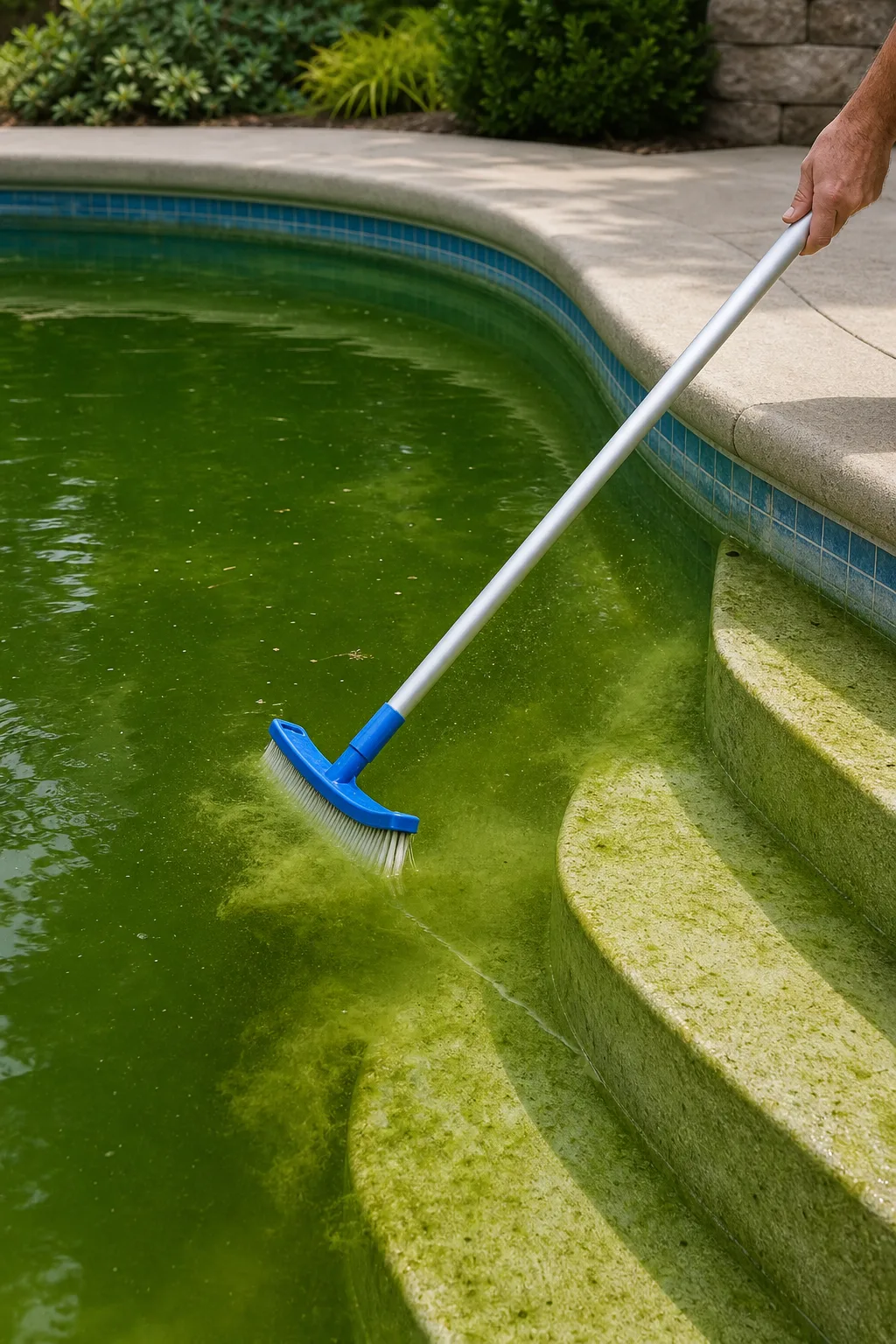
Use the brush type that matches your pool surface. A nylon brush is safer for vinyl, fiberglass, and painted surfaces. Plaster can usually tolerate a stiffer brush, but do not guess if you are unsure. Pay special attention to steps, behind ladders, under returns, around lights, and any place circulation is weak.
When the Pool Turns Cloudy Blue, Switch Your Focus to Filtration
A green pool often turns gray, teal, or cloudy blue after chlorine starts killing algae. That middle stage is annoying because it can look like nothing is improving. In reality, the pool may have moved from live algae to dead algae and fine suspended debris. Chlorine did part of its job. Now the filter has to do its job.
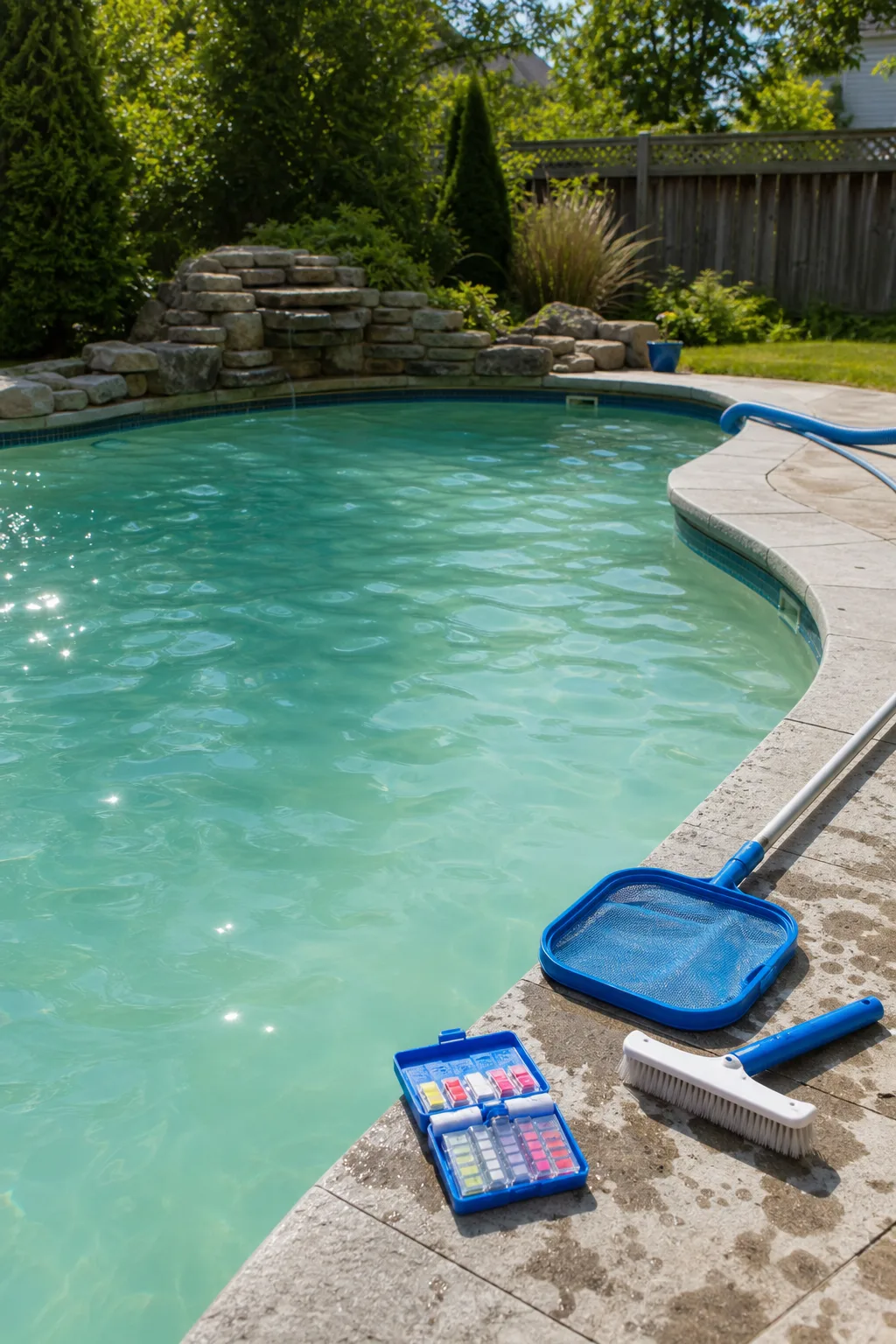
Run the pump around the clock during the clearing stage. Clean or backwash the filter when pressure rises according to the filter manufacturer’s guidance. With a cartridge filter, rinse cartridges when flow drops or pressure climbs. With a sand filter, backwash when pressure rises from the clean starting pressure. With DE, backwash and recharge correctly. A dirty filter cannot clear a green opening quickly.
Do not add clarifier, floc, phosphate remover, algaecide, and more shock all at once. More bottles can create more suspended material and more confusion. If chlorine is still being consumed rapidly, keep sanitizing. If chlorine is holding and the water is only hazy, then filtration help may make sense.
Vacuum to Waste When the Bottom Is Loaded
If debris has settled on the floor, vacuum slowly. If your system can vacuum to waste, that is often the best choice for heavy green-pool debris because it sends the mess out of the pool instead of into the filter. Watch the water level and refill as needed so the skimmer does not suck air.
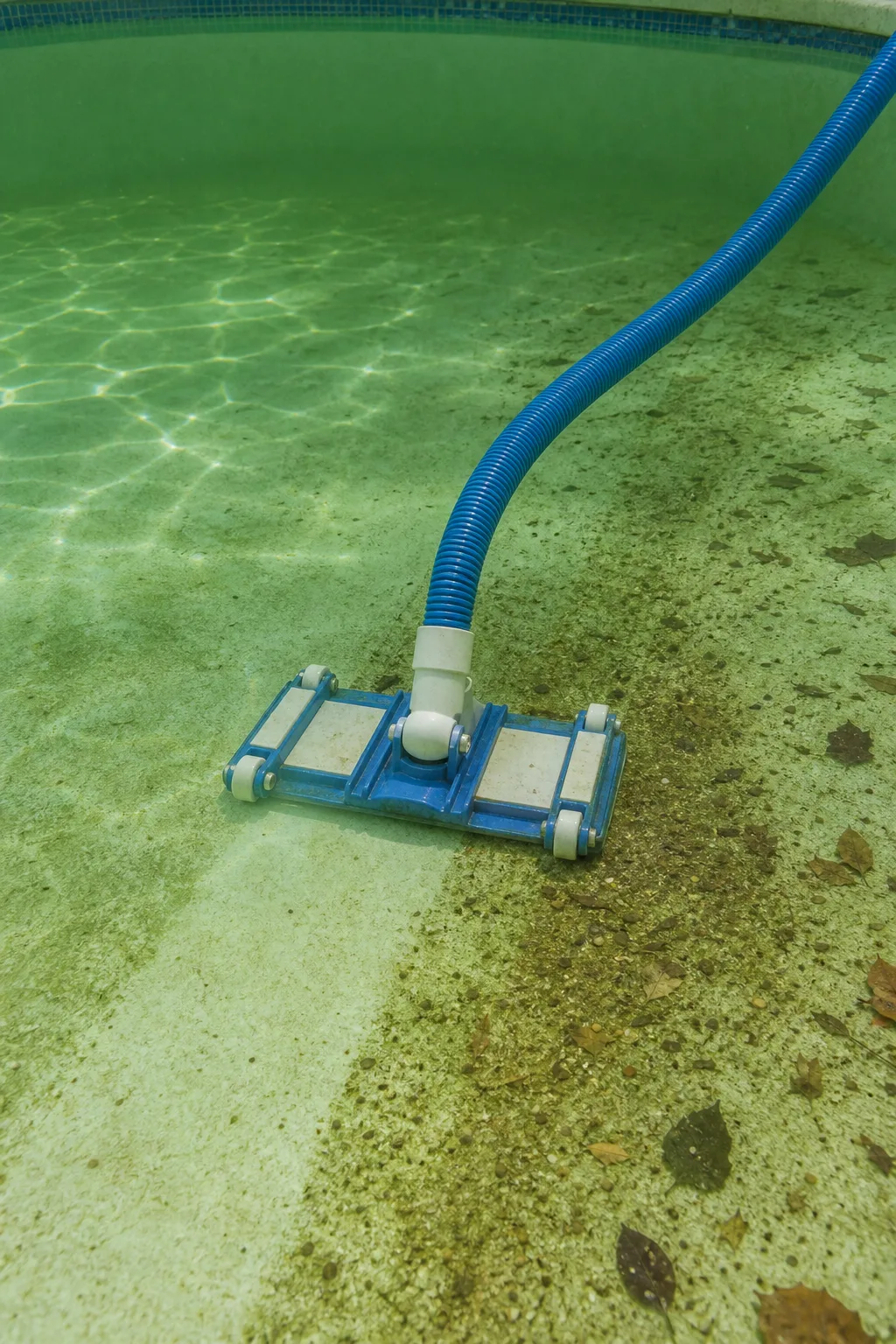
If you cannot vacuum to waste, be more conservative. Vacuuming heavy debris through the filter can clog cartridges, overload DE, or push fine material back into the pool. In that case, remove what you can manually and clean the filter more often. If you use flocculant, read the label first. Many floc products are meant to settle debris so it can be vacuumed to waste, and they may not be a good match for every filter setup.
The First 48 Hours
A realistic green-pool opening is not a one-hour job. The first 48 hours usually decide whether the pool clears steadily or turns into a chemical guessing game.
Hour 0 to 4: Clean, Assemble, Test
Remove debris, rebuild the equipment, start circulation, and test a full panel. Correct pH if it is outside the working range. Do not add stabilizer, tablets, algaecide, clarifier, floc, or phosphate remover until you know what the water actually needs.
Hour 4 to 24: Chlorinate, Brush, Filter
Add the chlorine dose that matches your volume and CYA level. Brush the pool. Keep the pump running. Test free chlorine again later the same day and redose if it has dropped hard. Empty baskets and clean the filter as pressure rises.
Hour 24 to 48: Confirm Whether Algae Is Still Alive
If the pool is still green and free chlorine keeps disappearing, algae is still winning. Keep the chlorine level up and keep brushing. If the pool is now cloudy blue and chlorine is holding better, shift more attention to filtration, vacuuming, and filter cleaning.
An overnight chlorine loss check can help. Test free chlorine after sunset, run the pump, then test again before direct sun hits the pool. If free chlorine drops substantially overnight, the pool is still consuming chlorine and needs continued sanitizing. If chlorine holds and combined chlorine is low, the remaining cloudiness is more likely a filtration problem.
What Not To Do First
- Do not shock before testing. You need pH and CYA numbers before you know what shock level makes sense.
- Do not add stabilizer automatically. Many pools open with enough or too much CYA already.
- Do not keep feeding tablets during a high-CYA cleanup. Trichlor tablets add more stabilizer.
- Do not use clarifier as a substitute for chlorine. Clarifier helps a filter catch fine particles; it does not kill algae.
- Do not use floc unless you understand the vacuum step. Floc that is not removed properly can make a pool cloudy again.
- Do not swim in green or cloudy water. You should be able to clearly see the floor, drains, steps, and any swimmer in distress.
- Do not mix chemicals. Add products separately, follow the label, and keep containers closed and separated.
When You Can Start Thinking About Swimming
A pool that looks better is not automatically ready. Wait until the water is clear enough to see the floor and steps, the free chlorine and pH are in the appropriate range, combined chlorine is under control, and the equipment is running normally. If you used floc, algaecide, acid, or other specialty products, follow the product label for swim wait times.
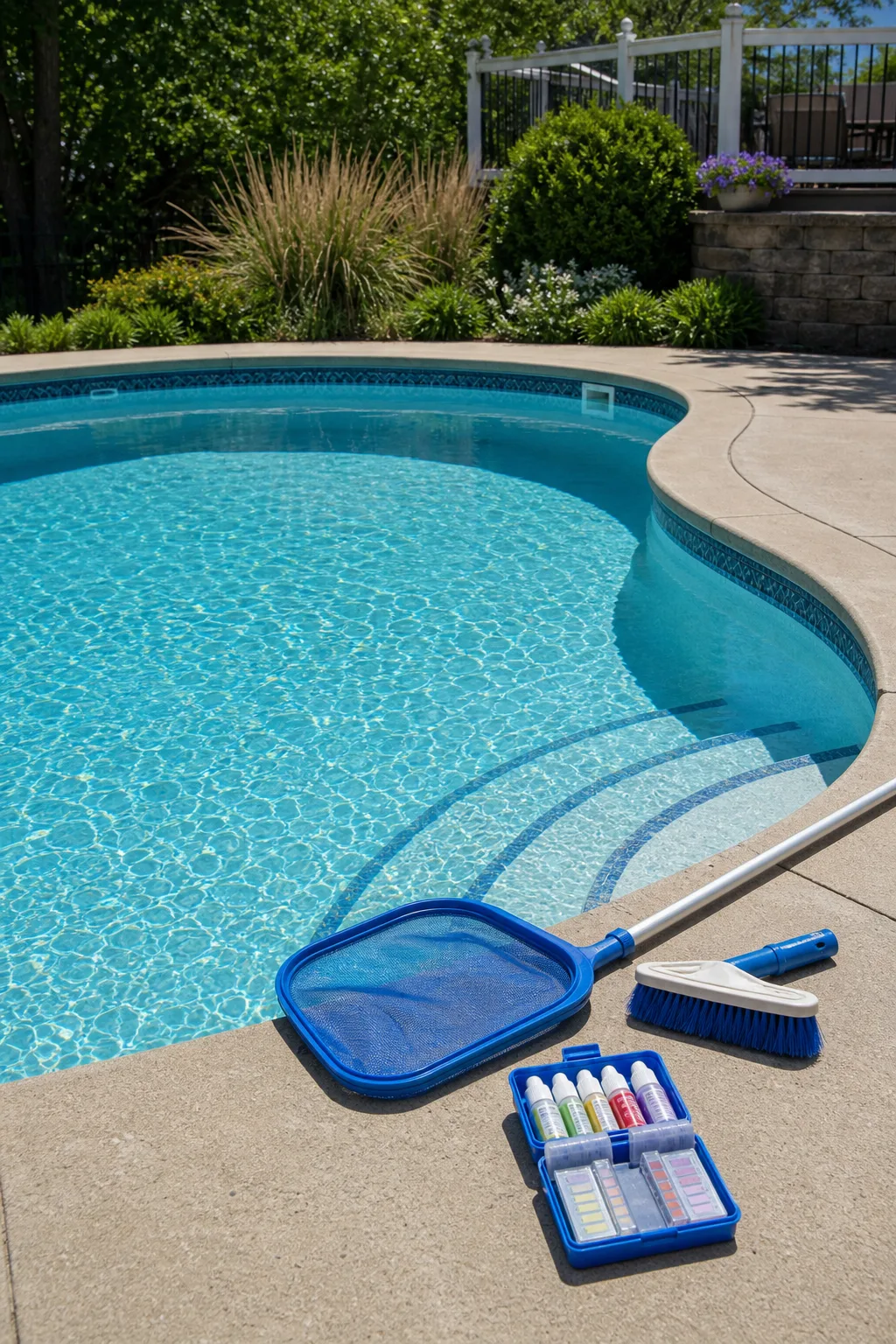
Do one final cleanup before the first swim. Brush again, vacuum any settled material, empty baskets, clean the filter if pressure is up, and retest. The goal is not just blue water. The goal is clear, balanced, circulating water that lets you see and respond if something goes wrong.
FAQ
Should I shock a green pool right away?
Not before removing debris, starting circulation, and testing. Shock is usually part of the fix, but it works better after you know pH and CYA and after you remove leaves and sludge that would consume chlorine.
Why did my green pool turn cloudy blue?
That often means chlorine has killed much of the algae and the dead material now needs to be filtered or vacuumed out. Keep testing chlorine, keep the pump running, brush, and clean the filter as needed.
Is liquid chlorine better than pool shock?
Liquid chlorine is often useful for green openings because it raises free chlorine without adding CYA or calcium. Granular shock can also work, but the type matters. Cal-hypo adds calcium, while dichlor and trichlor add CYA.
How long does a green pool take to clear?
A light green pool can improve in a day or two. A dark green pool with debris, high CYA, weak circulation, or a dirty filter can take several days. The pool is not finished until chlorine holds, the water is clear, and the filter has removed the dead algae.
Should I use algaecide during opening?
Sometimes, but do not make it the first move. Chlorine, pH control, brushing, and filtration are the core cleanup. Some algaecides can help in specific cases, while others can add metals, foam, or extra cost without solving the main problem.
Bottom Line
A green pool opening is not asking for random chemicals. It is asking for sequence. Remove the debris, get the equipment moving, test the full panel, correct pH, chlorinate according to CYA, brush aggressively, and let the filter run long enough to remove what the chlorine kills. Do those first, and the pool has a clear path from green to cloudy blue to swim-ready water.