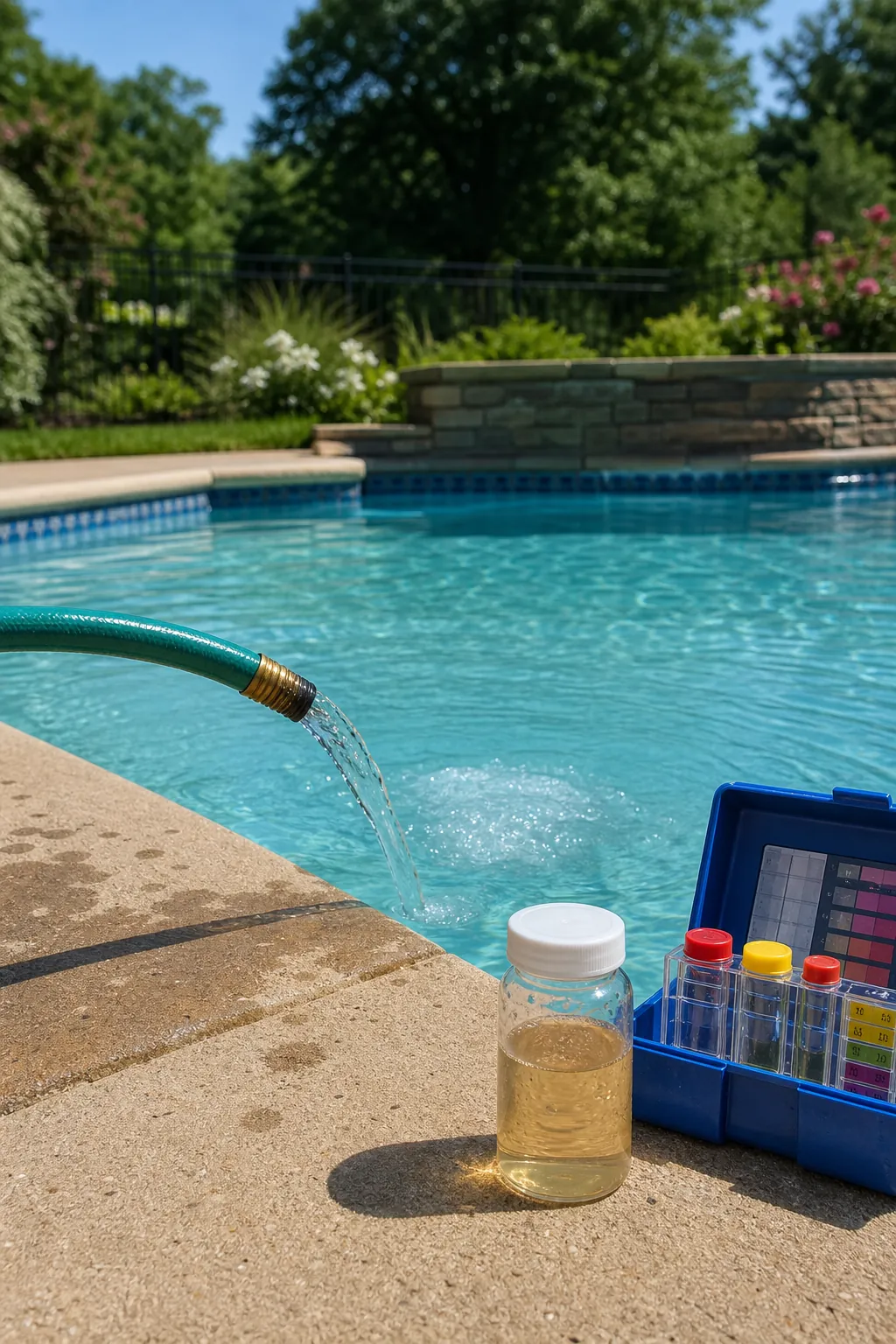
You can fill a pool with well water, but do not treat it like city water. The risky part is not the word “well.” The risky part is what is dissolved in that well water before it ever reaches the pool: iron, manganese, copper, hardness, sediment, low pH, high alkalinity, or enough dissolved metal to look clear from the hose and turn brown after chlorine hits it.
That last surprise is the one that makes pool owners panic. The pool looked fine while it was filling. Then they added shock, the water turned tea-colored, orange dust collected in the filter, or brown stains appeared on the steps. That does not mean the pool is ruined. It usually means dissolved metal was oxidized and became visible.
The safer plan is to test the water before the fill, protect the well during the fill, filter as much as practical on the way in, and use metal treatment before high chlorine or high pH pushes iron out of solution. If the water has already turned brown, the fix is still systematic: circulate, filter, manage metals, and avoid making the chemistry more aggressive until you know what you are dealing with.
The Short Answer
Yes, you can fill a swimming pool with well water if the well can safely supply the volume and the water is tested first. The main pool problems are iron staining, brown or green-tinted water after chlorine, cloudy water from hardness, sediment load, and slow clearing if the filter is asked to remove metals it cannot actually remove.
Before filling, test the well water for iron, copper, manganese, pH, total alkalinity, calcium hardness, and total dissolved solids. If the water has iron, use a fill filter or metal-trap filter if practical, add a quality metal sequestrant as directed, keep pH in range, and avoid a large chlorine shock until the water is circulating and the metal plan is in place.
First, Make Sure the Well Can Handle the Fill
A pool fill is a heavy draw on a private well. A modest 12,000-gallon pool is not just a long shower. It is hours or days of demand, and some wells recover slowly. Running the hose nonstop can pull sediment, strain the pump, drop household water pressure, or temporarily outrun the well’s recovery rate.
If you do not know the well yield, pump condition, storage capacity, or recent water quality, do not guess. Fill in stages, watch pressure, and give the well rest periods. If the water starts sputtering, turns sandy, smells different, or the pump short-cycles, stop and let the system recover. A well contractor can tell you whether the well is healthy enough for a large one-time draw.
The EPA notes that private well owners are responsible for protecting and testing their own well water. That matters here because a pool store test only tells you what is in the sample you bring. It does not tell you whether your well pump is happy being used as a pool-fill station for a full day.
Do a Bucket Test Before You Fill the Whole Pool
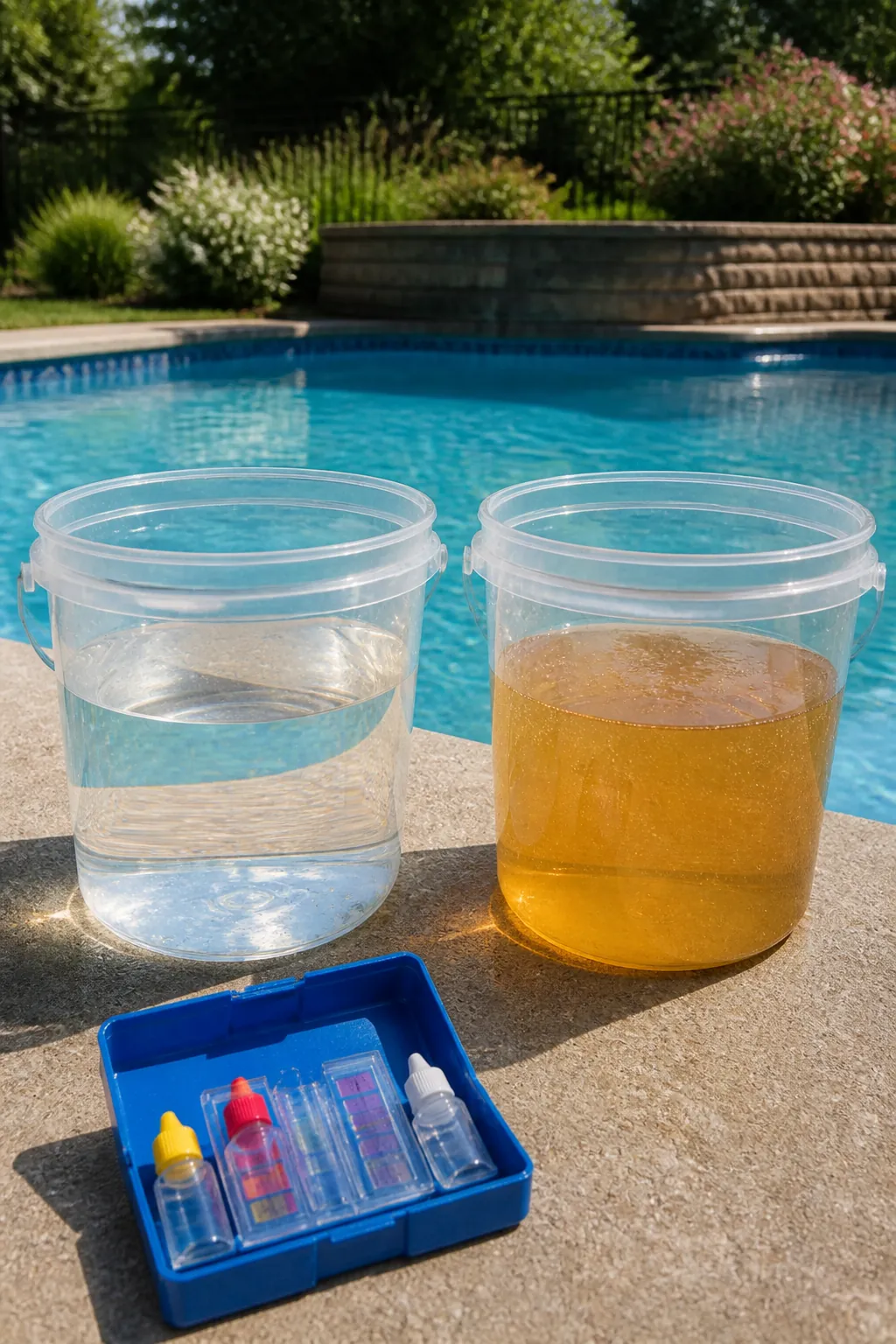
A bucket test is not a laboratory report, but it can save you from filling 15,000 gallons before discovering a metal problem. Fill a clean white bucket or clear jar with well water. Add a small amount of pool chlorine, stir, and let it sit where you can watch it. If the water turns yellow, orange, brown, gray, or drops colored sediment, assume the pool can do the same thing after startup chlorination.
Use the bucket test as a warning, not as your only test. Bring a fresh well-water sample to a pool store or use a kit that can measure metals and hardness. Ask specifically for iron and copper. A normal chlorine and pH test is not enough because iron can be invisible while it is still dissolved.
- Clear sample that stays clear after chlorine: lower metal risk, but still test hardness and balance.
- Yellow or tea-colored sample: likely iron, sometimes tannins or other source-water color.
- Orange-brown sediment: iron has oxidized into particles that filters may catch slowly.
- Gray or black staining reaction: possible manganese or other metal issue.
- Blue-green tint or turquoise staining: possible copper, especially if plumbing or equipment adds copper.
Why Clear Well Water Can Turn Brown After Chlorine
Iron often enters the pool as dissolved ferrous iron. In that form, the water may look clear. Add an oxidizer such as chlorine, raise the pH, or expose the water to enough oxygen and that iron can change form. Once oxidized, it becomes visible as yellow, orange, brown, or rusty material in the water and on surfaces.
This is why “I filled from the well and everything looked fine” is not proof that the water is metal-free. Chlorine did not create iron. It revealed iron that was already there. The same idea applies to some manganese reactions, except the colors can lean gray, black, or brown-black.
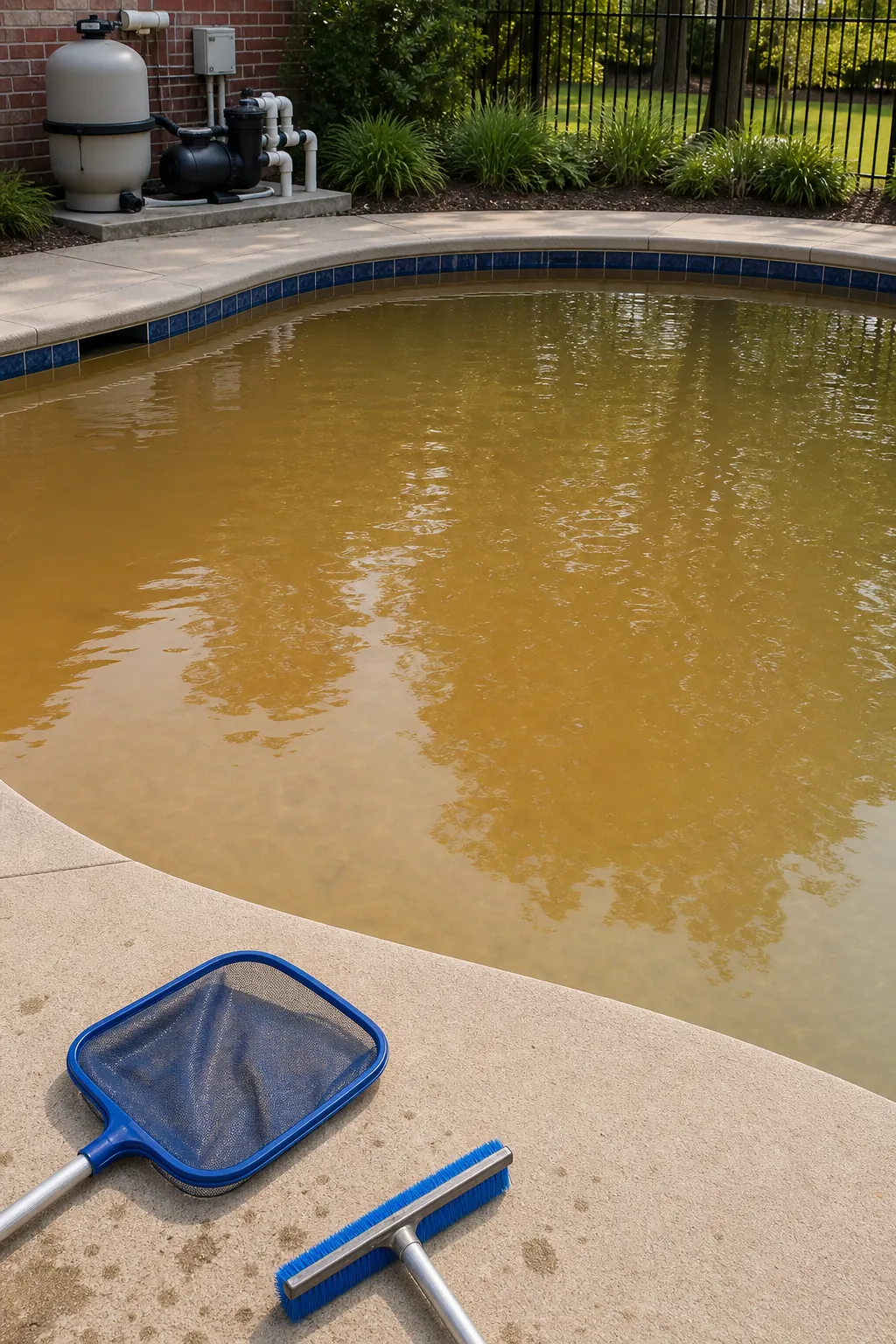
High pH makes the staining risk worse because metals are more likely to fall out of solution. High chlorine can accelerate the color change. That does not mean you should leave the pool unsanitized. It means you should get circulation running, keep pH controlled, and treat metals before hammering the water with more shock.
Use a Fill Filter, But Know What It Can and Cannot Do
A hose-end filter or metal-trap filter can help reduce sediment and some metals before the water reaches the pool. It is especially useful when the well produces visible grit, orange sediment, or known iron. The tradeoff is flow rate. These filters often work better when water moves slowly through them, and they can clog or exhaust before a large pool is full.
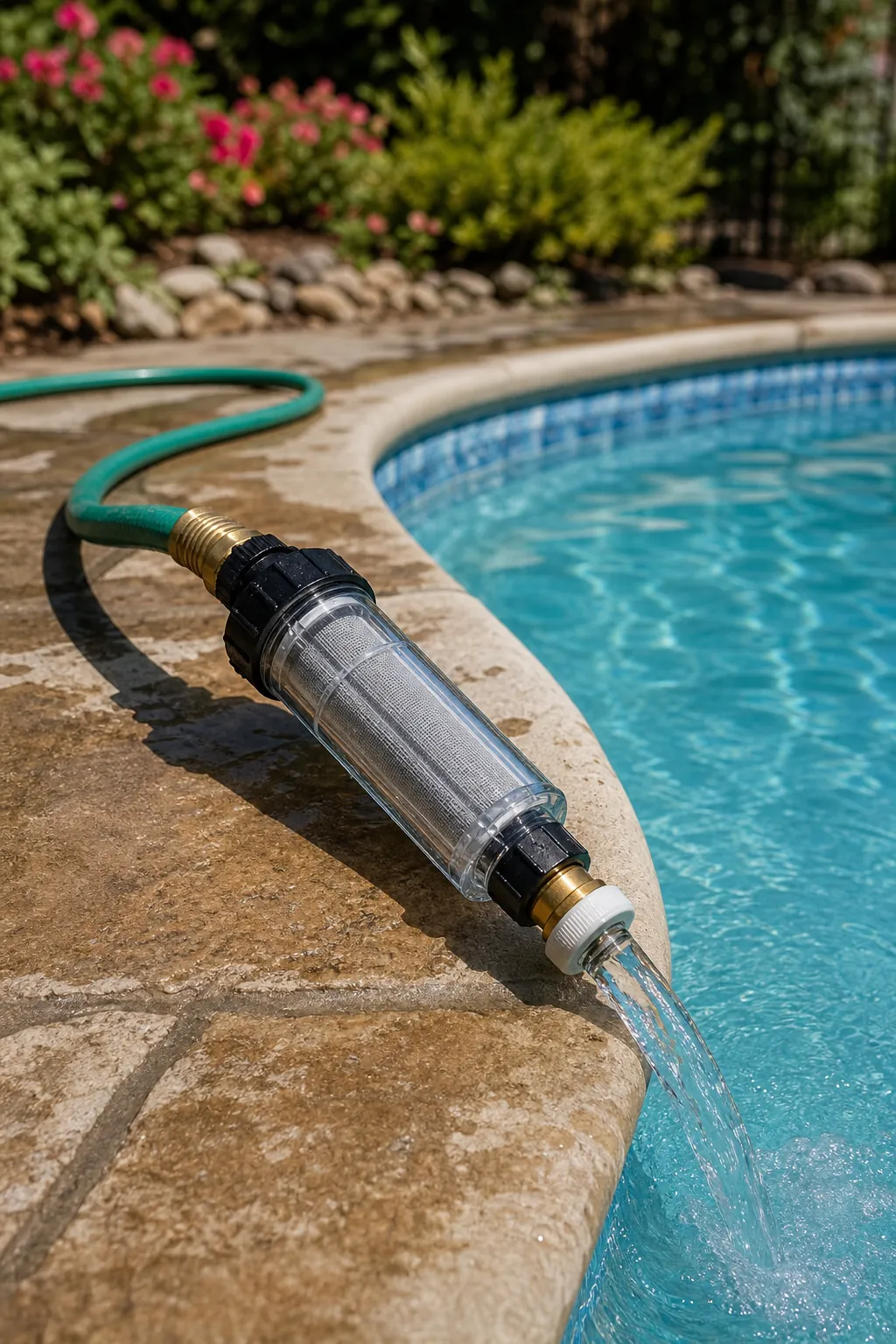
Do not expect a basic sediment cartridge to remove dissolved iron by magic. A sediment filter catches particles. Dissolved iron needs the right media, oxidation-and-filtration setup, or sequestration strategy. Some fill filters are marketed for metals, but their capacity matters. If the pool is large and the iron level is high, one cheap hose filter may be a small helper, not the whole plan.
| Tool | What it helps with | What it does not solve alone |
|---|---|---|
| Sediment filter | Sand, grit, rust particles already in solid form | Dissolved iron or copper |
| Metal fill filter | Some dissolved metals, depending on media and capacity | High-metal fills beyond the cartridge capacity |
| Pool cartridge, sand, or DE filter | Particles after iron oxidizes | Dissolved metal that is still invisible |
| Metal sequestrant | Keeping dissolved metals from staining | Physically removing the metal from the water |
| Water delivery | Avoiding the well draw and source-water metals | Ongoing top-off water from the well |
Add Metal Sequestrant Before the Water Gets Aggressive
A metal sequestrant does not remove iron from the pool. It binds with dissolved metals so they are less likely to plate out as stains. Think of it as stain prevention and metal management, not a filter. It also breaks down over time, so pools filled or topped off with iron-bearing well water often need maintenance doses.
If the well water tests positive for iron or your bucket test changes color, add sequestrant according to the label after the pool is circulating and before a large chlorine increase. Keep the pH from drifting high. Then bring sanitizer up in a controlled way instead of dumping in a heavy shock dose and hoping the water behaves.
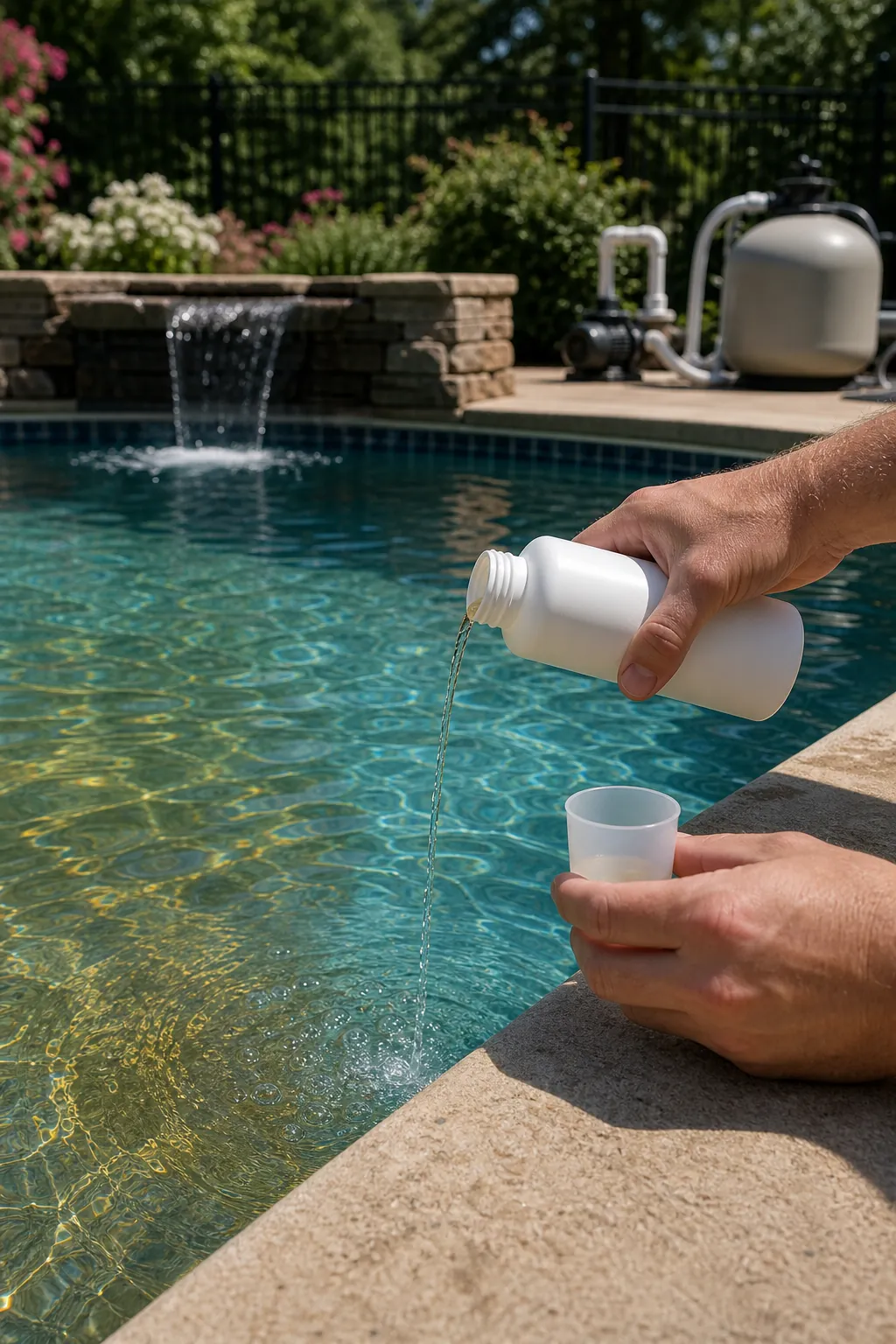
This is where many owners make the problem harder. They see brown water and keep shocking. If the brown color is oxidized iron, more oxidizer can create more visible iron and more staining risk. You still need a sanitary pool, but the order matters: circulate, control pH, manage metals, then chlorinate deliberately.
If the Pool Already Turned Brown, Do Not Start Over
Brown water after filling with well water is frustrating, but draining and refilling from the same well can repeat the same problem. First, confirm whether the color is likely metal. Test the water, check pH, and inspect the filter. If the filter is collecting orange-brown material, you are probably seeing oxidized iron particles.
Run the pump continuously while you are clearing the water. Clean or backwash the filter as pressure rises or flow drops. Cartridge filters may need frequent rinsing. Sand filters may clear fine rust particles slowly; some owners use filter aids or fine skimmer material, but those can restrict flow and must be watched carefully.
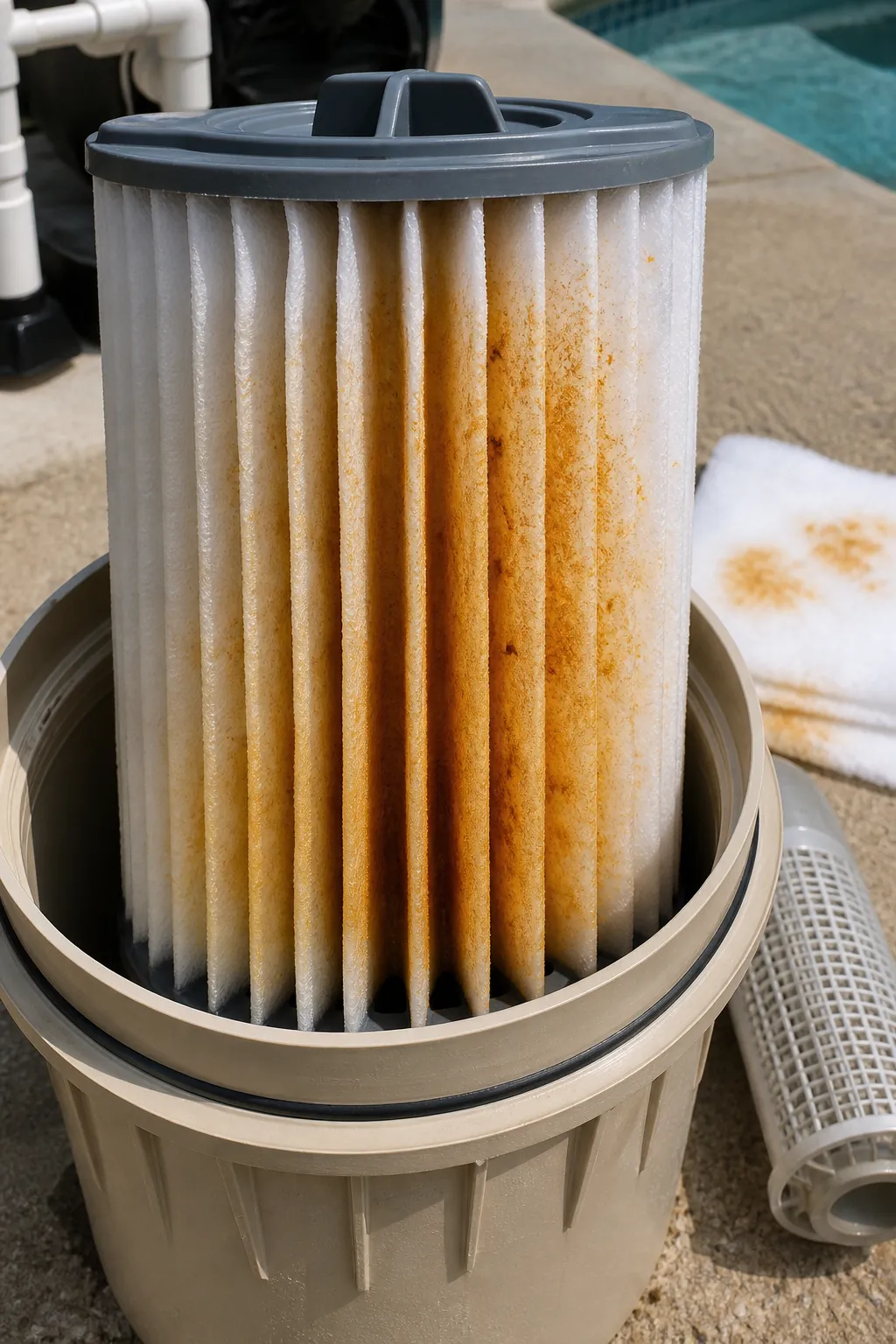
If the pool is tinted but not dropping visible particles, a sequestrant may help hold the metal in solution and prevent stains while filtration works on anything already oxidized. If the pool has heavy metal staining, treat the stain as a separate surface problem instead of assuming normal filtration will lift it off the steps.
How to Tell Whether Brown Marks Are Iron Stains
Iron stains often show up as yellow, orange, rust, or brown marks on steps, around returns, on the floor, or wherever water first mixed with chlorine. One common field check is the vitamin C test: hold a vitamin C tablet on a small stained spot for a minute or two. If the spot lightens, iron is likely involved.
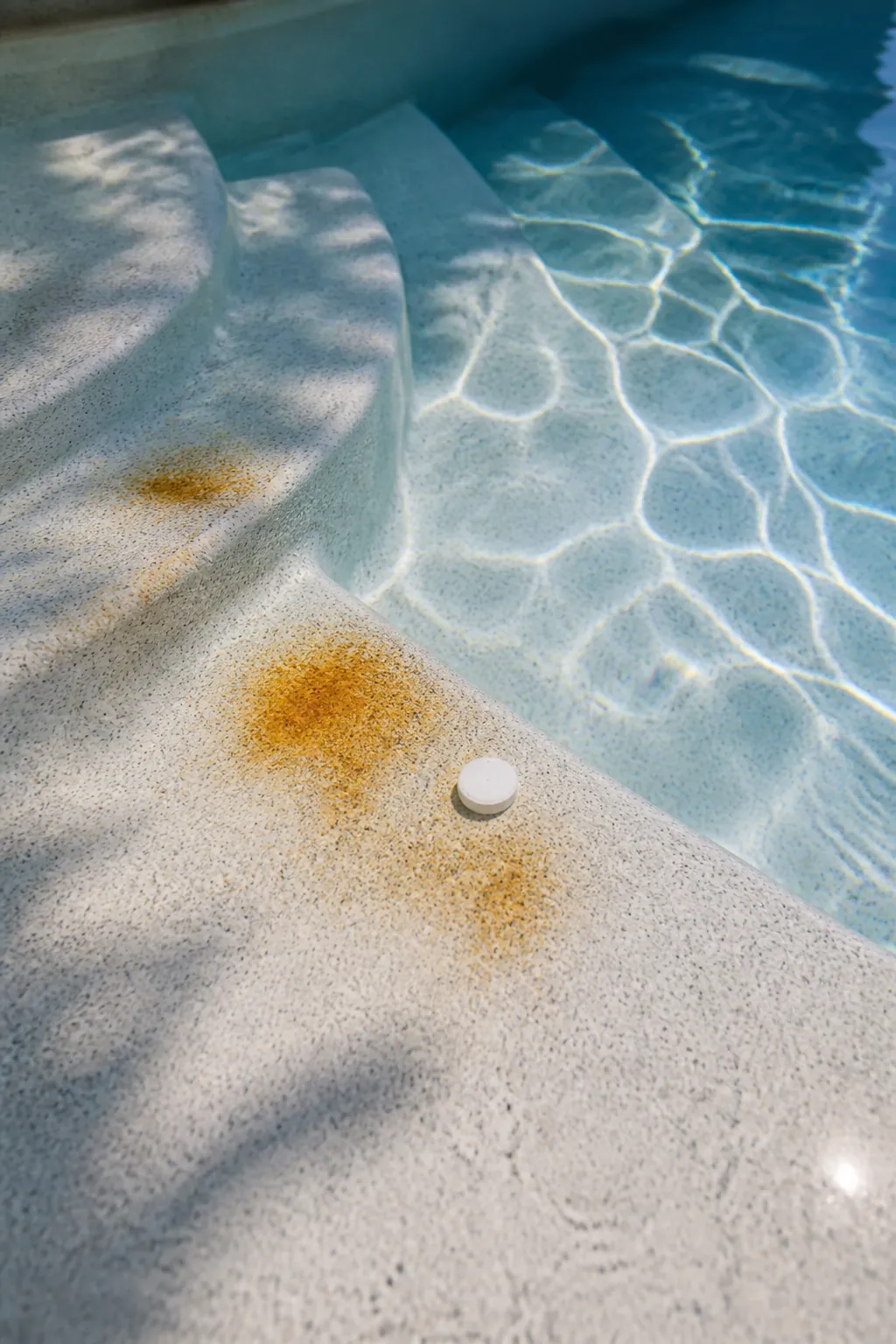
A vitamin C spot test is a clue, not a full treatment plan. Widespread ascorbic acid treatment can lift iron stains, but it also changes the chemistry and is easy to mishandle if chlorine is high, pH is wrong, or no sequestrant is added afterward. If the pool has a new plaster surface, unusual finish, fiberglass staining, heater corrosion concerns, or dark stains that do not respond, get professional guidance before doing a whole-pool stain treatment.
When Trucked Water Is the Better Choice
Well water is not automatically cheaper after you count the whole job. If the well has high iron, low recovery, heavy sediment, or very hard water, the cost of fill filters, sequestrant, repeated filter cleaning, stain treatment, and pump wear can be more annoying than paying for delivered water.
Trucked water makes the most sense when the pool is new, the surface is vulnerable to stains, the well has known metal problems, the well is marginal, or you need the pool full quickly without stressing the water system. It is not always necessary. It is simply the cleaner option when the well is going to turn the first week into a chemistry project.
A Practical Well-Water Fill Plan
- Test the well water before the fill, including iron, copper, manganese, pH, alkalinity, calcium hardness, and TDS.
- Do a bucket test with chlorine and watch for color change or sediment.
- Confirm the well can handle the volume, or fill in stages with rest periods.
- Use a hose-end fill filter or metal filter if the water has sediment or metals.
- Start circulation as soon as the pool level allows safe pump operation.
- Add metal sequestrant if metals are present or suspected.
- Keep pH controlled and avoid a high-pH, high-chlorine start.
- Bring sanitizer up carefully, then maintain normal pool chemistry.
- Clean the filter often if orange-brown material starts collecting.
- Retest after the fill because the pool water can change as metals oxidize and treatment products circulate.
Common Mistakes That Cause Stains
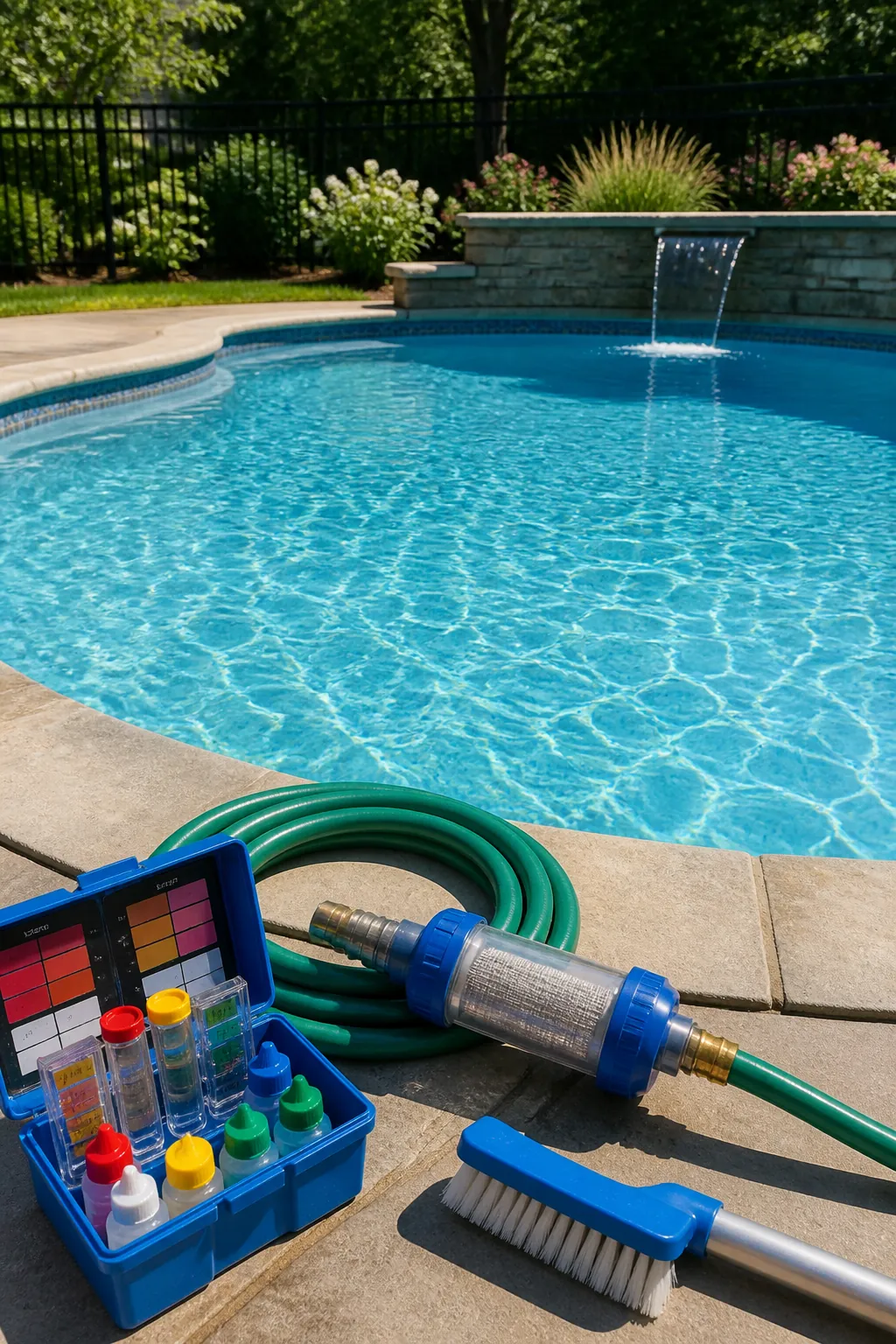
The biggest mistake is shocking first and diagnosing later. A fresh fill can need chlorine, but if the water is loaded with iron, a huge oxidizer dose can turn invisible metal into visible rust. The second mistake is letting pH climb. High pH increases scaling and can make metal staining more likely.
The third mistake is believing that a normal pool filter removes all metal. It removes particles. If the iron is dissolved, it can pass right through until chemistry changes make it visible. The fourth mistake is treating stain removal as the finish line. If you lift iron stains without adding sequestrant and controlling the source water, the stains can come back when chlorine and pH rise again.
Bottom Line
Filling a pool with well water is workable when you respect the source water. Test before the fill, protect the well, filter what you can on the way in, and manage metals before they become stains. If the water turns brown after chlorine, do not panic and do not blindly keep shocking. The color is usually information. Treat it like a diagnosis, and the pool is much easier to recover.